NATO's Eastern Flank on Edge: Drone Incursions and the Escalating Risk of Alliance Entanglement
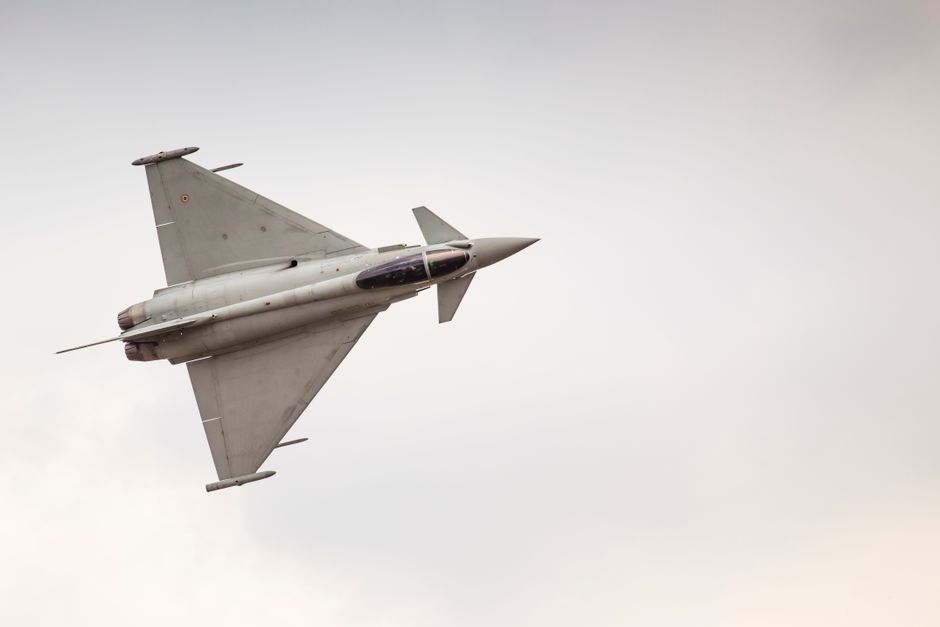
A French Rafale Over Latvia Changes the Calculus
On June 8, 2026, a French military Rafale intercepted and shot down a drone that had crossed into Latvian airspace from Russian territory — the first confirmed kinetic air-defence action by a NATO member against an object originating from Russia during the war in Ukraine. Reuters reported the Latvian military's alert and confirmed the intercept. The episode is not a diplomatic footnote. It is the clearest instance yet of NATO's collective defence architecture being stress-tested in real time, with lethal hardware in the air over an Alliance member's sovereign territory.
The incident sits at the intersection of several converging threads — Russia's sustained campaign of large-scale missile and drone strikes against Ukrainian cities, a pattern of aerial objects straying or being forced into Alliance airspace, and a sharply deteriorating diplomatic climate between Moscow and NATO's eastern members.
The Background: Oreshnik, Attrition, and the Airspace Overspill
Russia has continued conducting large-scale missile and drone attacks on Ukrainian cities, with repeated employment of Oreshnik hypersonic ballistic missiles documented by Ukrainian authorities, as noted in a joint statement by the leaders of France, the United Kingdom, and Germany published on June 7, 2026. The volume and variety of munitions in Russia's strike packages — cruise missiles, Shahed-type loitering munitions, and ballistic systems — strain Ukrainian air defences and produce a predictable byproduct: aerial objects that cross, or are pushed across, international borders.
Two distinct but related phenomena are now regularly occurring on NATO's eastern flank. First, Ukrainian long-range strike drones targeting Russian energy and logistics infrastructure have, on multiple occasions, skirted the airspace of Latvia, Lithuania, Estonia, and Finland, according to AP reporting. Kyiv's explanation, as reported by Reuters, is that Russian electronic warfare — specifically GPS jamming — causes Ukrainian drones to veer off their programmed flight paths. That explanation is technically plausible given documented Russian jamming capabilities in the Baltic operational environment, but it has not been independently verified in every instance.
Second, Russian-origin drones have entered NATO territory directly. A drone crashed into a residential apartment building in Romania's Galați region in late May 2026, injuring two people, as reported by both Al Jazeera and Reuters. The Romanian government has separately flagged persistent drone activity against infrastructure along its border with Ukraine. The Galați incident — a munition striking a civilian residential structure inside Alliance territory — drew condemnation from multiple NATO members.
The Diplomatic Deterioration
UK Foreign Secretary Yvette Cooper publicly accused Russia of violating NATO airspace and stated that Moscow's conduct risks direct armed confrontation, according to Ukraine's foreign intelligence service. The same source documented what it characterised as a brazen Russian drone incursion into Polish airspace. These statements are notable less for their rhetorical intensity — Western officials have been escalating their language for months — than for the specificity of the allegation: a named NATO foreign minister asserting a direct territorial violation by a nuclear power.
Russia's posture has been combative in return. Moscow's ambassador to the UN warned in May 2026 that Russia possessed information about Ukraine planning to launch military drones from Latvian territory and threatened retaliation against Riga if such operations were permitted, per Reuters. Russia has more broadly accused Baltic states of facilitating Ukrainian drone operations and has framed its own potential responses as legitimate countermeasures rather than escalation.
The exchange matters in legal and strategic terms. Article 5 of the North Atlantic Treaty stipulates that an armed attack against one member is considered an attack against all — but the treaty's language on what constitutes an "armed attack" and what response is required has always carried deliberate ambiguity. A drone of uncertain origin crashing into an apartment block tests that ambiguity in ways that Cold War planners never specifically anticipated.
Precedent and Pattern
The dynamics playing out over the Baltic littoral and the Danube delta are not without historical resonance. During the 1999 Kosovo campaign, NATO aircraft operating over the former Yugoslavia prompted protracted disputes over neutral airspace, unintended incidents, and competing legal interpretations about what rights belligerents hold in third-party skies. The difference now is that one side of the conflict — Russia — is itself a major nuclear power directly accused of the intrusions, and the Alliance member affected is not a geographic outlier but a direct neighbour of the theatre of operations. The precedent from Kosovo offers some procedural guidance on crisis communication and de-confliction; it offers no comfort about escalation ceilings.
That pattern — of airspace incidents driving diplomatic crises that acquire their own momentum, independent of the underlying conflict — is precisely what Alliance defence planners are managing in real time. The June 8 intercept over Latvia is the sharpest data point yet in that series.
What the Intercept Signals Operationally
The decision to shoot down the drone over Latvia, rather than simply track and report it, carries operational significance. It establishes that France — acting under NATO's enhanced forward presence framework — is prepared to use kinetic force against objects originating from Russian territory that enter Alliance airspace. That is not a trivial threshold to cross, and the choice to do so publicly rather than quietly indicates Alliance members want Moscow to register the signal.
For Russia, the challenge is calibration. Its stated logic has been that drone activity attributed to Ukraine constitutes Alliance complicity if tolerated by NATO members on their territory. The Latvian intercept — by a French asset, not a Latvian one — makes that calculus more complex: it demonstrates Alliance cohesion in air-defence response while also removing Russian ammunition by eliminating the drone before any further incident could occur.
For Ukraine, the pattern of straying drones creates political friction with partners whose domestic publics are watching drone debris land on apartment buildings. Kyiv has strong incentives to tighten operational control or at minimum to strengthen its explanation of the jamming mechanism, since continued incidents erode the legal clarity that distinguishes Ukrainian defensive operations from the Russian strikes they are designed to counter.
The Near-Term Risk Landscape
The compounding effect of these incidents — Galați in late May, the Baltic airspace skirts, the Latvian intercept on June 8, Russian threats against Baltic capitals — is that the margin for miscalculation has narrowed materially. Each incident individually is containable. The cumulative pattern is one in which any single drone, on any given night, could produce an outcome that demands a response governed by treaty obligations rather than purely diplomatic discretion.
Alliance members with territory on Russia's operational periphery — Romania, Latvia, Lithuania, Estonia, Poland, Finland — are no longer passive observers of a conflict two borders away. They are active nodes in an air-defence environment where the distinction between the war zone and Alliance territory is becoming, at minimum, contested in practice even if it remains clear in law.
The question shaping the strategic conversation in Brussels, Warsaw, Riga, and Bucharest is no longer whether these incidents will continue. Given the operational tempo on both sides, they will. The operative question is what escalation ladder each successive incident represents, and whether the ladder has a discernible top.


