Apple Unveils Siri AI and Next-Generation Apple Intelligence at WWDC 2026

Apple used the opening days of WWDC 2026 — running June 8–12 in Cupertino — to formally introduce Siri AI, a substantially rebuilt assistant powered by Apple Intelligence, alongside a broad suite of AI-driven platform features spanning iOS 27, iPadOS 27, macOS 27, and visionOS 27. Developer betas of the new Siri AI features became available for testing across all four platforms in June 2026, according to Apple's newsroom.
What Siri AI Actually Is
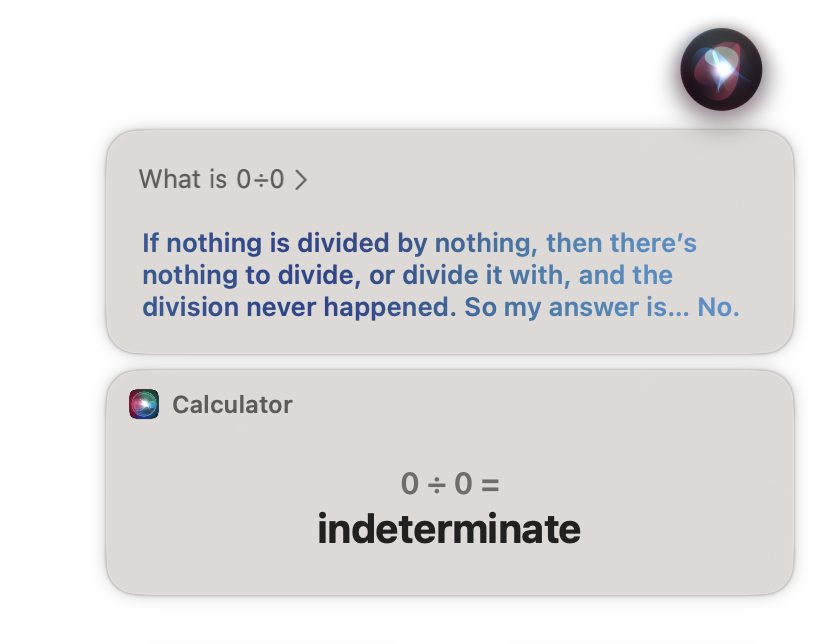
Siri AI is not an incremental prompt-engineering pass over the existing assistant stack. Apple's own framing positions it as "a profoundly more capable and personal assistant", and the architectural change that matters most to developers is on-screen context awareness: Siri AI can analyze what is currently displayed on a user's screen and act on that context rather than waiting for an explicit, self-contained query. That capability collapses the gap between ambient awareness and assistive action — the assistant can now reason over an email thread, a document, or a transaction summary without the user first explaining what they are looking at.
Conversational continuity has also been extended. Where previous Siri interactions were stateless across turns, Siri AI is described as more genuinely conversational, sustaining context across a back-and-forth exchange. For developers building on SiriKit and App Intents, this has direct implications for how multi-step workflows can be constructed without requiring explicit slot-filling at each turn.
Apple Intelligence as the Underlying Layer
The product story Apple is telling treats Siri AI as a surface expression of a deeper platform capability: Apple Intelligence, the on-device and private-cloud inference framework Apple introduced in 2024 and has continued to expand. The next generation of that framework, announced at WWDC 2026, is what powers the new Siri AI capabilities.
The privacy architecture remains a defining engineering constraint. Apple has been consistent in emphasizing that sensitive inference runs on-device where possible, with more complex requests routed to Private Cloud Compute — a model in which Apple asserts it cannot inspect the data in transit or at rest on the server side. AP News noted Apple's continued emphasis on privacy as a differentiating feature of the new Siri AI rollout, a positioning that carries both genuine architectural substance and obvious competitive marketing value.
For engineers evaluating the platform, the relevant question is not whether Apple's privacy claims are sincere — the Private Cloud Compute attestation model has been documented and partially audited by third parties — but whether the inference capabilities delivered within those constraints are sufficient to compete with cloud-first assistants that operate under fewer data minimization requirements.
Services Integration: Apple Cash and Bill Splitting
Among the specific feature disclosures, iOS 27 gains Apple Intelligence integration within Apple Cash, enabling bill-splitting directly through the assistant layer, per Apple's services announcement. The detail is narrow but telling: Apple is threading its AI layer into financial transactions, which are among the most latency-sensitive and trust-dependent interactions on a device. Whether the implementation routes those transactions through on-device inference or Private Cloud Compute will matter to enterprise compliance teams and, eventually, to regulators.
Parental Controls
WWDC 2026 also introduced new parental control capabilities, though Apple has not yet published the full technical specification for these features at time of writing. The timing is notable: parental controls that intersect with AI-driven content generation and on-screen analysis represent a more complex policy and engineering surface than legacy screen-time restrictions. How Apple Intelligence behaves when a device is operating under a child's managed profile — what it can surface, what it suppresses, and how that is enforced at the system level — will be a detail worth examining once developer documentation is more complete.
The EU Carve-Out
The sharpest constraint on the Siri AI rollout is also the most geopolitically significant. Apple has confirmed it will not ship Siri AI in the European Union with the initial releases of iOS 27 and iPadOS 27, citing compliance obligations under the Digital Markets Act. Apple has used this mechanism before — Apple Intelligence itself was withheld from EU markets at its initial launch — and the pattern reflects a genuine structural tension between Apple's tightly integrated platform model and the DMA's interoperability and gatekeeping provisions.
We have seen this dynamic play out before in the mobile era. When Apple launched iMessage with end-to-end encryption in 2011, the feature was available globally because it required no special regulatory concession. The moment Apple's platform capabilities begin touching data portability, interoperability with third-party services, or the gatekeeping of AI-driven assistants, the DMA creates friction that Apple has so far chosen to resolve by delaying features rather than redesigning them for compliance. Whether the EU carve-out on Siri AI reflects a principled architectural incompatibility or a negotiating posture is not yet clear. What is clear is that roughly 450 million EU residents on Apple hardware will receive iOS 27 without the flagship AI capability at launch.
Reuters reported that investors going into WWDC were focused on whether Apple's AI strategy could materially revive Siri's competitive standing — a framing that reflects how far the assistant had fallen behind in market perception relative to both Google's Gemini integration on Android and the emergent standalone AI assistant category.
What Changes for Developers
The practical impact for the iOS and macOS development community is concentrated in a few areas. On-screen context awareness expands the design space for App Intents — developers can now build flows that assume the assistant has read the current UI state, rather than requiring explicit parameter passing. Conversational continuity changes the UX contract for multi-step tasks. And the Apple Intelligence platform layer itself is expanding, which broadens the set of on-device ML capabilities accessible through Apple's APIs without developers managing their own model inference infrastructure.
The developer beta availability across iOS 27, iPadOS 27, macOS 27, and visionOS 27 simultaneously suggests Apple wants feedback from the full cross-platform developer base before general availability — a reasonable approach given how much of the capability depends on correct integration with third-party app surfaces rather than Apple's own first-party apps.
Looking at what this means for the competitive landscape: Apple's move reinforces that the assistant layer is now the primary battleground for platform stickiness. The companies that get ambient, context-aware assistance right — on-device, low-latency, privacy-respecting — will have a structural advantage in daily device engagement. Apple's architecture gives it a credible story on privacy and latency. The remaining question is whether Siri AI's reasoning quality, when finally measured systematically against peers, is competitive. The developer beta period that opened in June 2026 will begin to answer that.