SpaceX Sets IPO Price at $135 Per Share in Long-Awaited Market Debut

The Headline Number
SpaceX priced its initial public offering at $135 per share, according to Reuters (published 2026-06-02 GMT), with the company targeting $7.5 billion in gross proceeds from the offering. The figure lands the rocket and satellite company — formally Space Exploration Technologies Corp. — among the largest tech IPOs in recent memory by headline raise, though the per-share price and total raise will remain the reference points as secondary-market trading develops.
Goldman Sachs is acting as lead underwriter on the deal, as CNBC reported (published 2026-05-21 GMT) when SpaceX filed its registration statement. The S-1 itself was lodged with the SEC in the weeks prior to pricing, establishing the formal disclosure record for public investors.
What SpaceX Actually Does
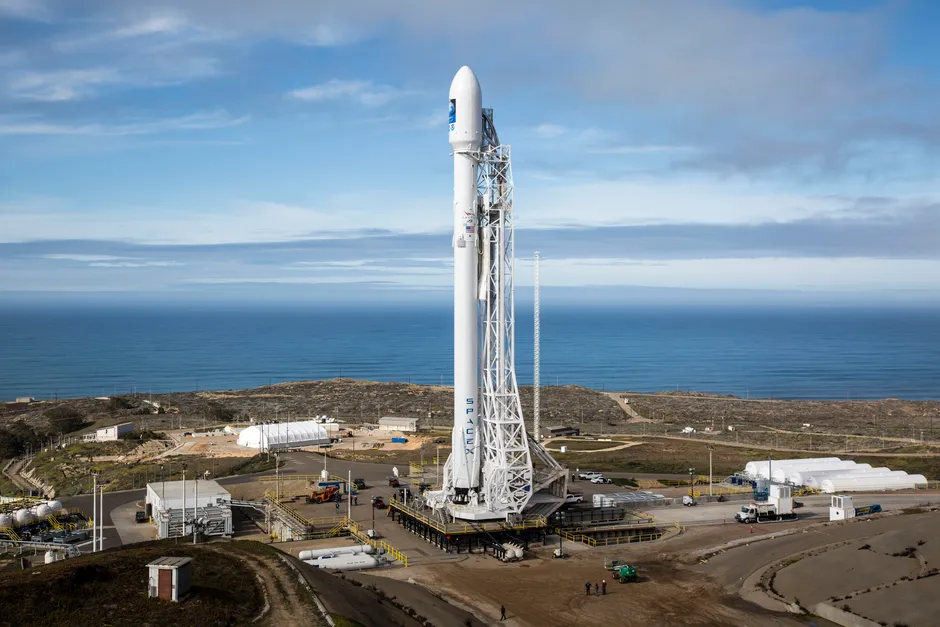
The S-1 and an accompanying free-writing prospectus filed with the SEC on 2026-06-09 describe the company in operationally specific terms: SpaceX designs, manufactures, launches, and operates advanced rockets and spacecraft, and provides global internet service and satellite-to-mobile capabilities. That four-part description matters for valuation purposes. It encompasses at minimum two distinct revenue models — launch services (largely a project-based, contractual revenue stream heavily exposed to cadence risk) and Starlink broadband subscriptions (a recurring, scalable consumer and enterprise revenue stream with different margin and growth dynamics). Analysts pricing the deal have had to straddle both, which partially explains the length of time it took to arrive at a public market clearing price.
Founded in 2002, the company has spent nearly a quarter-century operating almost entirely outside public-market scrutiny, funding itself through a combination of NASA and Department of Defense contracts, private institutional rounds at escalating valuations, and employee secondary transactions that gave insiders liquidity without triggering full disclosure obligations. That long private innings is a material fact for institutional buyers assessing the quality of the financial history they are inheriting.
The Mechanics of the Deal
Goldman Sachs's role as lead-left bookrunner is significant in its own right. The firm commands the order book, controls allocation, and shoulders the primary stabilization obligation in the aftermarket. For a deal of this size and profile, the syndicate structure and the identity of the stabilizing agent will directly influence where the stock prints in the first days of trading relative to the $135 issue price.
The S-1 registration on Form S-1 — the standard vehicle for domestic issuers accessing U.S. public markets for the first time — establishes the statutory disclosure baseline: audited financials, risk factors, business description, and use of proceeds. Institutional investors conducting diligence will have combed those filings for segment-level revenue disclosure, Starlink subscriber economics, launch backlog, and capital expenditure trajectory. The degree of transparency SpaceX afforded in those sections will have been a negotiating point throughout the roadshow.
A $7.5 billion raise at $135 per share implies a share count of roughly 55.6 million shares offered in the primary transaction. The resulting implied market capitalisation — derived from the fully diluted share count disclosed in the S-1 — is the figure that will anchor every subsequent multiple comparison, and it is worth waiting for confirmed secondary-market prints before treating any single analyst's entry-day target as authoritative.
The Private-to-Public Transition
We have seen this pattern before, when a generation of capital-intensive technology companies — from Amazon through to more recent infrastructure platforms — came to market after sustained private backing, carrying a combination of contractual government revenue and a nascent consumer product that investors were asked to value on a forward rather than trailing basis. The mechanics of that transition are familiar: institutional holders who bought in late private rounds near or above the IPO price face limited near-term upside and may be structural sellers once lock-ups expire; retail and institutional buyers at the IPO price are effectively making a bet on the consumer-facing segment — in this case Starlink — reaching scale before the launch business's capital intensity begins to compress free cash flow.
For SpaceX specifically, the satellite-to-mobile capability flagged in the SEC filing adds a third strategic vector that did not exist in the company's early private incarnations. It repositions Starlink not purely as a fixed broadband alternative for underserved geographies, but as a potential bypass layer for mobile network operators — a TAM expansion that changes the slope of the subscriber growth curve, at least in theory. Pricing that optionality is genuinely difficult, which is precisely why the $135 figure will be tested hard in secondary trading.
What the Goldman Mandate Signals
Goldman's selection as lead underwriter is consistent with the firm's positioning in mega-cap technology and aerospace mandates over the past decade. The practical implication for buy-side participants is that Goldman's allocation decisions — who gets stock at $135, in what size, and on what terms — will shape the initial float dynamics more than any public enthusiasm for the name. Deals where retail demand significantly outstrips institutional allocations tend to produce volatile first-day prints followed by extended price discovery; deals where Goldman anchors the book with long-duration institutional holders tend to exhibit tighter spreads and more orderly post-IPO trading. Which dynamic prevails here will be visible within the first week.
Open Questions
Several material variables remain unresolved from available public sources as of 2026-06-09. The exact use-of-proceeds breakdown — how much of the $7.5 billion is earmarked for Starlink constellation expansion, Starship development, or balance-sheet liquidity — has not been confirmed in sources available for this piece and should be verified directly in the S-1. Lock-up duration and the identity of major selling shareholders, if any secondary component exists alongside the primary, are similarly items institutional investors will have tracked during the roadshow but that have not been independently confirmed here.
The satellite-to-mobile segment's revenue contribution, Starlink's ARPU and churn rate, and the launch backlog figure are the three numbers that will anchor every serious valuation model. Whether SpaceX disclosed them in sufficient granularity for sophisticated underwriting is a question the S-1 itself answers; the market's verdict on that disclosure quality will arrive quickly once trading opens.
At $135 per share and a $7.5 billion target raise, SpaceX has priced one of the most closely watched technology offerings in years. The operational complexity of what it is selling to public markets — rockets, satellites, broadband subscriptions, and mobile connectivity, all running simultaneously — means the post-IPO price discovery process is unlikely to be brief.