U.S. CPI April 2026: Headline Inflation Re-Accelerates to 3.8%, Core Holds Firmer Than Expected

Headline Inflation Breaks Back Above 3.5%
The Bureau of Labor Statistics released April 2026 CPI data on May 12, 2026, and the numbers landed on the uncomfortable side of consensus. The all-items Consumer Price Index rose 0.6 percent on a seasonally adjusted monthly basis, pushing the 12-month rate to 3.8 percent — up from 3.3 percent for the year ending March 2026. That is a 50-basis-point acceleration in the annual rate in a single month, the kind of sequential re-widening that complicates any near-term Fed pivot narrative. (BLS, May 12 2026)
For context: the Fed's statutory price-stability target is 2 percent, expressed in PCE terms rather than CPI, but the two series rhyme closely enough that a 3.8 percent CPI print sits materially above what the FOMC can credibly characterize as progress. The gap between where inflation is and where the Fed needs it to be widened this month, not narrowed.
Core Inflation: Sticky, Not Spiking
The index for all items less food and energy — the "core" measure that strips out the two most volatile components — rose 2.8 percent over the 12 months ending April 2026, versus 2.6 percent for the year ending March 2026. That 20-basis-point drift higher in core is less dramatic than the headline swing, but it reinforces the same message: disinflation has stalled, and in some sub-components it has reversed. (BLS, May 12 2026)
For comparison, core CPI had been running at 2.6 percent as recently as November 2025. The April 2026 reading of 2.8 percent is not a blowout, but it does represent two consecutive months of upward drift in a series that the market had broadly priced as being in terminal deceleration. The message from services inflation — the most persistent component in the modern CPI basket — appears not to have changed materially, but the direction of travel has.
Food Costs: Broad-Based Pressure
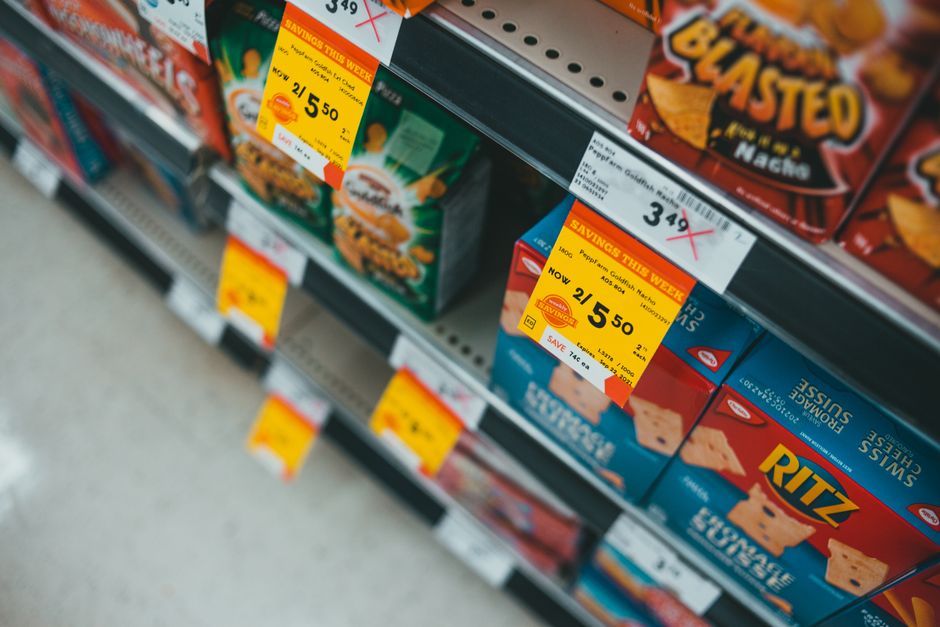
Food CPI rose 3.2 percent for the 12 months ending April 2026. The food-at-home sub-index — what households actually pay at the supermarket — came in at 2.9 percent, while cereals and bakery products rose 2.6 percent over the same period. (BLS, May 12 2026)
None of these numbers are alarming in isolation, but their aggregate weight matters. Food-at-home inflation running close to 3 percent hits lower-income households disproportionately, given that food represents a higher share of their consumption basket. It also matters for inflation expectations anchoring: grocery bills are the price signal most Americans observe with the highest frequency, and persistent food inflation tends to keep household inflation expectations elevated even when goods or services components ease.
What Drove the Monthly Print?
The 0.6 percent month-on-month seasonally adjusted jump is the component that will draw the most scrutiny. A single-month reading at that pace, annualised, is running above 7 percent — well outside any range consistent with price stability. The BLS release does not break down the monthly figure into granular driver categories within these verified facts, but the combination of re-accelerating food costs, a firm core, and a headline print that high suggests either a broad-based firming or a concentrated shock in energy or shelter — the two sub-components with the largest basket weights outside of food.
What can be said with confidence: this was not a food-and-energy-only story. Core's simultaneous re-acceleration to 2.8 percent rules out a clean "it's just oil prices" explanation.
The Fed's Calculus Gets Harder
We have seen this pattern before. In 2021 and 2022, sequential month-on-month CPI prints well above 0.4 percent arrived alongside official commentary characterising inflation as "transitory." The Fed's eventual response — 525 basis points of rate hikes over roughly 16 months — was the most aggressive tightening cycle since the Volcker era. The lesson the FOMC took from that episode was that waiting costs more than acting. April 2026's data is unlikely to trigger a repeat of that scale of response, but it does push back hard against any timeline for easing that the market might have been pricing.
The dual mandate places maximum employment alongside price stability. If the labour market remains resilient — and there is no data in this release to suggest otherwise — the Fed has little political or economic cover for cutting rates while headline CPI is running nearly 200 basis points above target. Futures markets will need to reprice the probability of cuts in the second half of 2026 accordingly, though forecasts are exactly that, and the next two CPI prints will carry at least as much weight as this one.
What the Release Schedule Tells Us
Looking back at the release calendar: the November 2025 CPI data was released on December 18, 2025, and the December 2025 figure followed on January 13, 2026 — both at 08:30 AM ET. (BLS schedule) The pace of data flow since then has been consistent with BLS's standard monthly cadence. The May 2026 CPI print — covering price changes through the end of May — will be the next critical reading, likely mid-June 2026.
Between now and that release, the market will be parsing Federal Reserve communications, labour market data, and any fresh signals on tariff pass-through — the latter having been a recurring structural question for goods inflation throughout 2025 and into 2026.
The Spread That Matters
For fixed-income practitioners, the relevant framing is the real yield — the nominal Treasury yield minus the inflation rate. If 10-year Treasuries are yielding in the 4-to-5 percent range and headline CPI is running at 3.8 percent, real yields compress. That compression is meaningful for pension funds and insurance companies benchmarked to real returns, and it affects the calculus for duration positioning across the curve.
For corporate treasurers and floating-rate borrowers, a Fed on hold — or further away from cuts than previously assumed — means the cost of carry on variable-rate debt stays elevated longer. And for equity valuations, discount rates that were expected to decline now face a longer plateau, which is a structural headwind for long-duration assets even if earnings remain solid.
The Bottom Line
The April 2026 CPI release is unambiguously a setback for the disinflation narrative. Headline at 3.8 percent, core at 2.8 percent, a 0.6 percent monthly print, and food running at 3.2 percent — none of these figures individually constitute a crisis, but taken together they describe an economy where inflation is not converging on target at any pace that gives the Fed room to ease. The next data points will either confirm a trend re-acceleration or flag this as an outlier. Until that clarity arrives, the risk posture on rate-sensitive assets has shifted.