SpaceX Begins Trading on Nasdaq After $75 Billion IPO

SpaceX shares opened on the Nasdaq Global Select Market under the ticker SPCX on June 12, 2026, completing a public listing that raised $75 billion — the largest IPO in U.S. history by proceeds — at $135 per share. Reuters
The company sold 555.56 million shares across the offering, having filed its S-1 with the SEC on May 20, 2026, and formally announced the IPO on June 4. The $135 per-share price was set on June 11, with Reuters reporting that the offering placed SpaceX among the most valuable U.S. companies immediately upon pricing.
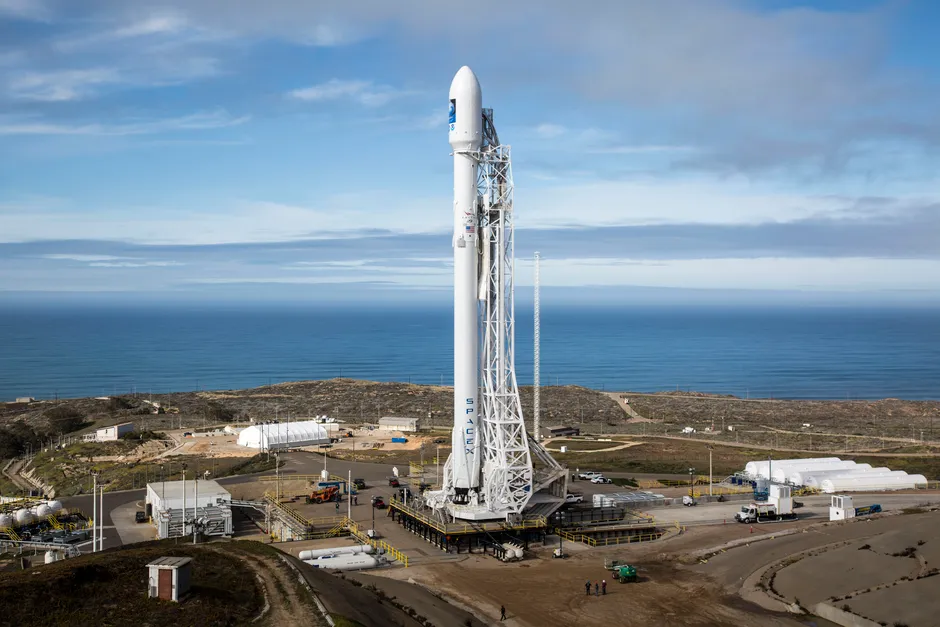
Demand was not in question. The book ran at roughly two times oversubscribed, according to sources cited by Reuters in early June. That level of institutional appetite — for a capital-intensive aerospace and satellite infrastructure business, not a software company trading on near-zero marginal cost — is worth pausing on. SpaceX operates Falcon 9 and Falcon Heavy launch vehicles, is mid-development on Starship, and runs the Starlink low-Earth-orbit broadband constellation across more than 6,000 satellites. Its revenue base is real and diversified: government launch contracts, commercial payload customers, and a fast-growing consumer and enterprise broadband subscriber base. Investors were not buying a concept.
One structural decision in the offering stood out. SpaceX allocated 30% of IPO shares to retail investors — a deliberate tilt away from the institutional lock-up that typically defines a listing of this scale. The practical effect is a broader, more distributed initial shareholder base, which can dampen the concentrated post-IPO selling pressure that has plagued other large debuts. Whether it holds that way as lock-up periods expire is a separate question.
Elon Musk retained 82% voting control of the company following the offering, a figure that warrants context rather than alarm, though it does define the governance structure any new shareholder is buying into. Dual-class share structures and founder-control arrangements are now routine among major technology listings — Meta, Alphabet, and Snap all went public with analogous arrangements — but SpaceX's reliance on U.S. government contracts, particularly through NASA and the Department of Defense, adds a dimension that purely commercial companies do not carry. A single individual holding decisive control over a company that launches national security payloads and operates the communications infrastructure for tens of millions of users is a governance configuration that regulators and institutional investors will continue to examine.
The $75 billion raise itself reframes what public equity markets can absorb. Prior to this listing, the largest U.S. IPO by proceeds was Meta's 2012 offering at approximately $16 billion — a figure SpaceX has more than quadrupled. The capital will presumably accelerate Starship's development cadence and Starlink's ground infrastructure expansion, though specific use-of-proceeds disclosures will be in the S-1 filing on record with the SEC.
The longer arc here is that SpaceX stayed private for nearly 24 years — through the Falcon 1 failures, the first successful orbital launch in 2008, the commercial crew program, and Starlink's buildout to profitability — before tapping public markets. That patience is itself a data point. The company came to market with audited revenue, a demonstrated launch manifest, and a satellite internet business generating recurring subscription income. It was not raising survival capital. The $75 billion gives it a war chest to press the Starship program toward full reusability and expand Starlink's direct-to-cell service, both of which require sustained, heavy capital deployment over years.
For the broader market, the mechanics of this IPO — the retail allocation, the scale of oversubscription, the pricing discipline — will be parsed by every large private company now weighing a listing. The public markets have been selective since the 2021 SPAC-and-growth-at-any-cost hangover, and a clean, oversubscribed offering at this size sends a clear signal about where institutional appetite sits when the underlying fundamentals are credible.
The first day of trading is, of course, only the first test. The market debut will establish a reference price against which subsequent quarters — and Starship's test cadence — will be measured.