Jamaica's Beach Access Fight: Privatisation, Public Rights, and a Coastline at Stake
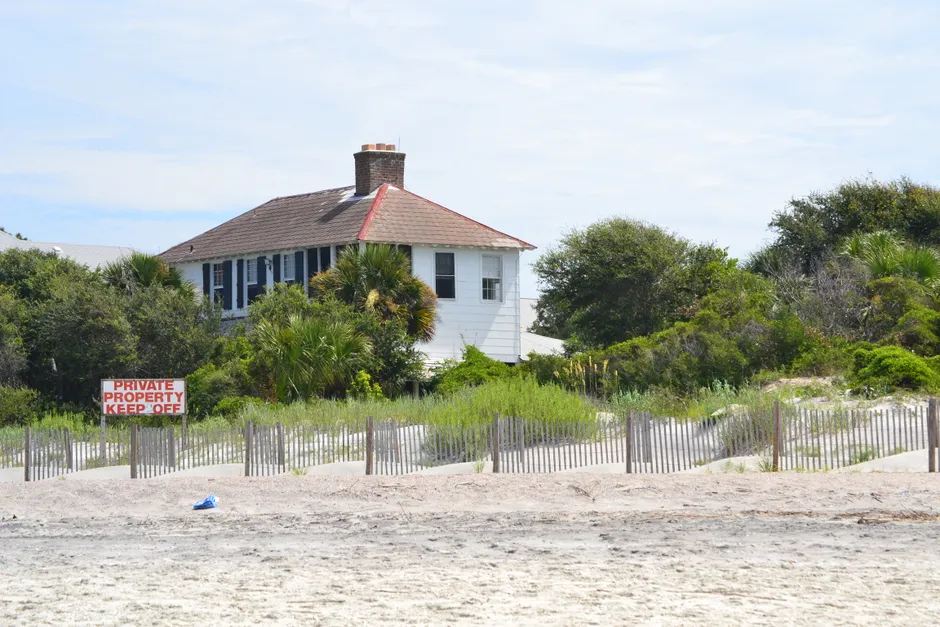
A legal and policy battle over who controls Jamaica's coastline is sharpening, pitting the island's constitutional and statutory public-access framework against pressures from private development and a government divestment agenda.
Under Jamaican law, the foreshore — the strip of land between the high- and low-water marks — cannot be privately owned in a manner that extinguishes public access. As Jamaica Gleaner commentary reported in October 2023, regardless of who holds title to land along the shoreline, no beach in Jamaica is entirely private. That legal baseline is grounded in the Beach Control Act, the primary statutory instrument regulating beach and sea access across the island.
The friction arises because that framework has not always translated cleanly into practice. Hoteliers, resort operators, and private landowners have, in various instances, restricted or discouraged access to stretches of beach that the law notionally keeps open to the public. Enforcement has been uneven, and the physical infrastructure — access roads, signage, public facilities — needed to make the legal right meaningful is frequently absent.
The Policy Architecture
The Beach Access and Management Policy, known as BAMP, was designed to close that gap. Developed under the Ministry of Economic Growth and Job Creation, BAMP's stated objective is to increase public access to the foreshore and raise the standard of beaches available to Jamaicans — not merely to restate the existing legal entitlement but to operationalise it through planning controls, facility standards, and management frameworks.
BAMP sits within a broader planning hierarchy anchored by Vision 2030 Jamaica, the country's first long-term national development plan. Vision 2030 explicitly ties sustainable tourism and environmental stewardship to long-run economic resilience — a framing that should, in principle, align beach access policy with national growth strategy. In practice, those objectives can pull in different directions when individual development decisions are made.
That tension is compounded by a separate strand of government policy: Jamaica's formal divestment programme. As assessed by the Planning Institute of Jamaica, the programme includes explicit revenue-raising objectives through privatisation of state assets. Where government-held coastal land or facilities fall within the divestment pipeline, the public-access imperative embedded in BAMP and the Beach Control Act comes into direct contact with fiscal incentives that favour maximising sale value — which typically means limiting competing claims on the asset.
What the Court Fight Turns On
The legal disputes now emerging around beach access are not straightforwardly about whether the Beach Control Act applies — it does — but about how it is enforced, who bears the burden of proof when access is contested, and what remedies are available to members of the public who find a beach effectively closed off by development, fencing, or the withdrawal of access roads.
These are not trivial procedural questions. Access rights that exist on paper but require expensive litigation to assert are, for most Jamaicans, functionally inaccessible. The gap between legal entitlement and practical access has been a recurring theme in Caribbean coastal governance more broadly, where tourism-driven development cycles repeatedly test the durability of public-interest provisions written into statute before the scale of modern resort infrastructure was foreseeable.
The outcome of current litigation will matter beyond any single stretch of coastline. Judicial interpretation of the Beach Control Act's scope — particularly regarding what constitutes an unlawful restriction on foreshore access — will set precedent that either reinforces BAMP's policy ambitions or exposes their limits. A narrow reading would effectively allow well-resourced developers to engineer exclusion without formally breaching the statute.
Looking at what this means for Jamaica's governance landscape: the case sits at an intersection that the island's institutional architecture was not fully designed to manage. BAMP is a green paper policy framework, not yet enacted legislation, which means it carries persuasive rather than binding force in court. The Beach Control Act, meanwhile, dates from an era when the enforcement machinery and the scale of coastal development were both very different. Neither instrument alone is calibrated for the current moment.
The broader question for Jamaica's planning system is whether the legal and policy tools on the books can hold a line that is, in economic terms, under sustained pressure — and whether the divestment programme's revenue logic will, over time, reshape the political will needed to defend it.


