Japan and UK Seal £18 Billion Investment Package and Frontier Technology Partnership

UK Prime Minister Keir Starmer and Japanese Prime Minister Sanae Takaichi met at Downing Street on 14 June 2026, finalising an investment and technology cooperation package the two governments expect to generate more than £18 billion in economic gains and tens of thousands of new jobs across both countries, according to UK government statements.
The headline figure updates an earlier benchmark. In May 2023, leading Japanese businesses had already committed a record £17.7 billion in UK investments, covering sectors from life sciences to infrastructure. The latest package — rounded by the government to "almost £18 billion" in new business and project commitments — effectively extends and deepens that prior wave of capital flows rather than displacing it.
Central to the June 2026 summit is the UK-Japan Frontier Technology Partnership, a bilateral framework under which firms from both countries will cross-invest, co-develop R&D, and access each other's markets in advanced technology sectors. The partnership has the character of a structural commercial arrangement rather than a one-off capital commitment: it is designed to create durable two-way pipelines in areas where both economies have competitive depth — semiconductors, AI, quantum, and advanced materials being the natural candidates, though the formal announcement covers the broader category of "frontier technology."
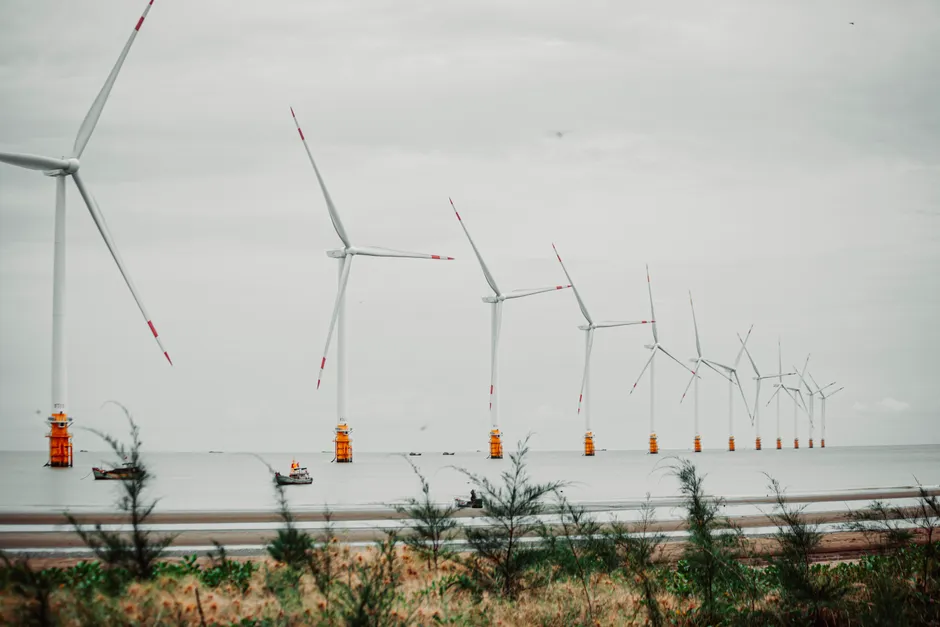
Energy cooperation features prominently. Japan and the UK agreed to work together on offshore wind development and next-generation reactor technology, Nikkei Asia reported. That pairing matters industrially: the UK has among the world's largest installed offshore wind capacity and an active programme to bring small modular reactors (SMRs) and advanced nuclear designs to market; Japan, post-Fukushima, has been cautiously rebuilding its nuclear sector while also scaling offshore wind in its coastal waters. Shared R&D on next-generation reactor designs — whether SMRs or Generation IV concepts — could accelerate regulatory learning and supply-chain development on both sides.
The bilateral context extends well beyond this summit. Japan has been one of the UK's most consequential economic partners in the post-Brexit landscape. The UK-Japan Comprehensive Economic Partnership Agreement (CEPA), which came into force in January 2021, gave London a template for maintaining preferential access after leaving the EU's orbit. Japanese firms have been among the most active foreign direct investors in the UK for decades — automotive, financial services, and pharmaceuticals all carry substantial Japanese ownership stakes. The £17.7 billion 2023 commitment, announced during then-Prime Minister Fumio Kishida's visit to the UK for the G7, was itself a signal that CEPA was translating into tangible capital decisions.
Takaichi's visit takes place as both governments are managing overlapping foreign policy and economic pressures. Japan has been deepening security ties with NATO partners — including the UK under the Hiroshima Accord framework — while navigating its Indo-Pacific posture. For the UK, bilateral investment summits with major non-EU partners carry domestic political weight: they provide visible economic evidence that post-Brexit trade and investment relationships are generating results. An £18 billion commitment, paired with a named technology partnership, is precisely the kind of deliverable that serves both governments' near-term communications needs.
The Frontier Technology Partnership will bear watching for what comes after the announcement. Government-to-government R&D frameworks live and die by whether the commercial arrangements underneath them attract actual capital. The 2023 commitments from Japanese firms were specific and named; how the 2026 partnership's targets are structured — whether as binding investment pledges, letters of intent, or joint-programme funding — will determine the pace at which bilateral technology integration actually proceeds. Neither government has, as of this writing, published the full schedule of implementing agreements, but the framework agreement's publication on 14 June suggests formal governance mechanisms are in place.
The energy dimension may prove the most consequential thread over the medium term. Offshore wind supply chains are global and intensely competitive; a bilateral R&D and investment axis between two of the world's leading maritime economies could shape procurement and component standards in ways that extend well beyond the two countries.