NASA's X-59 Completes First Flight, Advancing Quiet Supersonic Research
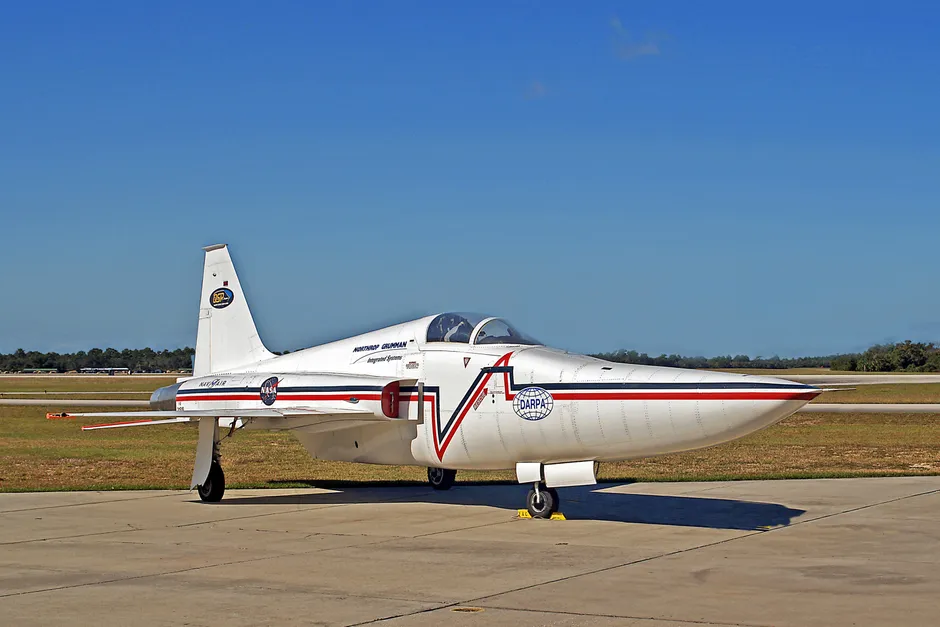
NASA's X-59 experimental aircraft completed its first flight on October 28, 2025, a milestone for the agency's Quesst mission and its decade-long effort to collect data that could eventually inform regulators on overland supersonic commercial flight, according to NASA's Quesst blog.
The X-59 is the centerpiece of that mission. Designed and built by Lockheed Martin's Skunk Works division, the aircraft is shaped specifically to suppress the sonic boom produced during supersonic flight — redistributing the pressure waves that coalesce into that sharp double-crack into a softer, lower-amplitude thump. NASA refers to this target acoustic signature as a "quiet sonic thump," nominally around 75 PLdB (perceived level in decibels), compared to the roughly 105–110 PLdB produced by Concorde over populated areas.
The first flight itself was a functional checkout, not a supersonic run. The aircraft flew subsonically, validating handling qualities, propulsion, and systems integration before the program advances to its high-speed envelope expansion. That sequence is standard for experimental aircraft: you confirm the vehicle does what the simulation says it does before you push it past Mach 1.
The Quesst mission has a specific regulatory objective. The FAA and ICAO currently prohibit commercial supersonic flight overland, a ban dating to the early 1970s largely predicated on sonic boom disturbance at the surface. NASA's intent is to fly the X-59 over selected U.S. communities, gather structured public response data on the attenuated boom, and hand that dataset to the FAA and ICAO as technical evidence for reconsidering those rules. The aircraft is, in that sense, as much a data-collection instrument as a flight demonstrator.
The broader commercial context gives that regulatory work urgency. Several companies — Boom Supersonic with its Overture airliner, Spike Aerospace, and others — are pursuing supersonic commercial aircraft programs. All of them face the same ceiling: overland routes are off the table without a rule change, which would effectively confine any supersonic airliner to transoceanic corridors and blunt the time-savings case for most passengers. The X-59 data pipeline is the most credible near-term path to unlocking that question.
What the first flight confirmed is that the aircraft is airworthy in its primary configuration. The aerodynamic design carries real constraints: the cockpit has no forward-facing window, replaced instead by an eXternal Vision System (XVS) — a camera-fed display — because the elongated, needle-like forward fuselage required to shape the shock wave leaves no geometric room for conventional glazing. Flying an aircraft with no direct forward view is not a trivial systems integration problem, and the fact that it flew without incident on the first sortie is a meaningful engineering data point in itself.
Looking at what this means for the program's timeline, the first flight puts Quesst on track for community overflight testing, currently expected in the mid-to-late 2020s. That phase — where structured surveys of residents' reactions to the quiet thump become the primary output — will be the real proof point. Engineering quiet into the aircraft is the tractable half of the problem. Demonstrating that the public response data is robust enough to move regulators is the harder task, and no amount of aerodynamic cleverness substitutes for it.
The program has been a long time coming. X-59's design contract was awarded in 2016, and development stretched across nearly a decade of budget cycles, COVID-related delays, and engineering revisions. First flight arriving in late 2025 puts it behind earlier projections but still within the operational window where the data it generates could meaningfully inform rulemaking before the first commercial supersonic airliners seek certification.
Whether any of that yields amended rules quickly enough to matter commercially is genuinely open. Regulatory processes at the FAA and ICAO move on their own schedules, and community acceptance data, however carefully gathered, feeds into a deliberative process that involves more than acoustics. But the X-59 is now a flying aircraft. The dataset it was built to generate can begin to accumulate.


