A Wi-Fi Light Bulb That Serves Banned Books Over the Air
A project called the Banned Book Library stores full text books inside a Wi-Fi-enabled smart light bulb and serves them wirelessly to anyone within range, according to Gigazine (published 16 June 2026).
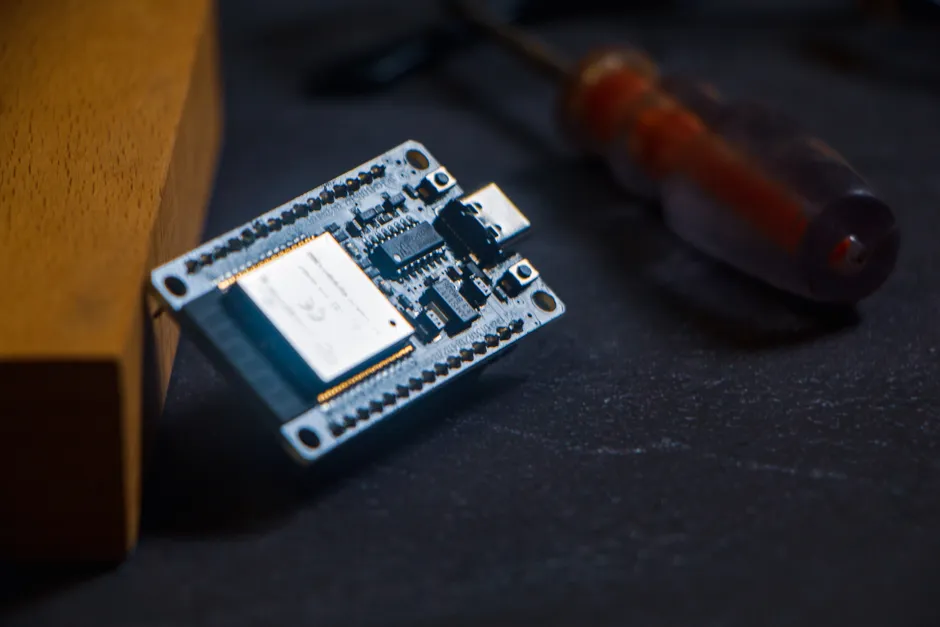
The hardware at the core of the project is an ESP32-C3 microcontroller — Espressif's single-core RISC-V part, well known in the maker and embedded communities for its integrated 2.4 GHz Wi-Fi and Bluetooth LE stack. The specific implementation fits inside a standard smart bulb form factor and carries 4 MB of onboard flash. That is a tight constraint, but ample for plain-text or lightly compressed prose: a typical novel runs 500 KB to 1 MB uncompressed, meaning a single bulb can hold several titles simultaneously. The device also supports over-the-air firmware and content updates, so its library can be revised without physical access.
The design intent is explicit. The project is built so that individuals can load whichever titles matter to them and carry the bulb wherever they relocate — framing the device not as a fixed installation but as portable, personal infrastructure for text that may be legally or institutionally restricted in a given jurisdiction.
From a purely technical standpoint, the architecture is straightforward. The ESP32-C3 runs a lightweight HTTP or captive-portal server; any nearby device with Wi-Fi — a phone, a laptop, a tablet — connects to the bulb's access point and retrieves content through a browser, no app required. The bulb's cover provides physical camouflage. OTA update support means the content layer is decoupled from the hardware: a new title can be pushed remotely as long as the bulb has upstream connectivity, which is worth noting because it also means the library's contents are mutable after deployment.
The component cost for an ESP32-C3 module sits in the low single-digit dollar range at volume, and complete smart bulb assemblies based on similar silicon are already mass-produced for the consumer market. The barrier to replicating or distributing this project is low — that is a factual observation about the bill of materials, not an assessment of what anyone should do with it.
There is a longer history of technologists encoding text into inconspicuous or durable physical objects: microfilm inside everyday items, data carved into DNA strands, books distributed via mesh networks on repurposed Android handsets. The Banned Book Library sits in that lineage — commodity wireless silicon doing what the designers of the ESP32-C3 never explicitly anticipated, but for which it is well suited.
Worth noting: the 4 MB flash ceiling is the binding constraint on library depth, and it does not grow with the number of bulbs deployed in a space. Each unit is an independent node, not a distributed filesystem. Scaling the collection means either compressing texts aggressively, storing only excerpts, or daisy-chaining multiple bulbs — none of which is architecturally complex, but all of which require deliberate design choices the current public documentation does not appear to address.
The broader context is a period of active and, in some jurisdictions, accelerating debate over which books may be held in public libraries, school collections, and digital storefronts. The Banned Book Library does not resolve that debate. What it does is reduce the infrastructure cost of personal text preservation to roughly the price of a light fitting — and put the technical controls entirely in the hands of whoever screws it into the socket.