Far-Right Port Blockades Expose Police Intelligence Failures as Government Demands Better Preparedness
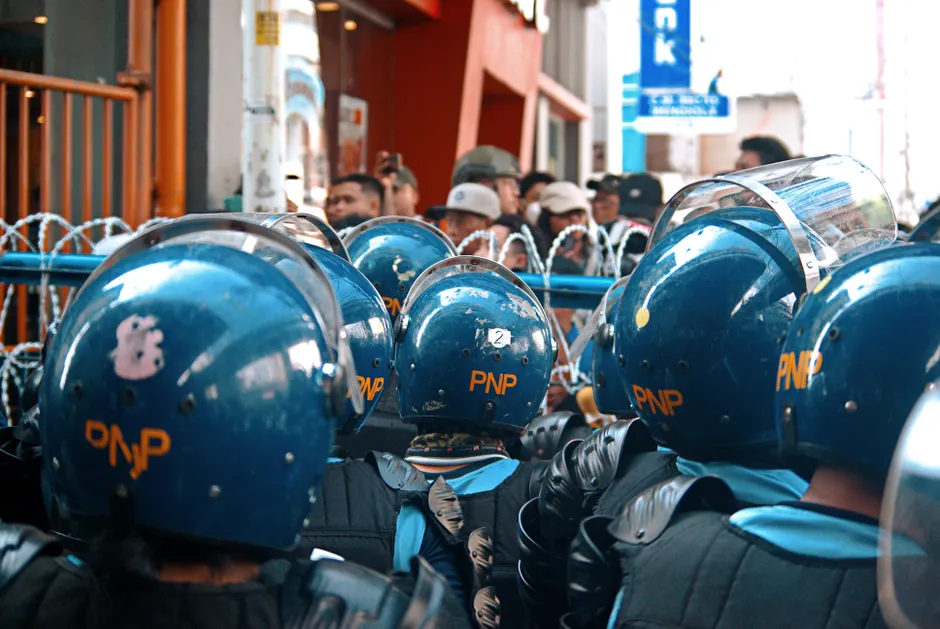
The UK government has told police forces to improve intelligence gathering after masked far-right groups blockaded Dover and Portsmouth ports over the weekend, exposing critical failures in how warnings were assessed and acted upon before hundreds of demonstrators massed at two of the country's key maritime gateways.
Kent police admitted mishandling non-emergency information received late on Friday evening that indicated a protest could take place in Dover the following day. That information was not fully assessed, and the force's initial claim that it had no warning of the demonstration fell apart once the late-Friday calls were acknowledged. Kent police deployed rapidly to the scene on Saturday morning, when approximately 150 individuals descended on the port of Dover at around 7:30 a.m. Hampshire police said they were similarly taken by surprise when around 200 people massed in Portsmouth on Sunday.
Prime Minister Andy Burnham met police chiefs on Tuesday evening to discuss what had happened and preparedness for any further unrest. The government's view, however, was that police actions once officers were confronted by hundreds of men at the ports were reasonable. The concern in Whitehall centred on the intelligence chain beforehand, not the operational response on the ground.
Whitehall officials also questioned why existing powers were not used. Tougher laws in place since last year, meant to clamp down on the wearing of face masks at protests, were not applied at either location, and officials asked police to account for that decision. There was dismay at how Kent police explained their decision-making afterwards, particularly the characterisation of gathered masked men outside the port of Dover as peaceful protesters.
The protests are believed to have been coordinated on closed social media networks rather than publicly advertised, and police found evidence that those behind them were determined to avoid detection. In Dover, protesters used walkie-talkies to coordinate their actions. Officers on the ground reported that the masked men had lawyers' phone numbers, cited public order case law, and were well briefed on how far they could push their actions to avoid arrest.
The action in Kent was organised by Daniel Thomas, a long-term associate of Stephen Yaxley-Lennon, known as Tommy Robinson. Thomas has established an umbrella grouping called Patriot Platform, which was also linked to the blockade in Portsmouth. Campaigners describe Patriot Platform as an anti-migrant collective that gathers local groups together and is home to a host of violent criminals.
The two protests unfolded differently. The Dover gathering passed peacefully, with no arrests made, according to Kent police. In Hampshire, there were clashes. Police used batons and pepper spray on far-right protesters, and the local Police Federation said anger and violence was directed at officers. The Home Office condemned what it called "the intimidating and thuggish behaviour" at the Portsmouth protest, and a minister said officers were injured as they repelled aggression. Hampshire police are now hunting for those behind the violence, conducting a thorough review of body-worn video. Their investigation will also examine whether the gathering of 200 people was meant to harass or intimidate, and whether vehicles were deliberately left behind to block access roads.
Police are considering whether the threshold for warrants for covert tactics has been met in relation to the protests. The National Police Coordination Centre has intensified its monitoring of the situation.
The broader context here is a demonstrated capability for decentralised, operationally sophisticated mobilisation that outpaced two separate force-level intelligence pictures. The use of walkie-talkies, legal briefings carried by participants, and coordination through closed networks suggest a level of operational discipline that distinguishes these gatherings from earlier far-right demonstrations at the same locations. Dover has a history of far-right demonstrations; in April 2016, police warned of significant disruption at a far-right march and posted extra officers to prevent a repeat of clashes between far-right and anti-fascist groups earlier that January. The current iteration, however, reflects a model built on evasion of detection rather than public visibility.
The government's simultaneous endorsement of the on-the-ground police response and its demand for better upstream intelligence draws a clear line between tactical execution and strategic preparedness. The question Whitehall is now pressing on forces is whether existing legislative tools, from face-mask prohibitions to covert warrants, are being used to their full extent, or whether the architecture of enforcement is lagging behind the organisational sophistication of the groups it is meant to contain.
Kent police publishes an annual Force Management Statement, a self-assessment of the demands and challenges the force faces, including a redacted version for 2026. How the force's own assessment of its intelligence capabilities aligns with the failures now acknowledged will likely come under scrutiny as the National Police Coordination Centre intensifies its monitoring and as Burnham's government weighs whether further legislative or operational changes are needed.
The masked, black-clad Dover protesters who blockaded roads could repeat the disruption unless police step up efforts to stop them. Whether the intelligence failures acknowledged this week prove sufficient to recalibrate that effort remains an open question for both forces and the government.


