UK Anti-Migrant Vigilante Groups Surge as Ministers Press Police to Act

At least 28 anti-migrant vigilante groups have formed in the United Kingdom in the last 18 months, according to Guardian analysis published on Sept. 12, 2026. The Guardian
The analysis found the number of active groups has surged since summer 2025. Researchers were able to establish initiation dates for 31 active vigilante groups, with at least 28 of those falling inside the 18-month window.
The groups vary in size, tactics and geographic focus. Some present themselves as neighbourhood security patrols. Others operate around ports and asylum accommodation, or travel across the Channel to intercept crossings.
A diffuse network
In Glasgow, a group calling itself Scots Active conducts late-night patrols around the city centre claiming to protect the public from migrants. Members sometimes wear balaclavas and stab-proof vests on patrol. Scots Active was one of two groups banned from TikTok earlier in 2026 after reportedly sharing footage claiming to expose migrant hotels.
Another formation, the British Security Project, states on its Facebook page that it aims to provide 124,000 security personnel to public spaces by 2035. The figure indicates an ambition for national scale, far beyond local patrols.
Other groups have focused directly on small-boat crossings. Members of Raise the Colours made several trips to France in 2025 to try to stop migrants crossing the Channel in small boats. Members filmed themselves claiming to have slashed dinghies on French beaches. France subsequently banned 10 members of Raise the Colours from the country.
The pattern extends to ports and reception points inside England. Members of the far-right Patriot Platform blocked roads near Dover for several hours, disrupting traffic to and from the port. Kent police later admitted officers had failed to act on calls made on Friday evening about the Dover unrest, after initially saying they had received no warning.
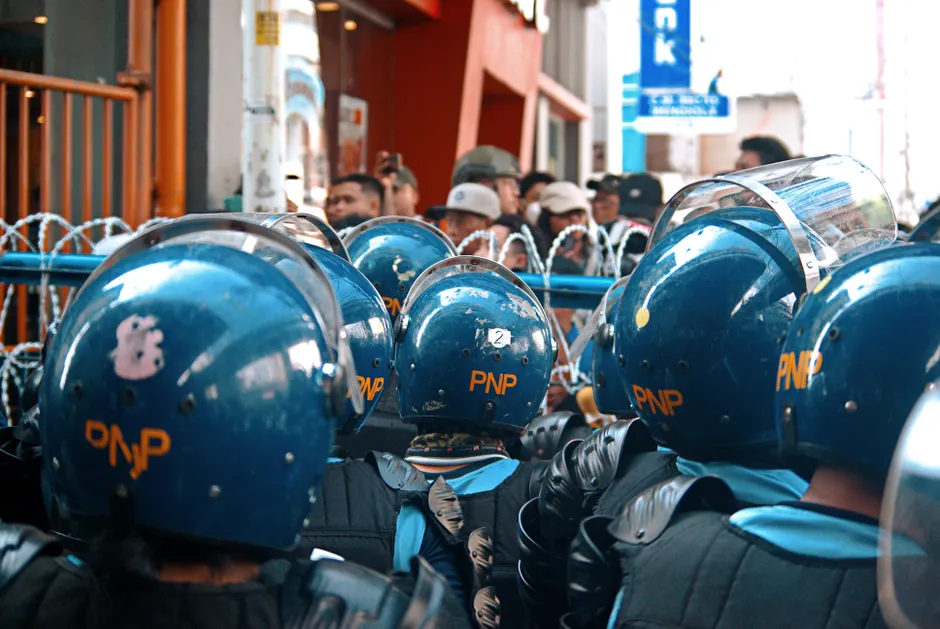
About 200 black-clad men gathered in Portsmouth after 120 asylum seekers rescued from a dinghy were brought ashore there. The Portsmouth group blocked roads and allegedly assaulted several police officers. That mobilisation came a day after hundreds of masked anti-immigration protesters blocked roads leading to Britain's busiest ferry port, an action the U.K. government condemned. New Haven Register
Ports and the Channel
British protesters tried to stop the arrival of migrants from France in early September 2026. Reuters On Sept. 6, 2026, migrants waded through water off a French beach to board an inflatable dinghy to attempt crossing the English Channel to England. Reuters
Those events followed a longer cycle of protest around asylum accommodation. As of Aug. 24, 2025, Britain had seen regular protests in recent weeks outside hotels housing asylum seekers. Reuters
The government described anti-migrant protesters involved in the September port actions as "thuggish." CBC Home Secretary Shabana Mahmood urged police to curb the activities of vigilante groups, telling senior officers to make full use of their powers.
The sequence is now operational as well as rhetorical. Patrols claim a public-protection function. Port blockades disrupt freight and passenger movement. Cross-Channel forays shift the confrontation onto French territory. Police responses are under scrutiny.
The broader context here is a shift from demonstration to enforcement substitution. Hotel protests signal opposition to asylum policy. Patrols, road blockades and dinghy sabotage claims assert a right to enforce it. That distinction matters for how police, prosecutors and local authorities classify conduct, and for how deterrence is calibrated.
Looking at what this means for the state, three pressure points stand out. The first is territorial control at ports. Dover and Portsmouth are chokepoints for trade, travel and emergency response. Even brief blockades impose costs and force police to choose between public order, traffic flow and protection of new arrivals.
The second is bilateral management with France. The ban on 10 Raise the Colours members shows Paris is treating foreign activism on its beaches as a sovereignty issue. Joint work on small boats already requires close operational coordination. Vigilante intervention complicates that coordination and creates parallel risks for migrants, activists and French police.
The third is information infrastructure. The TikTok bans point to the role of short-form video in recruitment, targeting of accommodation sites and after-action publicity. Removal constrains one distribution channel. It does not dismantle organising networks that can migrate across platforms.
For specialists watching the next phase, the variables are enforcement consistency, prosecutorial follow-through and whether port actions remain episodic or become routinised. Mahmood's instruction to senior officers sets an expectation. Kent police's admission of failure to act on Friday evening calls will test it. The count itself, at least 28 new groups in 18 months, suggests the phenomenon is no longer marginal or purely reactive to single landings.