Anthropic Becomes First AI Company to Join Frontier Carbon Removal Coalition

Anthropic has joined Frontier, the advance market commitment coalition for carbon removal, becoming the first AI startup to affiliate with the group, which has now secured $915 million in pledges directed at scaling carbon dioxide removal (CDR) technologies, according to TechCrunch.
Frontier operates as a buyer's collective: member companies pre-commit capital to purchase verified carbon removal at a set price once suppliers can deliver at scale. The mechanism is designed to de-risk early-stage CDR ventures — direct air capture, enhanced weathering, ocean alkalinity enhancement and the like — by guaranteeing demand before unit economics are viable. Stripe, Alphabet, Shopify, and McKinsey are among its existing members; Anthropic's entry marks the first time an AI-native company has signed on.
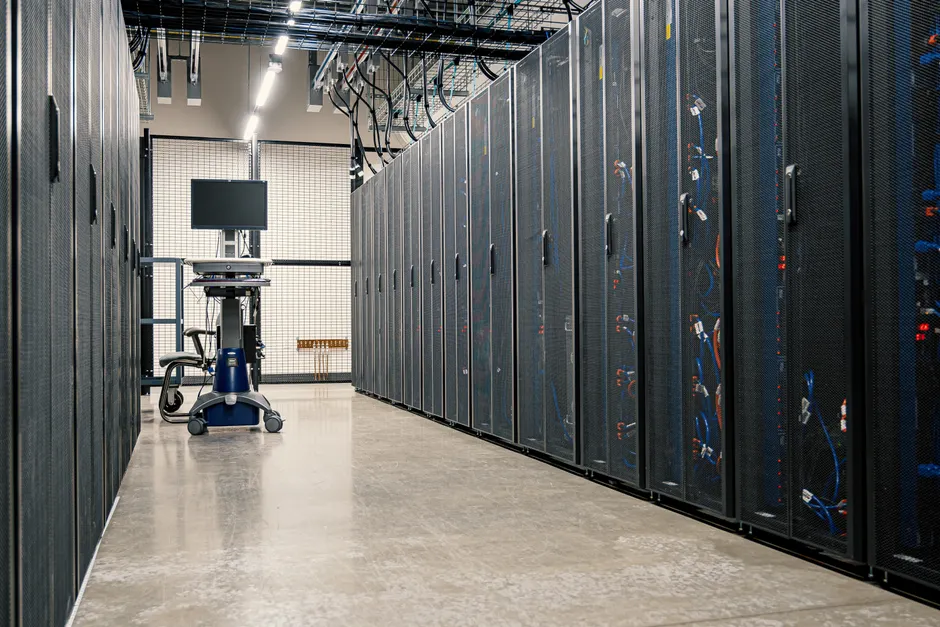
The timing is notable for a straightforward reason. AI infrastructure is among the most energy-intensive workloads in commercial computing. Training large language models and running inference at scale draws heavily on data center capacity, and data centers in turn draw heavily on power grids that are, in many geographies, still substantially fossil-fuelled. The carbon footprint of frontier AI has become an increasingly concrete regulatory and reputational variable for companies in the sector — not an abstraction.
Anthropic's participation does not automatically offset its operational emissions; Frontier commitments fund future removal capacity rather than retire existing credits on a one-to-one basis. The distinction matters. Advance market commitments accelerate supply development for technologies that are not yet cost-competitive, with the expectation that prices fall as the market matures. That is a reasonable long-term bet, but it is a different instrument from purchasing carbon credits tied to verified, already-completed removals.
Worth flagging here: the $915 million aggregate figure represents pledges across all Frontier members, not a sum attributable to Anthropic alone. The size of Anthropic's individual commitment has not been disclosed in the reporting available as of 17 June 2026. Readers should be cautious about conflating the coalition's total fundraise with the new member's specific contribution.
The broader context is that voluntary carbon markets have had a turbulent few years. High-profile investigations found that a significant share of rainforest carbon credits certified by major registries did not represent genuine additionality. That credibility damage has pushed serious corporate buyers toward higher-integrity instruments — and advance market commitments for engineered or enhanced removal, where permanence and measurability are more tractable problems than in nature-based offsets, have attracted renewed interest as a result.
For Anthropic specifically, joining Frontier fits a pattern the company has maintained since its founding: positioning on responsible development not just in the AI safety sense, but across the broader environmental and societal surface area of its operations. Whether that positioning translates into material climate impact depends entirely on how Frontier's portfolio of CDR projects performs over the coming decade — a question the science and engineering communities are still actively working through.
What Anthropic's entry does do, more immediately, is provide a signal to other AI labs. The AI sector has been conspicuously absent from Frontier's member list until now, even as hyperscalers with large AI divisions — Google among them — have participated through their parent entities. A standalone AI company making an explicit, public commitment through this mechanism creates a reference point that peers will be aware of, whether or not they choose to follow.