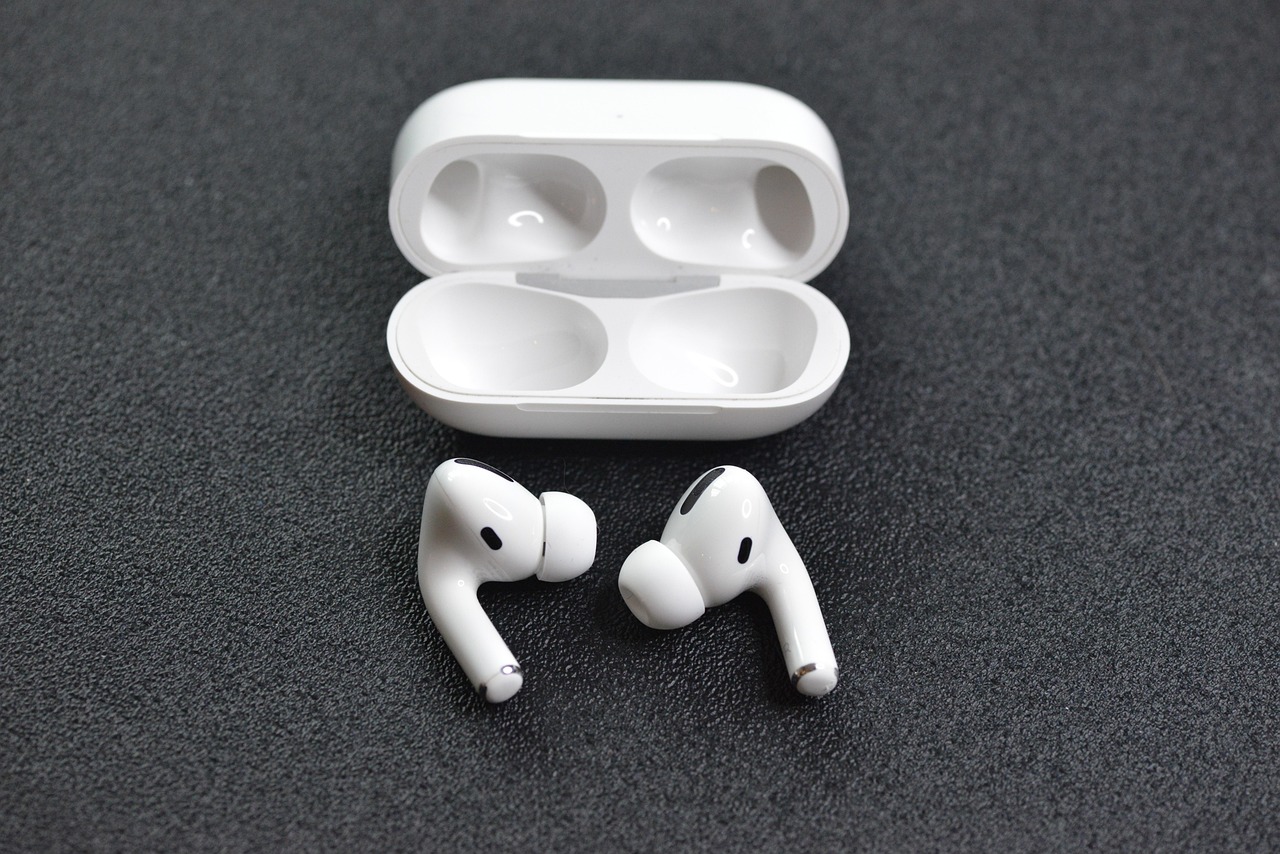
AirPods 5 cut price, keep ANC, add swipe volume to the $149 tier

Apple has replaced the AirPods 4 with ANC with the AirPods 5 with Wireless Charging Case at $149.
The new model keeps an open-ear design without silicone ear tips to form a seal in the ear canal. Noise cancellation is therefore acoustic and computational, not physical. Apple says both AirPods 5 models deliver up to 50 percent better noise cancellation than the AirPods 4 with ANC The Verge.
The $149 price is $30 lower than the AirPods 4 with ANC it replaces. Apple is selling two configurations. The base AirPods 5 is priced at $129, $20 below the Wireless Charging Case version.
The segmentation is functional, not cosmetic. The base model does not have wireless charging or volume controls. The $149 model adds both, and is the first non-Pro AirPods with volume controls on the stem.
That control is implemented as swipe volume. Apple describes the implementation as a force sensor with volume swipe, and describes volume swipe as a first for the open-ear form factor. In practice, users swipe on the stem to adjust level, rather than reaching for the phone or asking Siri.
Both models include active noise cancellation as standard. Both also have adaptive audio and transparency mode. Apple titled its dedicated release "Apple introduces AirPods 5 with best-in-class open-ear Active Noise Cancellation" Apple.
Both models support live translation with an iPhone 15 Pro or later. Processing requirements stay on the phone side. The earbuds act as microphone and near-ear output, which keeps latency and privacy characteristics tied to the paired iPhone rather than the accessory.
Durability moves from IP54 on the AirPods 4 to IP57 on both AirPods 5 models. That is a meaningful step for sweat, rain and dust ingress, particularly for an open design worn during workouts and commuting. Apple also states the AirPods 5 with Wireless Charging Case adds longer battery life, though it has not disclosed a specific hour figure in the materials covered here.
The case itself makes a distinction worth noting for existing Apple owners. It is not MagSafe, but it works with the magnetic Apple Watch charger. Users with a Watch puck can top up without Lightning or USB-C, while users expecting full MagSafe alignment and attachment should not assume it.
Apple published the dedicated AirPods 5 release on Sept. 10 and offered pre-orders starting on the announcement date. The launch sits alongside a broader Newsroom update titled "Get ready to experience iPhone 18 Pro, the new Apple Watch lineup, and AirPods 5".
The broader context here is product-line simplification through subtraction. ANC, adaptive audio and transparency were previously reasons to step up to a higher-priced ANC configuration. Now they are baseline across the AirPods 5 line, and differentiation moves to charging method and on-stem volume.
In this author's view, that is the correct trade to watch. Open-ear ANC will never isolate like a sealed tip, and Apple is not claiming otherwise. The engineering question is how much low-frequency reduction can be maintained without a seal, across varied ear shapes, at lower price and power. A 50 percent improvement claim matters less as a number than as a signal that Apple considers the algorithms and microphones, not the fit, to be the headroom.
Worth flagging for buyers: the $20 gap between models buys everyday convenience, not sound quality. Wireless charging and swipe volume reduce friction over hundreds of small interactions. If those interactions matter in your workflow, the $149 model is the rational default. If the buds live plugged into a wired case and volume lives on the phone or watch, the $129 model preserves the core ANC and translation stack.
Over the long arc, the more durable change may be live translation tied to iPhone 15 Pro or later. Open-ear devices that leave ambient sound in place are well suited to conversation across languages. As on-device translation improves, the earbuds become less of a music accessory and more of a communications interface. That is a quiet expansion of what entry AirPods are for.