Apple Brings Customizable EQ to AirPods Under Next-Generation Apple Intelligence
What Apple Announced
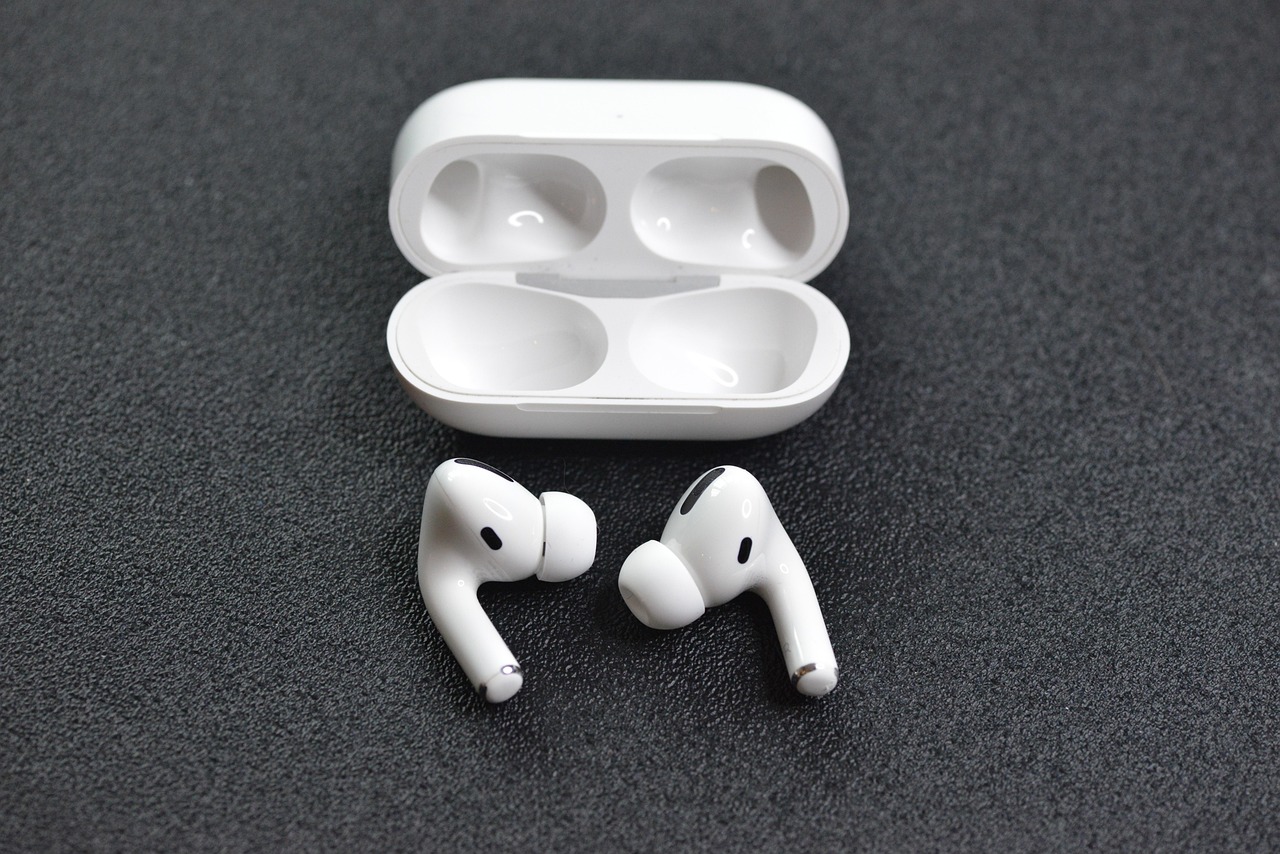
Apple on 8 June 2026 disclosed customizable EQ for AirPods as part of a broader rollout of next-generation Apple Intelligence features, according to Apple's official newsroom. The capability, framed within the company's expanding on-device and cloud AI stack, gives users manual control over frequency response on AirPods — a departure from the historically opaque, algorithmically managed audio pipeline that has defined the product line since its debut.
A Long Road from Adaptive to Customizable
The backdrop matters here. When Apple introduced AirPods Pro in October 2019, Adaptive EQ was one of its headline audio features: a real-time system that measured sound delivered to the ear and adjusted the low- and mid-frequency response accordingly, using inward-facing microphones to continuously tune the signal. It was elegant engineering — but it was entirely closed. Users had no visibility into what the algorithm was doing, no ability to push bass, pull back mids, or shape a profile to their own hearing preferences or listening context.
For nearly seven years, the EQ curve on AirPods has been Apple's to set. The June 2026 announcement ends that arrangement, at least partially.
Where This Sits in the Apple Intelligence Architecture
The customizable EQ feature arrives under the Apple Intelligence umbrella, which means it is entangled with the same infrastructure Apple has been building for on-device ML inference, personalization, and — increasingly — cloud-backed model execution via Private Compute Cloud. The precise implementation details of how EQ personalization is stored, synced, or potentially informed by user behavior models have not been fully disclosed at this stage. What Apple has confirmed is the feature's existence and its positioning as an AI-era capability, rather than a straightforward accessibility or audio settings addition.
That positioning is deliberate. Framing audio tuning as an intelligence feature rather than a settings panel signals that Apple intends more than a static five-band slider. The implication — though Apple has not confirmed specifics — is that machine learning plays a role, whether in suggesting EQ profiles, adapting them to detected content type, or personalizing them over time based on listening habits. The distinction between a dumb EQ control and a learned one matters enormously to how the feature will actually behave in practice.
What Changes for Users and Developers
For end users who are audiophiles, hearing-impaired listeners who rely on specific frequency emphasis, or anyone who has ever wished they could compensate for AirPods' default tuning in a particular environment, the feature is a direct functional gain. AirPods hold a dominant position in the true-wireless earbuds market; customizable EQ at this scale of deployment reaches a user base that dwarfs most dedicated audio hardware ecosystems.
For developers and audio engineers working within Apple's ecosystem, the more significant question is whether Apple exposes any of this EQ infrastructure via APIs. If customizable EQ is surfaced only through system settings, the impact on third-party music, podcast, and spatial audio applications is limited. If Apple opens hooks through Core Audio or a higher-level framework, it changes what is possible for app developers in ways that go well beyond the consumer-facing feature itself. No API announcements have been confirmed alongside this disclosure.
The hearing health angle deserves a separate note. Apple has been steadily positioning AirPods as a hearing health device — the over-the-counter hearing aid functionality cleared with US regulators was a significant step in that direction. Customizable EQ is complementary to that trajectory: a user with mild-to-moderate high-frequency hearing loss who has calibrated a profile to compensate will benefit from EQ persistence across devices and contexts in ways that a fixed adaptive algorithm cannot provide.
The Broader Pattern
We have seen this pattern before. When Apple introduced multi-touch in 2007, it did not initially expose gesture APIs to third-party developers — the capability was real and working, but the ecosystem leverage came later, in stages, as Apple gained confidence in how the primitive would be used and abused. The history of Core ML, ARKit, and HealthKit follows similar arcs: Apple announces a capability, ships it under its own control, then progressively opens it as the surface area is understood. Customizable EQ, arriving under the Apple Intelligence banner, is likely in the early chapter of that same story. The feature itself is the first disclosure; the developer story, if it comes, will be the second.
What Remains Unknown
Several material details have not been disclosed. The specific scope of customization — number of bands, parametric versus graphic EQ, preset management — is unconfirmed. Whether the feature ships to all AirPods models or is restricted to AirPods Pro and above (where the hardware DSP and sensor suite is more capable) is not yet public. The OS version gating, regional rollout schedule, and any dependencies on iPhone model or chip generation are similarly absent from the current disclosure.
These are not trivial gaps. AirPods span a wide hardware range, from the base model through AirPods Pro and AirPods Max, each with different driver configurations and onboard processing capabilities. A customizable EQ that works meaningfully on AirPods Pro's more sophisticated hardware may deliver a substantially different experience — or no experience at all — on older or lower-tier hardware.
The Direction of Travel
What the June 2026 announcement confirms is a directional shift in how Apple thinks about audio personalization. The Adaptive EQ era was about removing a variable — correcting for fit and seal automatically so users did not have to. The customizable EQ era, if Apple executes it well, is about restoring a variable deliberately, giving users agency that the algorithmic approach had quietly absorbed. Whether that agency is meaningful or cosmetic will depend on implementation details yet to be revealed.
Apple's audio hardware roadmap has consistently moved toward treating AirPods as a sensing and computing platform — not merely output devices. Customizable EQ is consistent with that direction, adding a personalization layer that sits logically alongside spatial audio personalization, conversation awareness, and the hearing health features already in market.