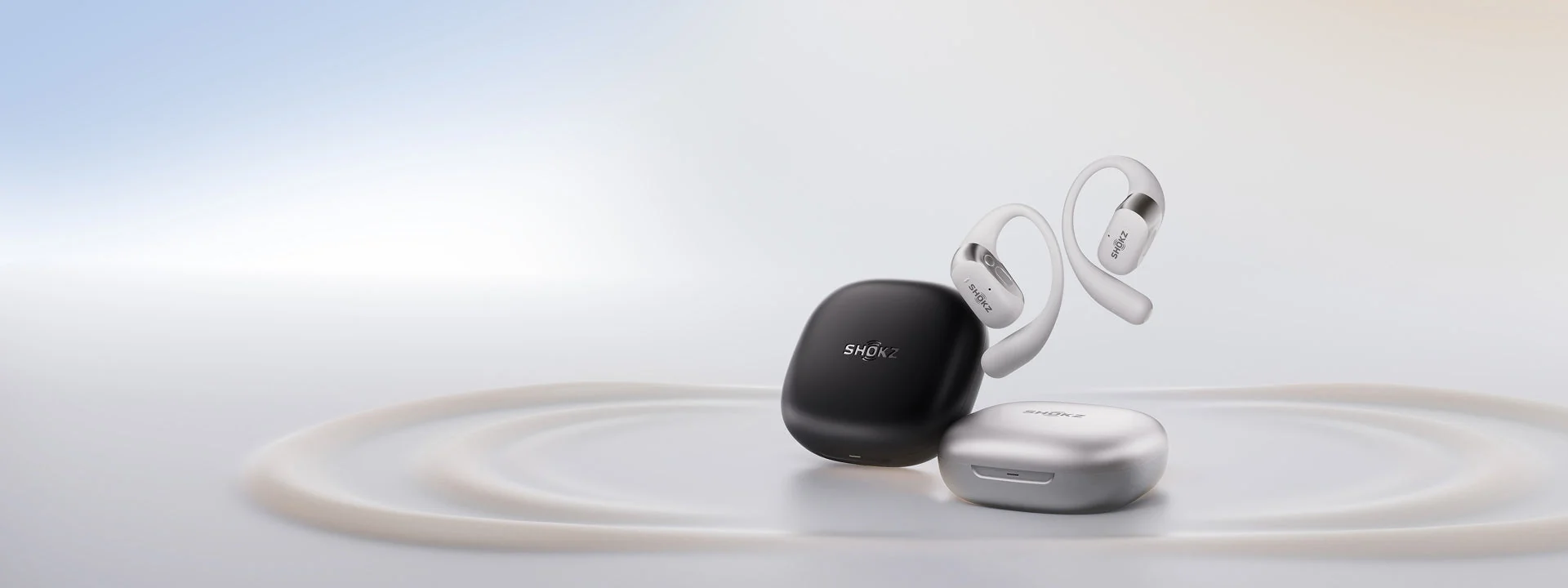
Bose Splits Open-Ear Line With $299 Ultra Open 2nd Gen and $199 Sport Open
Bose announced two open-ear models, the $299 Ultra Open Earbuds (2nd Gen) and the $199 Sport Open Earbuds, with preorders opening September 19 and general availability starting October 1. The Verge
The 2nd Gen Ultra sits at the top of the open line. The Sport Open shares the same preorder and on-sale dates at a $100 lower price. Color options for the Ultra 2nd Gen include black, white smoke, cherry chocolate, olive green, and sky pink. The Sport Open comes in black, white smoke, and eucalyptus green.
On acoustics, the Ultra Open Earbuds (2nd Gen) use a new driver specified for higher volume with automatic adjustments and deeper bass. Bose added a Cinema Mode built on Bose TrueSpatial technology to simulate a wider soundstage while keeping dialogue centered. The wider lineup implementation also includes TrueSpatial head-tracking. SoundGuys
Battery life is one of the concrete deltas. The Ultra 2nd Gen is rated for up to nine hours on the buds alone, up from seven hours on the prior generation. The charging case adds 19.5 hours of playback and can stand upright for wireless charging. Bose also redesigned the case. The buds have no ANC and are designed to let the wearer hear surroundings.
The Sport Open is positioned as the cheaper alternative designed for a secure fit during physical activities. Its battery is rated at up to seven hours plus an additional 22 hours with the wireless charging case. Both the Ultra 2nd Gen and the Sport Open feature AI-driven SpeechClarity voice isolation for calls.
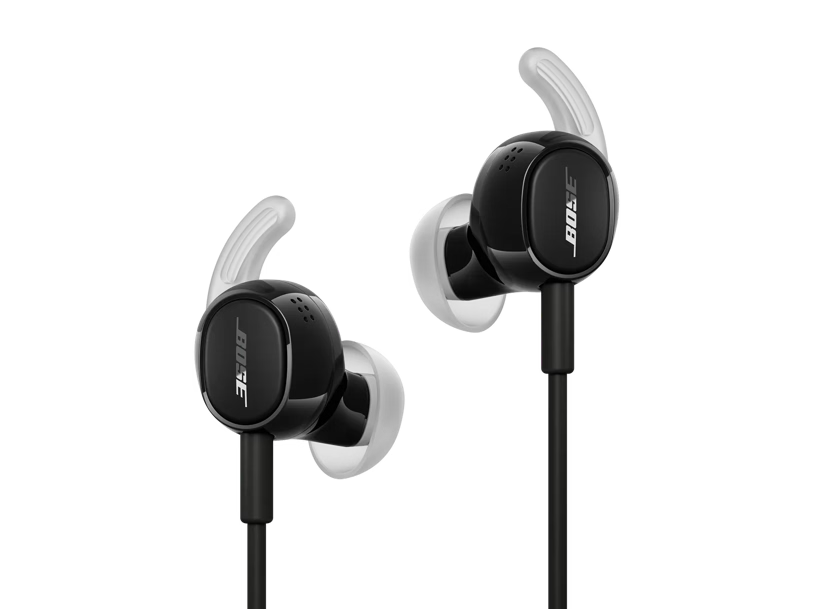
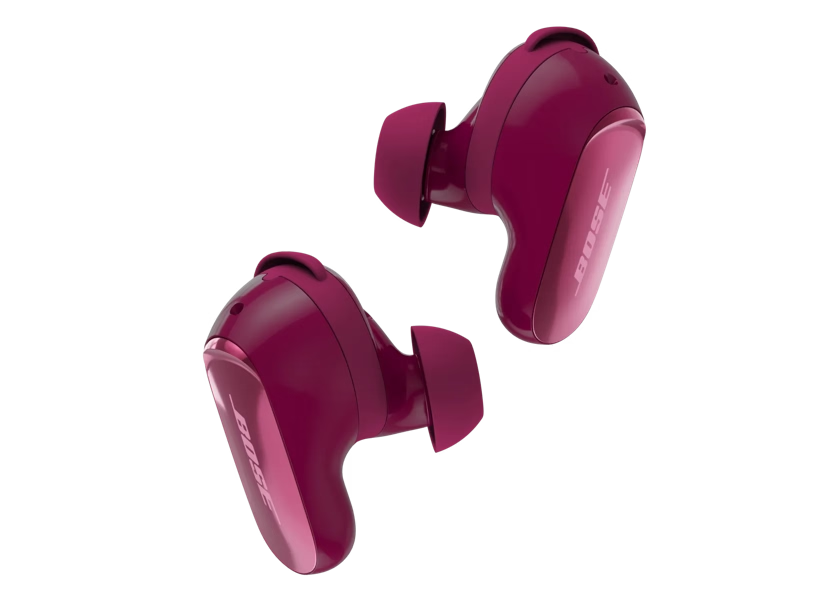
For readers tracking the full Bose earbud range, the distinction is now open versus sealed. The original Ultra Open Earbuds use an open-ear, cuff-like fit intended to combine audio quality and all-day comfort, and Bose lists that model at $199.00, down from $299.00. The sealed alternative is the QuietComfort Ultra Earbuds (2nd Gen), priced at $299 with Bluetooth connectivity, noise cancelling, personalized sound, and all-day comfort, plus Bose Immersive Audio and its own Cinema Mode for theater-like sound. That model is offered in Black, White Smoke, and limited-edition Deep Plum.
The broader context here is straightforward for anyone deploying or supporting earbuds in the field. Open-ear avoids occlusion and preserves situational awareness, which matters for runners, cyclists, and office workers who need to hear a room. The cost is isolation and low-frequency efficiency. In my view, Bose is segmenting that tradeoff explicitly rather than asking one product to cover it. One model pushes driver output, spatial processing, and battery for all-day open wear. The other trims price and prioritizes fit stability for movement, while keeping the same voice-isolation stack and spatial mode across both.
Looking at what this means for buyers, the decision tree is short. Choose open if you need to hear surroundings. Choose sealed QuietComfort Ultra if you need cancellation. Within open, the choice is battery, maximum output, color range, and $100 against a sport-tuned fit. That clarity is useful. Open-ear has matured from a comfort experiment into a parallel product track with its own silicon-level features for beamforming and spatial rendering.