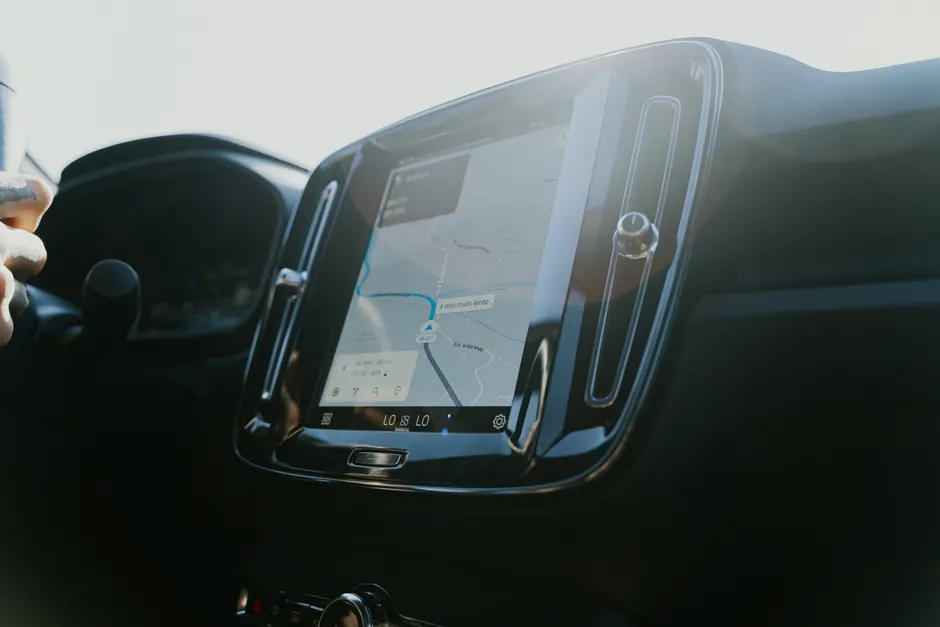
GM Integrates Google Gemini AI Into Vehicle Systems, Leveraging Three Decades of OnStar Infrastructure

GM Integrates Google Gemini AI Into Vehicle Systems, Leveraging Three Decades of OnStar Infrastructure
General Motors announced it will integrate Google's Gemini conversational AI into its vehicles, marking a significant expansion of AI capabilities in the automaker's connected car platform. The integration builds on GM's existing OnStar infrastructure, developed over three decades of connected vehicle operations, to deliver what the company positions as advanced conversational AI to millions of drivers.
Tim Twerdahl, vice president of product management at General Motors, indicated the Gemini integration represents a natural evolution of GM's connected vehicle strategy rather than a wholesale platform replacement. The implementation leverages the foundational connected vehicle architecture GM has refined through OnStar since the system's launch in the mid-1990s.
Parallel Rollout Across Google's Ecosystem
The GM announcement coincides with Google's broader deployment of Gemini across its automotive and mobile platforms. Google's Android Auto platform is simultaneously receiving Gemini integration, with the AI assistant rolling out globally in 45 languages to users who have already upgraded from Google Assistant to Gemini on their mobile devices.
Google is executing a phased migration strategy for its assistant technology. The company plans to upgrade Google Assistant users on mobile devices to Gemini over the coming months, with the classic Google Assistant becoming inaccessible on most mobile devices later this year. This timeline suggests GM's vehicle integration aligns with Google's systematic replacement of its legacy assistant infrastructure.
The automotive rollout follows established patterns for connected vehicle feature deployment. Android Auto users who have already migrated to Gemini on their smartphones can access the enhanced AI capabilities immediately, while the broader integration across GM's fleet will likely follow the automaker's typical over-the-air update schedule.
OnStar as AI Infrastructure Foundation
GM's approach leverages OnStar's established cellular connectivity and cloud services architecture to support Gemini's computational requirements. OnStar's three-decade evolution from emergency services platform to comprehensive connected vehicle system provides the data pipeline, security framework, and update mechanisms necessary for AI assistant deployment at automotive scale.
This infrastructure foundation addresses several technical challenges inherent in automotive AI deployment. Vehicle systems require consistent connectivity across varying network conditions, robust security protocols to protect both personal data and vehicle control systems, and update mechanisms that can handle large model deployments without disrupting core vehicle functions.
The integration also benefits from OnStar's existing natural language processing capabilities, which have been refined through years of voice-activated emergency and concierge services. This operational experience provides GM with baseline understanding of in-vehicle voice interaction patterns and failure modes that purely consumer-focused AI assistants have not encountered.
We have seen this pattern before, when smartphone manufacturers initially struggled to adapt mobile operating systems for automotive environments, eventually learning that vehicle integration requires different assumptions about connectivity, user attention, and system reliability than consumer devices. GM's decision to build on proven infrastructure rather than implementing a greenfield AI deployment reflects lessons learned from those earlier integration challenges.
Technical Architecture and Capabilities
Gemini's integration into GM vehicles operates through the existing OnStar telematics control unit, which manages cellular connectivity and cloud service communication. This approach allows GM to maintain control over critical vehicle systems while enabling AI capabilities that extend beyond basic voice commands to more sophisticated conversational interactions.
The system architecture supports Google's development roadmap for Gemini 2.5 Pro, which the company is working to extend into a world model capable of planning and imagining new experiences. This suggests GM's vehicles may eventually support more complex AI-driven functions beyond current conversational query capabilities.
Current implementation appears focused on natural language interaction for vehicle functions, navigation queries, and information requests. The OnStar foundation provides access to real-time vehicle diagnostics, location services, and emergency response capabilities that can inform AI responses with vehicle-specific context.
Market Positioning and Competitive Context
The timing of GM's Gemini integration reflects broader industry movement toward AI-enhanced vehicle experiences. Traditional automotive suppliers and technology companies are competing to establish AI assistant platforms as standard vehicle features, particularly as electric vehicle adoption accelerates and software differentiation becomes more critical.
GM's approach differs from competitors implementing custom AI solutions or partnering with multiple AI providers. By standardizing on Google's Gemini platform, GM gains access to Google's continued AI development while potentially simplifying integration complexity compared to multi-vendor approaches.
The integration also positions GM vehicles within Google's broader ecosystem strategy, which includes Android Auto, Google Maps navigation, and various Google services. This ecosystem approach may provide competitive advantages in markets where Google services have strong adoption, while potentially creating dependencies on Google's technology roadmap and business decisions.
Looking at what this integration enables, GM drivers will have access to conversational AI capabilities that extend beyond traditional voice commands to more natural language interactions. The OnStar infrastructure foundation suggests these capabilities can be enhanced over time through over-the-air updates, allowing GM to deploy new AI features without requiring hardware changes.
The broader automotive industry will likely monitor GM's implementation for lessons about AI integration challenges, user adoption patterns, and operational reliability at scale. Success could accelerate similar partnerships between automakers and AI platform providers, while implementation difficulties might slow industry adoption of conversational AI in vehicles.