Afghan Women Build Businesses in the Margins the Taliban Left Them
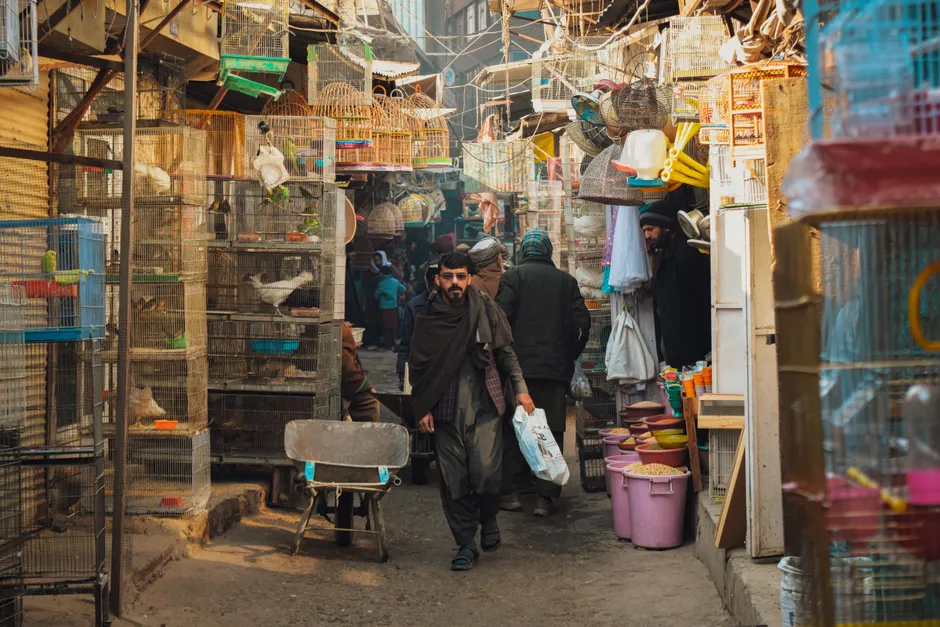
Afghan women, stripped of access to universities since December 2022 and secondary schools since September 2021, have carved out an informal economy in the space those bans left behind — running small businesses from their homes, navigating a patchwork of regional Taliban tolerance that determines whether a woman's enterprise survives or is shuttered.
The scale of exclusion is not marginal. UN Women reports that the university ban alone affected more than 100,000 young women. Nearly eight in ten young Afghan women are now locked out of education, employment, and vocational training simultaneously, according to UNICEF. Civil service positions, which once provided a formal and relatively protected employment path, are gone. The Taliban's sectoral bans have systematically dismantled the institutional routes Afghan women spent two decades building.
What has emerged in their place is an informal, home-based economy — one that Crisis Group documented in March 2026 as both resilient and precarious. Women are running tailoring workshops, food production operations, and handicraft businesses from domestic spaces precisely because the home sits in a regulatory grey zone that Taliban enforcers have not uniformly policed. Operating invisibly is the strategy. Visibility, in most provinces, is the risk.
A Geography of Tolerance
The Taliban are not monolithic on this. Crisis Group's March 2026 analysis makes clear that enforcement varies significantly by region — a woman running a small business in one province may face no interference, while her counterpart in another faces closure or worse. This unevenness is not incidental; it reflects the decentralized character of Taliban governance, where provincial governors and local commanders exercise discretion that Kabul's edicts do not fully override.
Reuters reported in April 2024 that female-led businesses had already become an economic lifeline for many Afghan women, but access to capital remained a structural ceiling. Microfinance, which was expanding in Afghanistan before August 2021, has contracted sharply under the Taliban, and Islamic finance instruments — theoretically compatible with Taliban governance — have not filled the gap at scale. Women operating informally cannot easily access formal credit, register their enterprises, or enforce contracts. The business exists; the legal infrastructure around it does not.
The Compounding Cost
UNICEF projects that if current restrictions hold, Afghanistan could lose more than 25,000 female teachers and health workers by 2030. That figure reframes the entrepreneurship story: women building home businesses are managing immediate survival, but the structural loss accumulates in sectors — education, healthcare — where female professionals are not optional extras but functional necessities in a society where gender segregation limits men's access to women patients and students.
UN Women notes that even before the Taliban's secondary school ban took effect in September 2021, nearly 30 percent of Afghan girls were already excluded from education — a baseline that reflects decades of underfunded rural schooling and security disruption. The post-2021 bans landed on a system already carrying significant exclusion. What has changed is the deliberate, policy-driven character of that exclusion, applied universally rather than unevenly by geography or economic circumstance.
The informal economy Afghan women have built is real and, in places, commercially meaningful. It is also structurally capped. Without access to formal finance, legal recognition, or the educational credentials that build human capital over time, the ceiling on what these enterprises can become is low. A generation of Afghan women is acquiring entrepreneurial experience while simultaneously being denied the technical and professional formation that would let them deploy it at scale.
Whether the Taliban's regional variation on women's economic activity represents a durable operational norm or simply inconsistent enforcement is a question international monitors have not resolved. What Crisis Group's fieldwork suggests is that women themselves have resolved it pragmatically: they operate where they can, as quietly as they can, in a system that tolerates them until it decides not to.


