Comrades Marathon: The Impaling Survivor Who Gave His Medal to His Surgeon
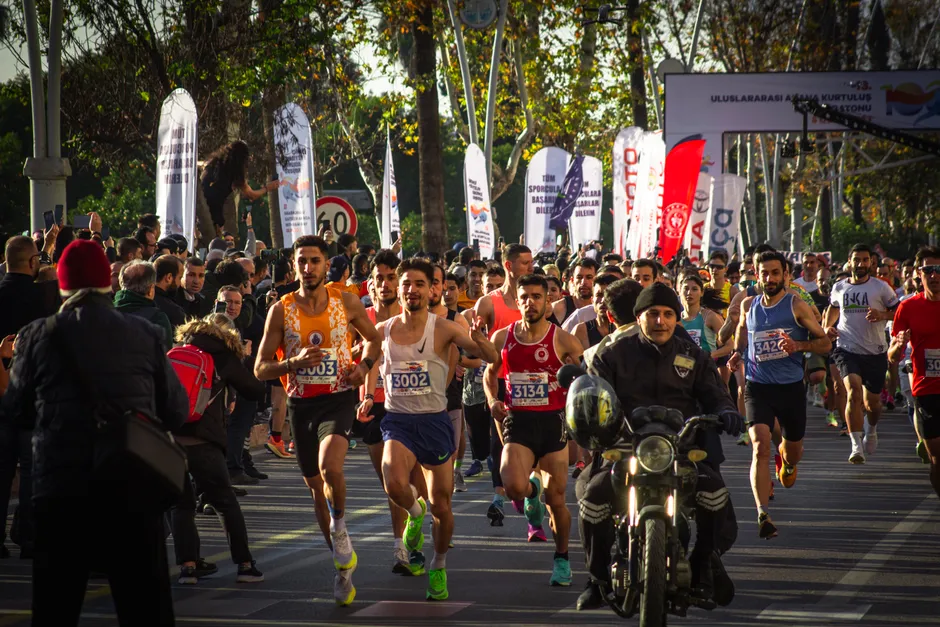
A South African man who was impaled in 2015 completed the Comrades Marathon and handed his finisher's medal to the surgeon who saved his life — a gesture that cuts to the marrow of what the race, now approaching its centenary, means to those who run it.
The runner had set himself a precise target: 10 hours and 54 minutes, the exact time he posted when he first completed Comrades before the accident. That specificity matters. Comrades finishers are sorted into medal categories by time — Bill Rowan, Robert Pearson, Vic Clapham — and matching a pre-injury personal best is not sentiment dressed as ambition. It is a measurable, documented benchmark against which the body's recovery can be held.
The 2015 impaling left the nature and extent of his injuries a matter of record rather than metaphor. Surviving such trauma to return to an ultramarathon of this distance — roughly 89 kilometres between Durban and Pietermaritzburg — requires not only surgical intervention but years of rehabilitation, structured training, and the kind of stubbornness that Comrades tends to select for. The medal went to his surgeon. The time, if he hit it, went into the results ledger.
The Race and Its Architecture
The 97th edition of Comrades, run on Sunday, 9 June 2024, was an Up Run — the direction matters here. The course alternates annually between an Up Run (Durban to Pietermaritzburg, net elevation gain of approximately 1,800 metres) and a Down Run. The 2024 edition started at Durban City Hall at 05h30 with the standard 12-hour cutoff; crossing the finish line after the gun fires at 17h30 renders a runner a non-finisher regardless of the distance covered. That binary is one of the event's defining features: there are finishers and there are not.
The 2026 edition, the 99th running of Comrades, is scheduled for Sunday, 14 June 2026 — again an Up Run, per the Comrades Marathon Association. The centenary edition in 2027 will draw its own weight of expectation, but 2026 carries the pressure of the penultimate milestone.
Why the Medal Story Holds
The act of giving a finisher's medal to a surgeon is unusual enough to be newsworthy, but its significance is structural, not merely emotional. Comrades medals are non-transferable in any formal sense — they are awarded to the runner, registered under their race number, catalogued in a results database that stretches back to 1921. To hand one over is to make a private statement with a public object.
For the surgical community, moments like this carry a different resonance. Trauma surgeons operating in South Africa work within a public health system under chronic resource pressure; a patient returning — ambulatory, trained, competitive — to complete one of the world's most demanding ultras is as close to an outcome metric as the human dimension of medicine gets.
The runner's decision to target his pre-injury time, rather than simply finish, also speaks to a psychological architecture that sports medicine practitioners recognise: full recovery defined not as absence of injury but as return to prior performance. Whether he achieved 10:54 is not confirmed in the available record, but the goal itself is the statement.
Comrades has always attracted stories of this kind — the race's 12-hour window is long enough to accommodate almost any pace, and its history since Vic Clapham founded it in 1921 as a memorial to fallen soldiers of the First World War runs thick with narratives of endurance against odds. The impaling survivor's account fits that tradition without requiring embellishment. The facts, on their own, are enough.


