Tesla Driver Claims Autopilot Was Active When Vehicle Struck Texas Home, Killing Resident
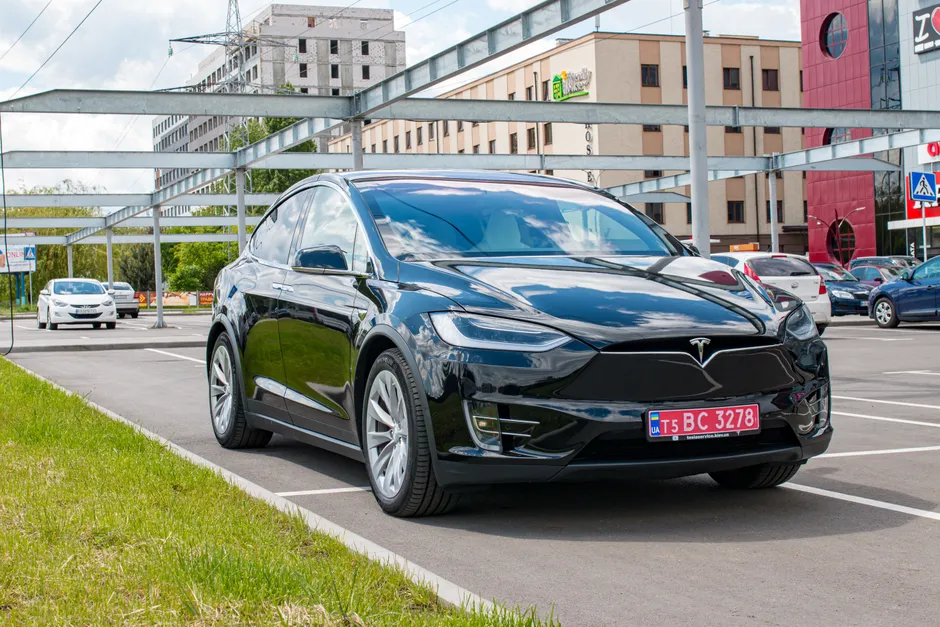
Tesla Driver Claims Autopilot Was Active When Vehicle Struck Texas Home, Killing Resident
A 76-year-old woman was killed after a Tesla crashed into her home in Katy, Texas on a Friday night, with the driver telling investigators the vehicle was operating on Autopilot at the time, according to ABC News. The Harris County Sheriff's Office is leading the investigation.
Few details have been released publicly about the sequence of events leading up to the collision. What is established: the vehicle left the roadway, penetrated the structure, and a woman inside the home died as a result. Whether the driver's Autopilot claim will be borne out by vehicle data — Tesla's onboard systems log engagement status, speed, steering torque, and driver input — is a question investigators will now pursue.
That data trail is central to how these cases get resolved, or don't. Tesla's event data recorder and its proprietary logs have featured in prior NHTSA investigations and civil litigation, sometimes corroborating driver accounts, sometimes contradicting them. The National Highway Traffic Safety Administration has been scrutinizing Tesla's driver-assistance features for years, with a succession of probes and recalls tied to Autopilot and the separately marketed Full Self-Driving suite. None of that history constitutes evidence about this specific incident, but it does explain why the driver's claim will be treated as a hypothesis to test rather than a fact to accept.
The terminology matters here. Tesla's "Autopilot" is a Level 2 driver-assistance system under SAE's classification framework — it handles longitudinal and lateral control within defined operating conditions but requires continuous driver supervision and the physical and cognitive ability to intervene. It is not autonomous driving. Tesla has consistently maintained, in its own documentation and in legal proceedings, that drivers must remain attentive and ready to take control at any moment. Whether the driver in Katy was doing so is unknown at this stage.
Worth flagging: the framing of "the vehicle was on Autopilot" as a causal explanation rather than a factual description has become a recurring feature of post-crash accounts, and it consistently generates significant public attention before investigators have had time to examine the underlying data. That pattern does not imply this driver is being dishonest. It does mean the claim deserves the same evidentiary scrutiny applied to any driver's account of what happened in the seconds before a crash.
For the Harris County Sheriff's Office, the immediate investigative priorities are likely to include vehicle black-box extraction, roadway geometry and speed data, and any available surveillance or dashcam footage. If NHTSA's Special Crash Investigation team designates this incident for federal review — which the agency has done routinely with crashes involving claimed automation engagement — Tesla will be required to cooperate with data disclosure.
The victim's identity had not been publicly released as of reporting. A person was inside their home and did not survive. That is the irreducible human fact at the center of this story, whatever the technical findings ultimately establish about the vehicle's operating state.
Crashes where a car breaches a structure are statistically rare but not unprecedented, and they expose a particular vulnerability: a home is not designed as a barrier to an automobile traveling at speed, and the people inside have no warning and no ability to respond. The question of whether driver-assistance technology contributed to or failed to prevent this outcome is legitimate and important. It cannot be answered from a driver's statement alone.


