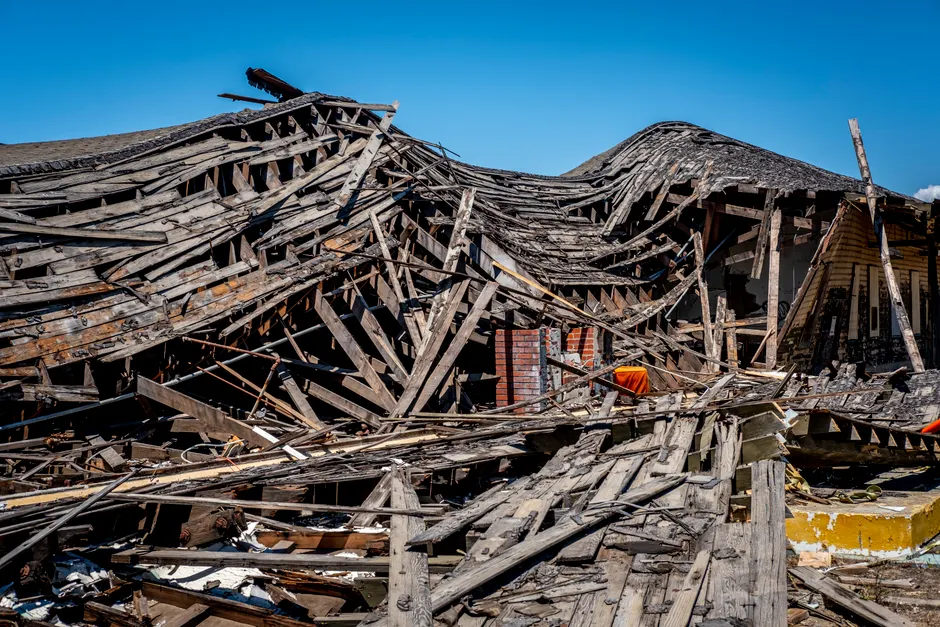
Two Killed as Tornado Cuts Through Mount Vernon, Illinois, Destroying Hundreds of Homes

A tornado killed at least two Jefferson County residents and damaged or destroyed 300 homes and 50 businesses in Mount Vernon, Illinois, on June 11, 2026, as part of a broader outbreak that produced multiple strong tornadoes across Northern Illinois and Northwest Indiana.
Southern Illinois Now identified the victims on June 22 as Delores Shelton, 83, and Sarita Kimble, 62, both Jefferson County residents. Authorities had not released additional fatality figures at time of publication.
The tornado struck the southeast half of Mount Vernon — a city of roughly 15,000 that serves as Jefferson County's commercial hub — and remained on the ground for approximately 20 miles, according to National Weather Service records. That track length places it well above the median for Illinois tornadoes and is consistent with a significant mesocyclone event rather than a brief, terrain-disrupted touchdown. With 50 businesses damaged or destroyed alongside 300 residences, the economic footprint concentrates heavily in the city's southeastern commercial corridors — a geographic signature that will complicate recovery timelines, since commercial rebuilding typically draws on different funding streams than residential assistance and moves more slowly through the insurance and permitting pipeline.
The June 11 outbreak was not an isolated cell. NWS data places it among a cluster of strong tornado events that swept Northern Illinois and Northwest Indiana the same day, a pattern consistent with the late-spring severe weather regime that regularly develops when Gulf moisture surges northward ahead of an upper-level trough. For communities across the affected corridor, the challenge is now triage: identifying which structures are repairable versus total losses, establishing temporary housing pipelines, and securing federal disaster declarations that unlock FEMA's Individual Assistance and Public Assistance programs.
Mount Vernon's position in deep Southern Illinois matters for the recovery calculus. The region carries a higher share of fixed-income and elderly residents than Illinois's urban centers — a demographic reality underscored by the ages of the two confirmed fatalities. Tornado sheltering compliance and structural vulnerability in older housing stock are persistent risk factors in communities where median home values and construction vintages lag state averages. Jefferson County emergency managers will be coordinating with the Illinois Emergency Management Agency, and any federal major disaster declaration request will move through the governor's office to FEMA Region 5 in Chicago.
For the insurance and reinsurance market, a 300-home, 50-business loss footprint in a mid-sized Midwestern city is a meaningful but not catastrophic single-event exposure. The more consequential variable is whether the June 11 outbreak aggregate — spanning multiple counties across two states — crosses industry loss thresholds that trigger catastrophe bond or retrocession structures. That aggregate picture will sharpen over the coming weeks as carrier loss estimates are compiled and cross-referenced with NWS damage surveys.
The immediate human priority is the two confirmed dead. Delores Shelton and Sarita Kimble are names that will recede from the news cycle quickly; the policy and infrastructure questions will persist for months.