Al Jazeera Cameraman Ahmed Wishah Killed in Israeli Strike on Bureij Refugee Camp
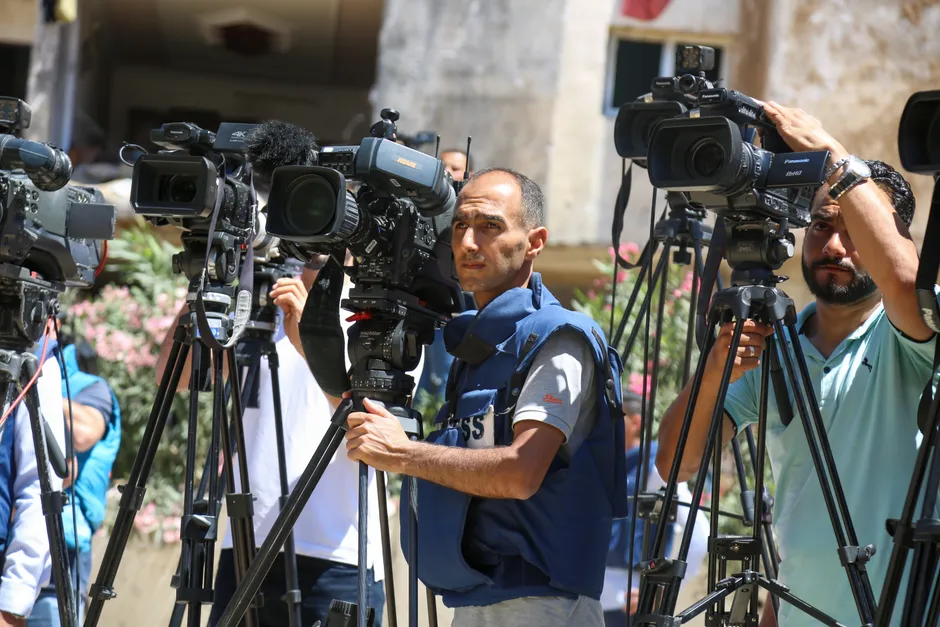
Ahmed Wishah, a cameraman for Al Jazeera, was killed in an Israeli airstrike on a house in the Bureij refugee camp in central Gaza, according to The Guardian. Al Jazeera reported that two other people died alongside him in the strike. The network described the attack as targeted.
Israel put forward accusations against Wishah following his death. Al Jazeera rejected those accusations outright, characterising them as a post-hoc attempt to justify the killing of a working journalist, Le Monde reported. The network's response followed a pattern it has employed after each of its staff members has been killed in Gaza — a flat denial of Israeli characterisations, often accompanied by calls for independent investigation.
A Documented Pattern of Journalist Deaths
Wishah's death is the latest in a sequence of Al Jazeera staff fatalities in Gaza that the network and press freedom groups have consistently framed as targeted rather than incidental. Cameraman Samer Abu Daqqa was killed in an Israeli drone strike on the Farhana School in Khan Yunis, Reuters reported. Reporter Ismail al-Ghoul and cameraman Ramy El Rify were killed in a strike on July 31, 2024. Most recently before Wishah, Al Jazeera correspondent Anas al-Sharif was killed in an Israeli strike — Al Jazeera called it an assassination — according to the Associated Press, which dated the report to August 12, 2025.
Al Jazeera is not alone in sustaining casualties. Reuters cameraman and contractor Hussam al-Masri was killed near a Reuters live broadcasting position on an upper floor of a Gaza hospital in an Israeli strike, Reuters itself reported. The cumulative toll across outlets has no modern parallel in a conflict of this duration.
The Accountability Gap
Israel's standard posture has been to assert that killed journalists were operatives or combatants — a claim that shifts the legal classification of the strikes from potential violations of international humanitarian law's protection of civilians to lawful targeting. Al Jazeera, and in the Reuters case the wire service itself, categorically dispute those characterisations. No internationally independent forensic investigation has yet produced binding findings.
The absence of accountability architecture matters here. Gaza's operating environment has prevented the kind of on-the-ground crime-scene documentation that typically underpins International Criminal Court proceedings. The ICC, which has an open investigation into the situation in the State of Palestine, faces persistent evidentiary and jurisdictional obstacles. Without verified site access, the competing narratives — Israeli military necessity versus deliberate targeting of press — remain in suspension.
West Bank: Parallel Pressures
While the camera has been pointed at Gaza, the West Bank has undergone material legal changes. On February 8, 2026, Israel's security cabinet adopted a series of decisions on land registration in the occupied West Bank, Arab Center DC reported. Al Jazeera reported separately that new Israeli rules easing illegal settlement expansion had been approved, with Palestinians describing the cumulative effect as de facto annexation. Israel also seized administrative control of a mosque in Hebron from Palestinian authorities; the city's mayor warned that such unilateral changes breach existing agreements.
Settler violence has accompanied these administrative moves. Israeli settlers torched and defaced a mosque in a Palestinian village in the central West Bank in November 2025, PBS NewsHour reported. A 2023 U.S. State Department human rights report recorded 509 Palestinian deaths attributable to Israeli security forces and settlers in the West Bank — a figure that predates the current escalation cycle. The Palestinian Authority, for its part, has issued death sentences for collaboration with Israel, drawing its own human rights criticism from the same State Department report.
The convergence of events — journalists killed in Gaza, land facts being established in the West Bank — reflects two tracks of a single conflict running simultaneously. The press freedom dimension of Wishah's death will likely generate immediate condemnations from the Committee to Protect Journalists and Reporters Without Borders, as previous killings have. Whether those condemnations translate into any change in Israeli operational conduct has, so far, not been established.