Trump Calls Xi Talks 'Very Productive' as AI Dominates Washington Summit

U.S. President Donald Trump described his talks with Chinese President Xi Jinping as "very productive" on September 25, 2026, as Xi's state visit to Washington, D.C. entered its final day. Al Jazeera
In a Truth Social post on Friday, September 25, Trump wrote that "Tremendous things will be happening" after the meetings. The trip was Xi's first visit to the United States in more than a decade. Trump was scheduled to take Xi to the U.S. National Archives, home to the Declaration of Independence, U.S. Constitution and Bill of Rights, before the three-day visit concluded.
Protocol and pageantry
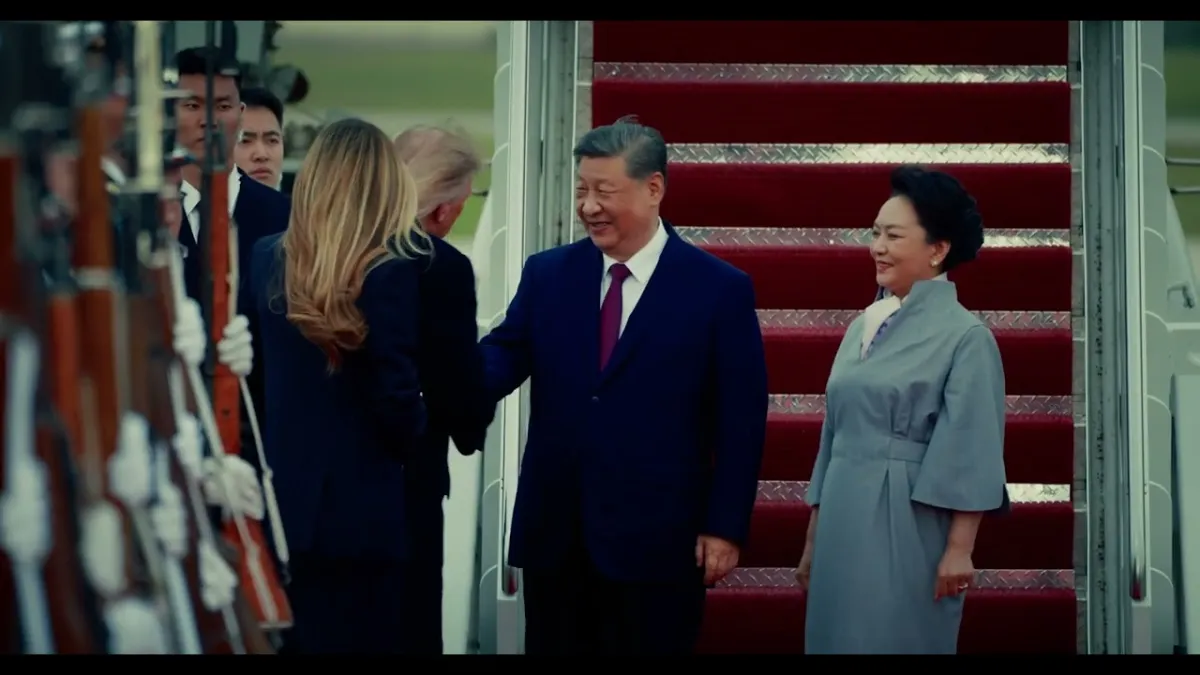
Trump hosted a grand ceremony at the White House to welcome Xi, and gave him a helipad tour during the visit. The state dinner on Thursday, September 24, drew Amazon's Jeff Bezos and Tesla head Elon Musk, with Musk seated at the main table alongside Trump and Xi. First Lady Melania Trump released details of the dinner with Xi and Madame Peng Liyuan. On September 24, the first lady and Peng visited the Smithsonian National Museum of Asian Art highlighting Sino-American artwork, culture, and the next generation. Xi delivered toast remarks in Washington on September 24 addressed to President Donald J. Trump and Mrs. Melania Trump.
The choreography was deliberate. No breakthroughs were announced. Chinese Foreign Ministry spokesperson Guo Jiakun had said before the meetings that Xi would have an in-depth exchange of views with Trump on major issues concerning bilateral ties and world affairs.
Trade, AI and Taiwan were discussed in the September talks, according to U.S. accounts of the agenda. Treasury Secretary Bessent called the trade and AI discussions 'very successful'. On Thursday, September 24, Trump had said in a Truth Social post that AI would be a "big topic of discussion" in his White House meeting with Xi. AP
AI at the center
Trump said artificial intelligence was emphasised in the talks and claimed Xi favoured calling it "SUPER INTELLIGENCE". Trump had told the United Nations General Assembly in the week of September 22 that the United States would rename artificial intelligence "super intelligence" in all U.S. government documents.
Xi said during the Washington visit that China and the United States should make sure AI is 'always under human control'. AP
U.S. Trade Representative Jamieson Greer said on September 25 that creating channels of communication on AI is one of the main challenges Washington and Beijing are seeking to overcome. Greer said another meeting on AI between U.S. and Chinese representatives is planned within the next month. Washington and Beijing planned to continue discussions on AI and technology transfer licensing after the state visit.
Greer said the September talks did not cover the sale of a small amount of high-quality U.S.-made chips requiring licences, describing them as the "crown jewels of American technology". The September meetings produced no major breakthroughs on trade or AI safety. Reuters had reported on September 16 that the race for AI supremacy was set to hang over the following week's meeting, and reported on September 24 that the summit welcoming Xi was heavy on symbolism but light on substance. Reuters
The broader context here is management of rivalry rather than resolution of it. For specialists, the operative signals are procedural, not declaratory. A follow-on AI meeting within a month and a standing commitment to continue technology transfer licensing talks create a working cadence. That matters because export-control regimes and AI governance frameworks diverge sharply, and sustained technical channels reduce miscalculation even when political narratives diverge. The chip carve-out is equally telling. By publicly excluding licensed high-end chips from the discussion, Washington preserved its leverage while keeping non-sensitive trade moving.
Backstory from the spring
The September visit followed Trump's 2026 visit to China, the first visit of a U.S. president to China since 2017. The two sides had then agreed the United States and China should build a constructive relationship of strategic stability on the basis of fairness and reciprocity. Trump had agreed to welcome Xi for a visit to Washington in fall 2026. The two countries also agreed to support each other as the respective hosts of the G20 and APEC Summits in 2026. White House
That spring package included geopolitical understandings. Trump and Xi agreed that Iran cannot have a nuclear weapon. They called to reopen the Strait of Hormuz. They agreed that no country or organization can be allowed to charge tolls. They confirmed their shared goal to denuclearize North Korea.
On institutional architecture, Trump and Xi chartered the U.S.-China Board of Trade and the U.S.-China Board of Investment. The Board of Trade will allow the U.S. and Chinese governments to manage bilateral trade across non-sensitive goods. The Board of Investment will provide a government-to-government forum for discussing investment-related issues.
China agreed to address U.S. concerns regarding supply chain shortages of rare earths and other critical minerals, including yttrium, scandium, neodymium, and indium. It also agreed to address U.S. concerns regarding prohibitions or restrictions on the sale of rare earth production and processing equipment and technologies.
China approved an initial purchase of 200 American-made Boeing aircraft for Chinese airlines. That was China's first commitment to purchase American-made Boeing aircraft since 2017. China agreed to purchase at least $17 billion per year of U.S. agricultural products in 2026 (prorated), 2027, and 2028, in addition to soybean purchase commitments made in October 2025. China restored market access for U.S. beef by renewing expired listings of more than 400 U.S. beef facilities and adding new listings, agreed to work with U.S. regulators to lift all suspensions of U.S. beef facilities, and resumed imports of poultry from U.S. states determined by the USDA to be free of highly pathogenic avian influenza.
Looking at what this means for the next phase, the September summit locks in the fall-2026 visit promised in the spring and tests whether the boards and purchase commitments can function alongside unresolved AI safety and licensing questions. The summit was also expected to cover trade, investment, AI, the war with Iran, and Taiwan. Progress will be measured in whether the promised AI meeting occurs on schedule and whether licensing discussions produce written terms.