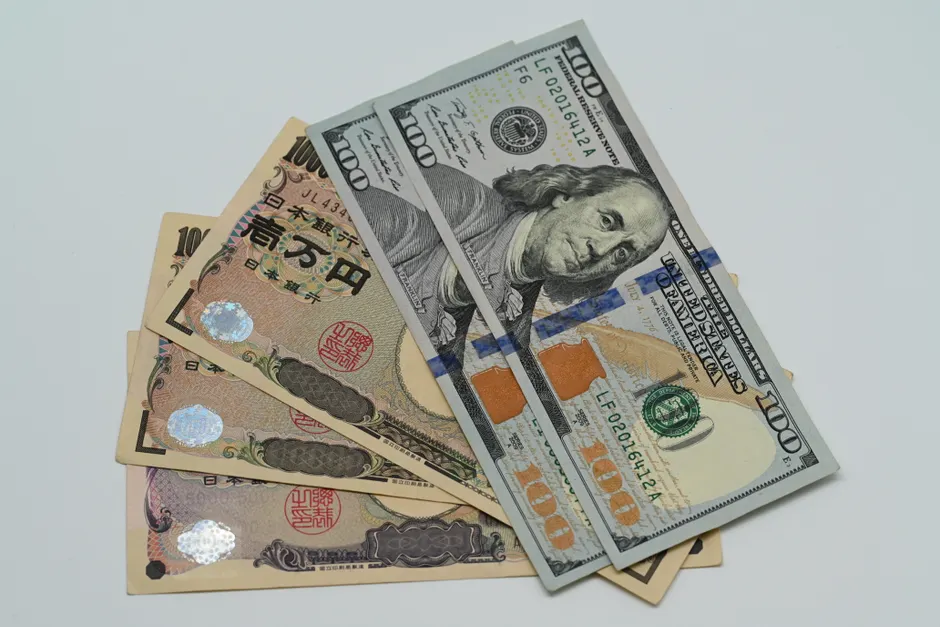
Bessent, Katayama Put Yen Undervaluation on Record After Sept. 25 Call

Japan Finance Minister Satsuki Katayama and U.S. Treasury Secretary Scott Bessent agreed in a Sept. 25 conference call that undervaluation of the yen is a matter of concern. Ministry of Finance
Bessent later said he and Katayama discussed the desirability of a strong yen that reflects Japan's strong economic fundamentals. Bloomberg The language goes further than the prior joint formulation from the Aug. 31 Japan-U.S. finance ministerial meeting, where the Ministry of Finance readout said maintaining an orderly yen market is essential for the stability of global financial markets.
That Aug. 31 meeting had produced an agreement to continue coordinating to achieve orderly yen moves crucial for global market stability. Reuters The two sides had previously agreed that excess foreign-exchange volatility is undesirable, following their meeting on May 12. The September readout keeps the coordination pledge but adds an explicit directional judgment on valuation.
The level matters. The dollar stood at 159.75 yen on Aug. 31, close to the 160 mark seen as heightening the chance of yen-buying intervention. Reuters On that same day, Bessent said he believes Japan will take action leading to a stronger yen. The yen had briefly weakened to around 161.9 late on Monday, as reported on June 22. Japan spent a record 11.7 trillion yen ($72.44 billion) intervening in foreign exchange markets, according to that June report.
Washington's pressure has operated through fiscal and monetary channels as well as exchange-rate language. Sources said Bessent repeatedly urged Japan to tighten fiscal policy and raise Bank of Japan interest rates. Reuters Katayama declined to say whether Bank of Japan policy was discussed with Bessent after their May meeting. Japan also said U.S. President Donald Trump voiced concern over the weak yen in his summit with Prime Minister Takaichi. Reuters
The September call fits a steady sequence of bilateral contact. Bessent shared with Katayama his strong confidence in the U.S.-Japan alliance, according to an Oct. 28, 2025 Treasury readout. He convened a finance ministerial meeting that included Katayama on Jan. 12, and thanked Katayama for Japan's leadership on energy and financial issues after talks on April 16, according to Treasury readouts of those meetings.
The broader context here is a shift from process language to valuation language. Orderly moves and excess volatility are standard G7 formulations. They commit both sides to calm conditions without endorsing a level. Undervaluation as a matter of concern, plus desirability of a strong yen reflecting fundamentals, narrows Tokyo's room to tolerate depreciation. It also puts the policy mix in focus, with Washington linking currency strength to fiscal restraint and tighter domestic monetary conditions.
In my view, desks will read this as coordinated cover for action near 160 rather than a precise trigger. The Aug. 31 pricing around 159.75, the earlier print near 161.9, and the reference to record intervention spending frame the tolerance band without defining it. Coordination to achieve orderly moves leaves discretion on timing and tool, whether Ministry of Finance intervention, Bank of Japan policy, or fiscal signals. The risk for pricing is asymmetry. Further weakness invites a joint statement followed by operation. Strength consistent with fundamentals draws no objection.