France Confirms First Imported Ebola Case as DRC Outbreak Reaches 710 Confirmed Infections

France's Ministry of Health confirmed on June 24, 2026, the first imported case of Ebola virus disease (EVD) on French soil — a humanitarian physician who had returned from a field mission in the Democratic Republic of Congo. The confirmation, announced by the Ministry, marks the first time the current DRC outbreak — driven by the Bundibugyo species of Ebola — has produced a confirmed case within a high-income country.
The domestic case sits within a rapidly evolving epidemic. By June 14, the DRC had recorded 710 confirmed cases and 149 deaths, according to Reuters, up from 676 confirmed cases reported just three days earlier when a government report noted spread into three new health zones. WHO had recorded 321 confirmed cases and 116 suspected cases as of June 2, after hundreds of initial suspects were ruled out through laboratory testing — a clarification that tightened the epidemiological picture but did not slow confirmed incidence growth.
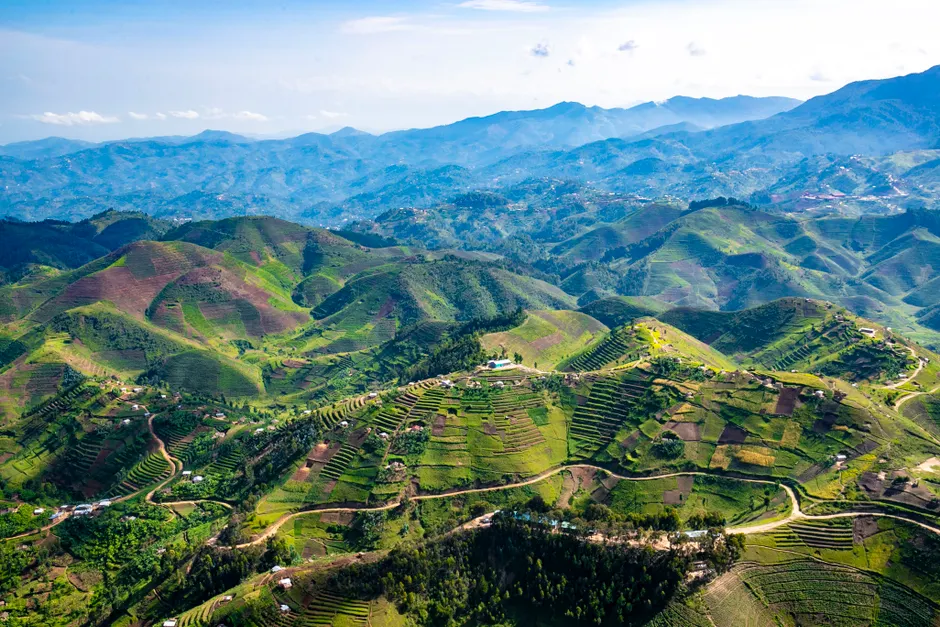
The outbreak spans Ituri, North Kivu, and South Kivu provinces, a geography that carries its own compounding risks. All three provinces sit along DRC's volatile eastern borderlands, where decades of armed conflict have hollowed out health infrastructure, disrupted surveillance capacity, and generated large populations of internally displaced persons living in conditions that accelerate transmission. The DGS-URGENT No. 2026-06 alert, issued by France on May 29, had already flagged more than 1,000 suspected cases at that point — a figure that preceded the laboratory-based culling that reduced suspects to 116 by early June, suggesting the surveillance pipeline was processing an exceptionally high volume of alerts.
The Bundibugyo Variable
The species identification matters operationally. Bundibugyo ebolavirus (BDBV) was first isolated in Uganda in 2007 and caused a second outbreak there in 2012. It carries a case fatality rate generally estimated between 25 and 36 percent — lower than Zaire ebolavirus (ZEBOV), which drove the catastrophic 2014–2016 West Africa epidemic and the 2018–2020 Kivu outbreak. Critically, licensed vaccines — including rVSV-ZEBOV (Ervebo) — were developed against ZEBOV and offer no direct cross-protection against BDBV. No BDBV-specific vaccine has received regulatory approval, though investigational candidates exist. For outbreak responders, this closes the ring-vaccination toolkit that proved decisive in recent ZEBOV responses and forces a greater reliance on contact tracing, isolation, and supportive care.
WHO's emergency situation page confirms both DRC and Uganda are affected, consistent with prior BDBV cross-border dynamics from the 2007 and 2012 events. The addition of Uganda into the affected zone raises the complexity of coordinated response across two sovereign health systems with different capacities and political contexts.
What the French Case Changes
A confirmed case in France is not epidemiologically equivalent to sustained community transmission — the patient is a healthcare worker who was symptomatic on return, which means the exposure occurred in-country, not in France. What it does activate is the full weight of French and European Union health emergency protocols: contact tracing under high-risk exposure criteria, activation of specialized isolation units (Établissements de Santé de Référence, or ESR), and mandatory notification chains to the European Centre for Disease Prevention and Control (ECDC).
The humanitarian medicine community will also reckon with this. Médecins Sans Frontières, the International Federation of Red Cross, and smaller national NGOs maintain continuous rotating deployments in eastern DRC. The risk calculus for those organizations — already operating in conflict-affected zones with degraded PPE logistics — now includes the possibility of staff repatriation under EVD protocols. Insurance, medical evacuation contracts, and organizational deployment policies are likely being reviewed across that sector as of this week.
For French public health authorities, the immediate task is mapping the returned physician's contact network, stratifying exposures, and monitoring those contacts through the 21-day maximum incubation window for BDBV. Secondary transmission within France is possible but the conditions for it are substantially different from eastern DRC — functional infection prevention infrastructure, rapid laboratory capacity, and a population not living in displacement.
The trajectory of the DRC outbreak itself — 710 confirmed cases across an active conflict zone, with no licensed vaccine for the circulating strain, and now at least one confirmed export — makes this a situation that will remain under intensive international scrutiny for weeks to come.