Former Databricks AI Chief Bets Oscillator Architecture Can Cut AI Power Draw by 1,000x
The founder behind Un-0 — a new image-generation system built on oscillator-based computing — is Ion Stoica's former AI chief at Databricks, and the core claim is stark: a 1,000-fold reduction in the power required to run AI inference workloads.
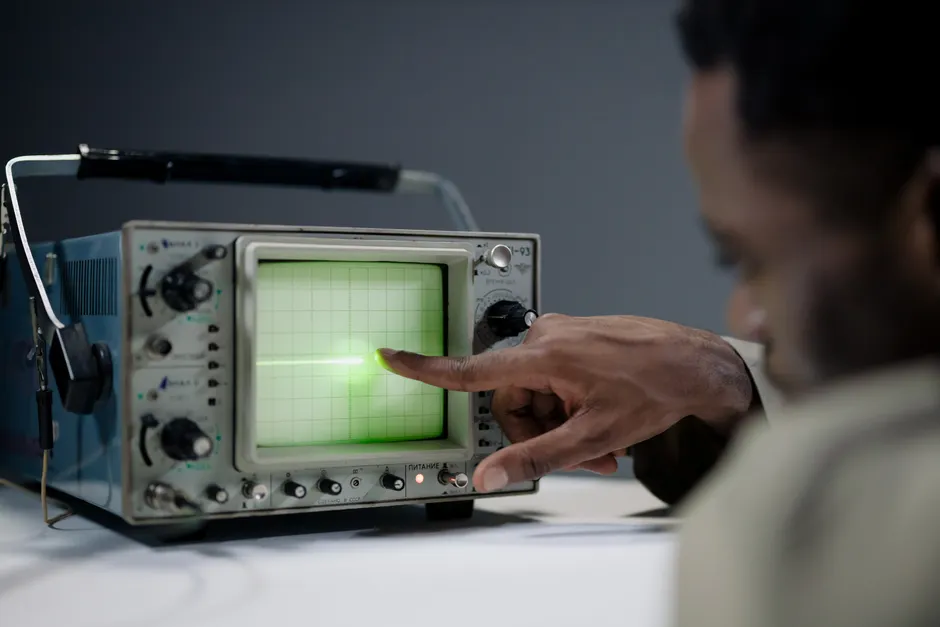
The startup's approach departs from the GPU-centric, transformer-serving infrastructure that currently dominates AI compute. Oscillator-based architectures use networks of coupled oscillators to perform computation through phase synchronization rather than conventional binary switching — a physical mechanism that, in principle, consumes far less energy per operation than CMOS logic running at high clock rates. Whether that theoretical efficiency survives contact with real production workloads, at scale and across model sizes, is the central open question.
The timing is not arbitrary. BloombergNEF projects that U.S. data-center power demand will more than double between 2024 and 2035, climbing from roughly 35 gigawatts to 78 gigawatts. The International Energy Agency has flagged that data centers, driven by AI consumption, could draw electricity at a scale comparable to some of the world's largest national power consumers. Those numbers have begun distorting grid planning across the United States, where AI data centers are already pulling enough load to reshape regional electricity flows.
The political response has followed. The Trump administration has moved to fast-track data-center construction as a national security priority — a framing that accelerates permitting but does nothing to reduce the underlying power requirement per rack. More infrastructure, faster, means the efficiency problem compounds rather than resolves.
Why the Architecture Bet Is Worth Taking Seriously
Oscillator computing is not a new idea. Researchers have studied coupled-oscillator networks for decades as a potential substrate for combinatorial optimization and pattern recognition. What is newer is the argument that such hardware can serve generative AI workloads — specifically image generation — at competitive quality while shedding the thermal and electrical overhead of GPU clusters. Un-0 appears to be making exactly that bet.
The 1,000x efficiency claim will draw immediate skepticism from anyone who has watched the AI hardware space, and rightly so. Efficiency gains of that magnitude have been claimed before — often by startups pitching novel substrates, from photonics to neuromorphic chips — and the path from benchmark to production deployment is where most of those claims have dissolved. The relevant comparison is not peak theoretical efficiency but sustained throughput per watt across real workloads, with the memory bandwidth and precision requirements that generative models actually impose.
That said, the competitive surface here is unusual. Image generation is a workload with relatively well-defined quality metrics (FID, CLIP scores, human preference ratings) and a clear commercial market. If the team can demonstrate parity on those metrics at a fraction of the power envelope, the case writes itself — data-center operators paying nine-figure annual electricity bills do not need to be persuaded that efficiency matters.
The founder's background adds a layer of credibility that pure deep-tech startups often lack. Running AI at Databricks means operating at serious scale, managing inference infrastructure in production, and understanding where the actual cost bottlenecks sit. That operational fluency tends to produce more grounded architectural choices than lab-only research.
Worth flagging: the 1,000x figure, as stated, almost certainly refers to a specific comparison point — likely peak theoretical efficiency against a GPU baseline for a particular workload or model size — rather than a general claim across all AI compute. The absence of a published benchmark or peer-reviewed result means it should be treated as a research target rather than a demonstrated outcome until independent verification is available.
The broader energy problem driving interest in this space is real and intensifying. GPU clusters running large generative models consume on the order of hundreds of watts per chip, and hyperscaler buildouts now span hundreds of thousands of chips per campus. Even a 10x efficiency gain at the chip level would have material impact on grid load projections. A genuine 1,000x gain would be transformative — not just for operating costs, but for where AI compute can physically be deployed, including edge and embedded contexts currently ruled out by thermal constraints.
The industry has been here before, searching for the post-GPU compute substrate that changes the economics of AI. Most contenders have underdelivered. The oscillator path has physics on its side in theory; the question is always whether the engineering closes the gap between theory and production silicon. Un-0's image-generation focus gives the team a concrete, measurable target to prove the case — or not.