Micron Locks In $22 Billion in Memory Deals as AI Demand Tightens Supply
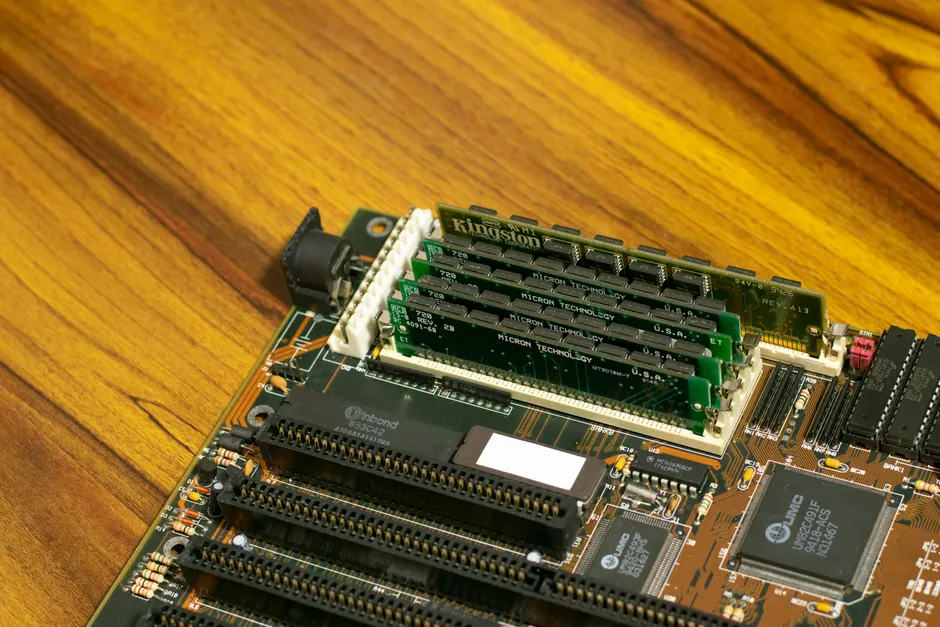
Micron has secured $22 billion in customer commitments for memory chips, according to a forecast Reuters reported on 25 June 2026, as sustained AI infrastructure spending pushes HBM and DRAM pricing to multi-year highs and locks volumes well into the back half of this decade.
The scale of those commitments is worth putting in context. Memory has historically been the most cyclical segment of the semiconductor industry — a market where oversupply craters margins within quarters and vendors have burned through balance sheets chasing share. What has changed is the character of the buyer. Hyperscalers building out GPU clusters for LLM training and inference are committing to memory volumes the way they once committed to long-term power purchase agreements: ahead of schedule, at fixed price, to guarantee supply continuity. That structural shift is what pushed Micron into the $1 trillion market-cap bracket in May 2026, as Reuters reported at the time.
Supply Pressure Beyond the Data Center
The demand signal from AI data centers is not staying neatly inside the hyperscaler fence line. Reporting from early June 2026 showed automakers and retailers already flagging memory shortages as a direct cost pressure. Consumer-facing price increases were described as a likely consequence of the supply squeeze, with both sectors warning publicly that constrained memory availability was feeding through to finished goods.
That dynamic follows a pattern the industry has seen in prior supercycles — the capacity that fabs commit to leading-edge HBM stacks for AI is capacity that does not go toward commodity LPDDR or automotive-grade DRAM. Micron, Samsung, and SK Hynix have all been reallocating wafer starts toward high-margin HBM, which means the more prosaic parts of the demand stack — the modules inside a mid-range vehicle's ADAS controller or a point-of-sale terminal — compete for a shrinking pool of production.
The automotive sector is structurally exposed here. Modern vehicles carry DRAM loads that would have seemed extravagant by PC standards a decade ago; driver-assistance systems, over-the-air update pipelines, and in-cabin compute stacks all depend on memory that is now being bid up by data-center buyers with far larger purchasing leverage. Automakers operate on multi-year design cycles and cannot easily redesign around an alternative; they are, for now, price takers.
What Five-Year Pricing Lock-Ins Signal
Micron's $22 billion in locked contracts — spanning what sources describe as a five-year horizon — is a direct expression of where the industry believes pricing floors will settle. Memory vendors do not offer long-term supply guarantees when they expect prices to decline; they offer them when they expect supply to remain tight and buyers are willing to pay a premium for certainty.
The broader context here is that fab capacity additions for advanced DRAM and HBM take two to three years from investment decision to production output. TSMC's packaging constraints on HBM through CoWoS add further lead time. Even if Micron, Samsung, and SK Hynix all greenlit significant capacity expansions today, meaningful relief would not arrive until 2028 at the earliest. Buyers who understand this arithmetic are the ones signing five-year deals now.
In this author's view, the more interesting stress point to watch is not Micron's revenue trajectory — that looks well-supported — but whether the supply concentration in advanced memory packaging becomes a systemic risk analogous to the TSMC dependency debate that has preoccupied semiconductor policy circles for the past several years. Three vendors control virtually all HBM production. All three are reliant on a narrow set of advanced packaging partners. Geopolitical friction anywhere along that chain — Taiwan, South Korea, or the China export-control landscape — carries outsized consequences in a world where AI infrastructure has become a strategic national priority for multiple governments.
The $22 billion in bookings secures Micron's near-term financials convincingly. The broader supply picture for the rest of the memory market is considerably less settled.


