Supreme Court Issues Three Immigration Rulings on TPS, Border Turnbacks, and Green Card Rights
The Supreme Court handed down three immigration opinions on June 25, 2026, touching the full arc of the U.S. immigration system: the status of humanitarian temporary designations, the legality of physical border turnbacks, and the procedural rights of lawful permanent residents.
TPS Terminations: Mullin v. Doe
In Mullin v. Doe (No. 25-1083), the Court addressed lower-court orders that had postponed the termination of Temporary Protected Status for nationals of Syria and Haiti. TPS, codified by Congress in 1990, grants deportation relief and work authorization to nationals of countries struck by armed conflict, environmental disaster, or other extraordinary conditions. Haiti's TPS designation had been scheduled to lapse on February 3, 2026. The injunctions blocking those terminations were the immediate subject of the Court's review.
The case sits at the intersection of executive discretion and judicial reviewability. TPS designations are initiated by the Secretary of Homeland Security, but the statutory framework leaves considerable room for courts to ask whether rescissions comply with procedural and substantive requirements. The Court's resolution of Mullin will shape how durable lower-court stays of immigration terminations can be going forward.
Border Turnbacks: Case No. 25-5
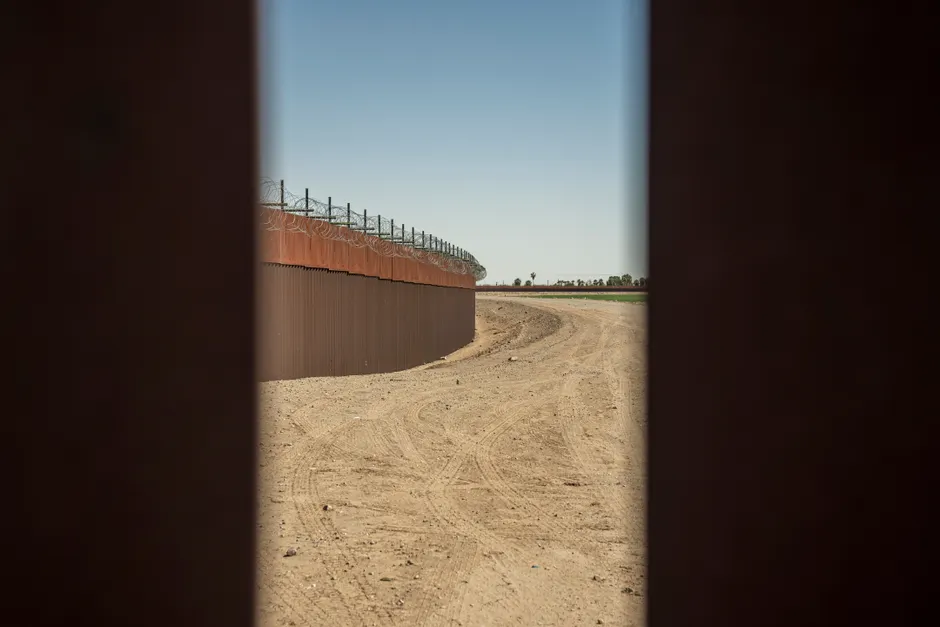
The second opinion, No. 25-5, addressed a CBP practice under which officials were directed to physically and indefinitely block noncitizens from presenting themselves at the actual boundary line — a policy fully deployed across the U.S.-Mexico border in June 2018. The question before the Court involved whether that physical interdiction was consistent with the asylum provisions of the Immigration and Nationality Act, which create a right to apply for protection for any alien "who is physically present in the United States or who arrives in the United States."
The turnback policy is distinct from processing caps or metering — it did not manage the flow of asylum seekers through ports of entry, it prevented access to those ports entirely. That distinction carries legal weight: the government's argument that officials retain discretion over port access has long run against the statutory text requiring the government to refer any person who "indicates an intention to apply for asylum." The Court's engagement with that tension will set the terms of border-access litigation for the foreseeable future.
Green Card Holders: Case No. 25-429
The third ruling, No. 25-429, concerned lawful permanent residents — green card holders — and their status upon return to the United States. Under 8 U.S.C., LPRs are presumptively entitled to readmission and ineligible for parole unless one of six enumerated exceptions applies. At issue is what happens when DHS treats a returning LPR as "seeking admission," a classification that strips the individual of the procedural protections ordinarily accorded to residents rather than applicants.
The practical stakes are concrete. As noted in an amicus brief filed by the Asian American Legal Defense and Education Fund, DHS routinely confiscates green cards from LPRs it has deemed to be seeking admission, leaving them without tangible proof of their status at the very moment their status is being contested. That practice compounds the procedural asymmetry the case is designed to resolve.
Why the Timing Matters
Three opinions on a single day is not unusual for a Court nearing the end of its term, but the alignment here — covering undocumented arrivals, TPS beneficiaries, and green card holders — maps almost exactly onto the enforcement priorities that have driven immigration litigation since 2017. No single ruling settles the broader policy debate, but together they produce a body of doctrine that lower courts, DHS adjudicators, and immigration practitioners will be parsing for years.
The outcomes in Mullin and the turnback case in particular are likely to have immediate operational consequences: if the injunctions in Mullin are lifted, tens of thousands of TPS holders face renewed termination proceedings; if the turnback policy is affirmed, CBP's physical-interdiction authority is effectively ratified. Neither the Court's reasoning nor its precise holdings are yet public in summary form — what is certain is that June 25, 2026 closed a chapter of uncertainty that had been open since the litigation began.


