Swiss Glaciers Cross the Ice-Loss Threshold Two Days Early in 2026
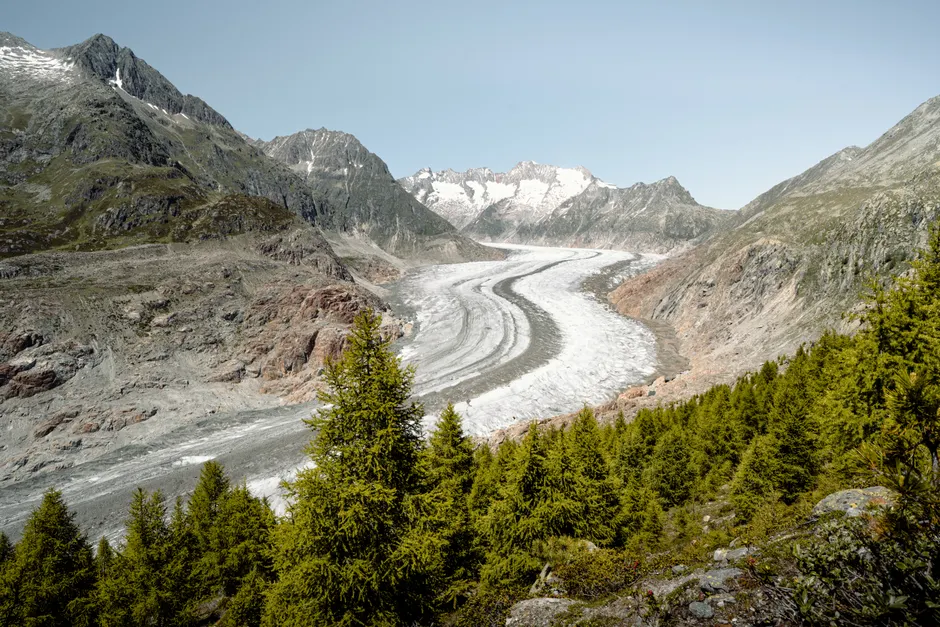
Switzerland's Glacier Loss Day fell on 29 June 2026 — the point from which every litre of meltwater drawn from glaciers erodes ice volume rather than seasonal snowpack — ETH Zurich reported on 26 June. Snow reserves accumulated over winter have been fully depleted. What remains is the permanent ice body itself.
The timing matters because Glacier Loss Day is a structural diagnostic, not just a phenological curiosity. In years with adequate winter accumulation, snow insulates glacier ice well into summer, so ablation season begins late and net mass loss is contained. This year's early exhaustion of the snowpack strips that buffer away, exposing bare ice — which absorbs more solar radiation than snow — for an extended melt window across July and August, the climatically hottest months in the Alps.
The 2026 milestone follows a year of acute losses. Swiss glaciers shed 3% of their total volume in 2025, driven by a winter of below-average snowfall compounded by heat waves in June, Reuters reported in October 2025. A 3% single-year loss is severe by any historical baseline; the Swiss glacier network encompasses roughly 1,400 individual bodies, and volume losses of that magnitude are not recovered on decadal timescales under current climate projections.
Underlying the episodic shocks is a structural rate of attrition. Swiss-wide glacier volume loss runs at 0.73 ± 0.08 km³ per year, according to MeteoSwiss — a figure that translates the abstract language of percentage points into physical cubic kilometres of frozen water permanently removed from the alpine system. During the 139th and 140th review years assessed by the Cryospheric Commission (EKK), Swiss glaciers continued to retreat on both length and mass dimensions, the GLAMOS monitoring report confirms, extending an unbroken multi-decade trend.
The downstream consequences extend well beyond aesthetics or tourism. Alpine glaciers act as freshwater capacitors — releasing stored melt during dry summers when precipitation is low. As that storage shrinks, the regulation function degrades: rivers fed by glacial melt, including headwaters of the Rhine and Rhône, face reduced late-summer baseflow precisely when agricultural and municipal demand peaks. Hydropower operators, who account for roughly 60% of Swiss electricity generation, are acutely exposed to shifts in seasonal runoff timing and volume. Water treaty frameworks between Switzerland, France, Germany, and the Netherlands — built around historical flow assumptions — have not been updated to reflect the pace of cryospheric change.
The 2026 Glacier Loss Day, arriving earlier than the seasonal norm, will sharpen scrutiny of how Swiss and wider Alpine governance frameworks price and allocate water under scarcity conditions. The cryosphere data is granular and well-maintained; the political response has lagged considerably behind.


