The Cremation Urn Left Behind at Newbury Racecourse
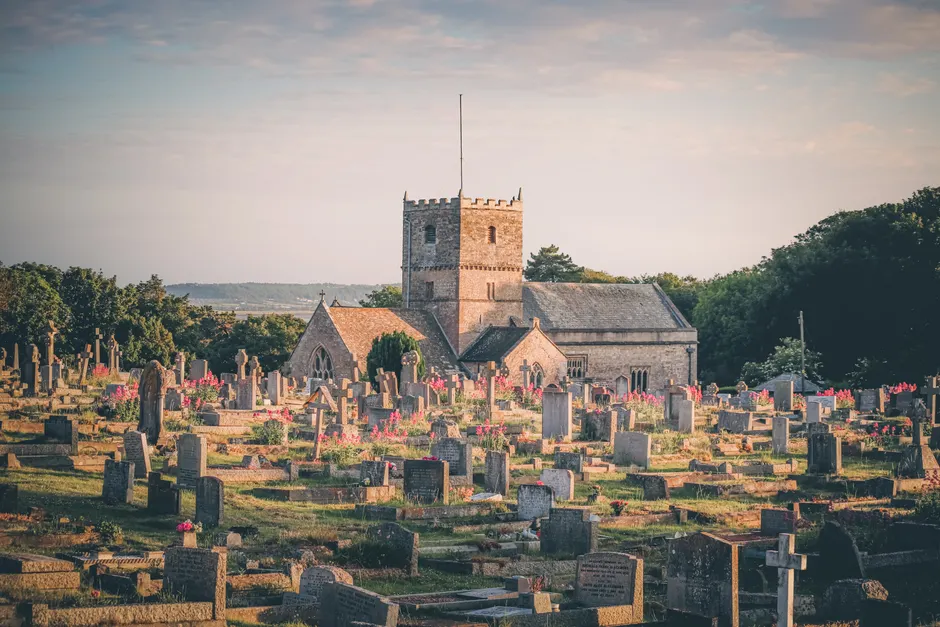
The cremated remains of a man named Gary Bonsor were left, apparently forgotten, in a burger van at Newbury Racecourse in July 2024 — and the sequence of steps required to give those ashes a proper resting place illuminates how English law handles the unclaimed dead.
A racecourse staff member who discovered the urn did what the circumstances required: they reported it to Newbury Police Station. From there, investigators attempted to trace Bonsor's family through whatever identifying information accompanied the urn. Those efforts came to nothing. No next of kin was found, no claimant came forward, and the ashes remained in institutional limbo.
That limbo has a legal resolution, though it is not a simple one. In the Church of England's jurisdiction, burial in consecrated ground requires a faculty — an ecclesiastical licence issued by a Diocesan Chancellor, the senior legal officer of a diocese. The Chancellor in this case granted a faculty authorising the interment of Bonsor's ashes in a churchyard, resolving the question of where, if not the question of who Gary Bonsor was or who mourned him.
The faculty jurisdiction is worth pausing on. It operates as a parallel legal system governing what may and may not happen on consecrated land, distinct from civil planning or probate law. A Chancellor functions as a judge within that system, weighing petitions that range from the installation of a heating system in a medieval nave to, as here, the burial of ashes with no surviving family to consent. The fact that a faculty was sought and granted — rather than the ashes being disposed of through local authority channels — suggests that whoever shepherded this case through the system made a deliberate choice to pursue a dignified religious interment on Bonsor's behalf.
Unclaimed ashes occupy an ambiguous position in English law. Unlike a body, cremated remains are not legally "property" in the conventional sense, but the person or institution holding them carries a duty of care. Local authorities have powers under the Local Authorities' Cemeteries Order 1977 to inter unclaimed remains, and coroners can direct disposal in certain circumstances. The ecclesiastical route taken here is less common and requires an identifiable petitioner — likely the police, the racecourse, or a church official — willing to assume responsibility for the process.
What brought Bonsor's ashes to a burger van at a Berkshire racecourse, and why they were left there, is unknown. Racecourses attract large, transient crowds; belongings are left behind routinely. An urn is not a coat or a phone, but the mechanics of how it was forgotten are probably not mysterious — grief is disorienting, and the circumstances of a day at the races can be chaotic enough that even something of profound significance slips through.
The harder question is why no one came looking. Police enquiries through the urn's contents found nothing that led to family. That could mean the labelling was minimal, that Bonsor's family is itself small or dispersed, or simply that no one who knew him was aware of where the ashes had been taken that day. The absence of a claimant is, in its own way, the most arresting detail of the case.
Gary Bonsor will now be buried in a churchyard, his ashes placed in consecrated ground by a process that required a police report, a faculty petition, and a Chancellor's order. It is a more bureaucratically elaborate passage than most people receive, and a quieter one than most would choose. Whether anyone who knew him will ever learn where he rests is another matter entirely.