Ford Rehires 350 Quality Engineers After AI Inspection Systems Fall Short
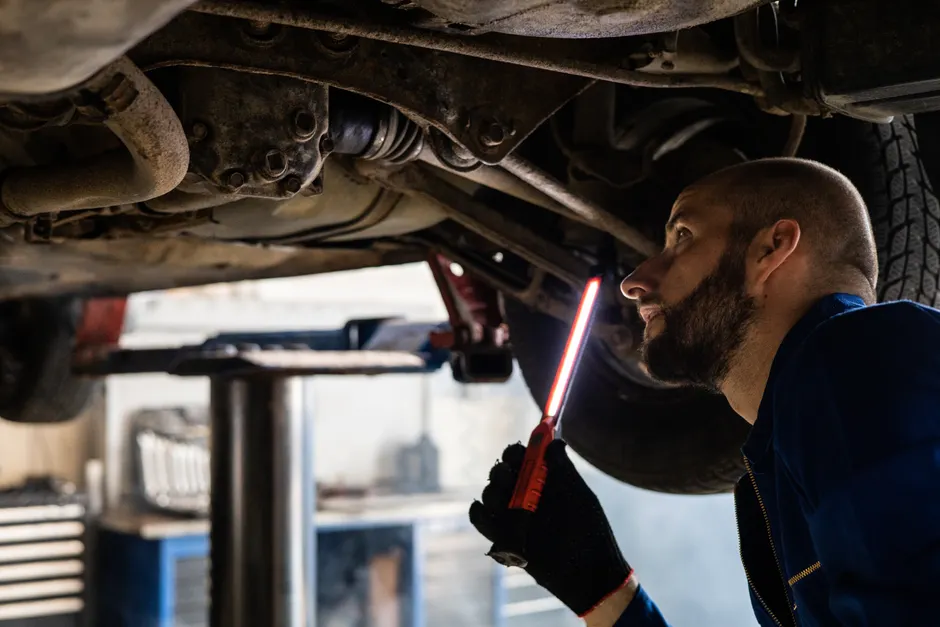
Ford has rehired 350 veteran quality-assurance engineers after AI-based inspection systems proved inadequate for the demands of vehicle manufacturing, Bloomberg reported on June 25, 2026. The move reverses, at least partially, a workforce reduction that had accompanied the automaker's earlier push to automate quality control.
The specifics of where the AI systems fell short have not been disclosed in full, but the pattern is a familiar one in industrial deployment: computer vision and anomaly-detection models trained on curated datasets tend to underperform when confronted with the variability of a live production line — surface reflections, lighting shifts, novel defect morphologies outside the training distribution. Human inspectors carry contextual judgment that is genuinely hard to encode.
What makes this episode worth attention is its scale and its source. Ford is not a startup that over-promised on ML capabilities and quietly walked it back. It is a company with significant engineering resources that, roughly nine years ago, placed a $1 billion bet on autonomous systems — investing in a startup co-founded by engineers from Google and Uber's self-driving programs in February 2017 — Bloomberg. The appetite for AI-driven automation at Ford is real and long-standing. That makes the quality-inspection retreat a data point, not a fluke.
The broader context here is that manufacturing quality assurance has been one of the more aggressively targeted domains for computer vision deployment over the past decade. The pitch is straightforward: cameras do not fatigue, they generate structured logs, and inference at line speed is now computationally tractable. Several Tier 1 automotive suppliers and OEMs have announced programs along these lines. Ford's experience suggests the gap between controlled-environment benchmark performance and production-floor reliability is larger than some integrators have communicated to their customers.
It is also worth being precise about what the rehiring does and does not tell us. Three hundred and fifty engineers returning to a workforce the size of Ford's is not a full reversal of an automation strategy. It is a correction — a hybrid posture in which human judgment covers the cases the model cannot. That architecture, human-in-the-loop for edge cases and exceptions while automation handles high-confidence classifications, is the sensible engineering answer. The question is whether Ford's original deployment skipped that middle layer in the name of cost reduction, or whether the models genuinely degraded over time as vehicle designs evolved faster than the training data could follow. Neither answer has been confirmed publicly.
For the engineers involved, the rehiring carries its own complexity. Quality inspection at this level is a skilled discipline — it requires familiarity with materials, assembly sequences, and the failure modes specific to particular platforms. Rebuilding that institutional knowledge after a workforce reduction takes time that production schedules do not readily accommodate. In my view, the harder cost here is not the headcount but the gap: the defects that shipped, or nearly shipped, during the interval between the AI system's deployment and the recognition that it was underperforming.
The robotics and industrial AI sector will watch how Ford characterizes this going forward. If the company frames it as a transitional measure while it retrains or rebuilds its models, that is one signal. If it quietly deprioritizes the automation roadmap for quality control, that is another. Either way, procurement teams at other manufacturers evaluating similar deployments now have a concrete reference case to stress-test their vendors' performance guarantees against.
Automation does not fail evenly. The tasks that yield first to machine learning tend to be high-volume, low-variance, and well-logged. Vehicle quality assurance is high-stakes, moderately high-variance, and physically situated in ways that create persistent sensing challenges. Ford's correction does not indict the broader industrial AI thesis. It does sharpen the question that any responsible deployment should answer before the human workforce is drawn down: what is the failure mode, how will it be detected, and who covers the gap?