Alexa Plus Gets Stuck on Lalala

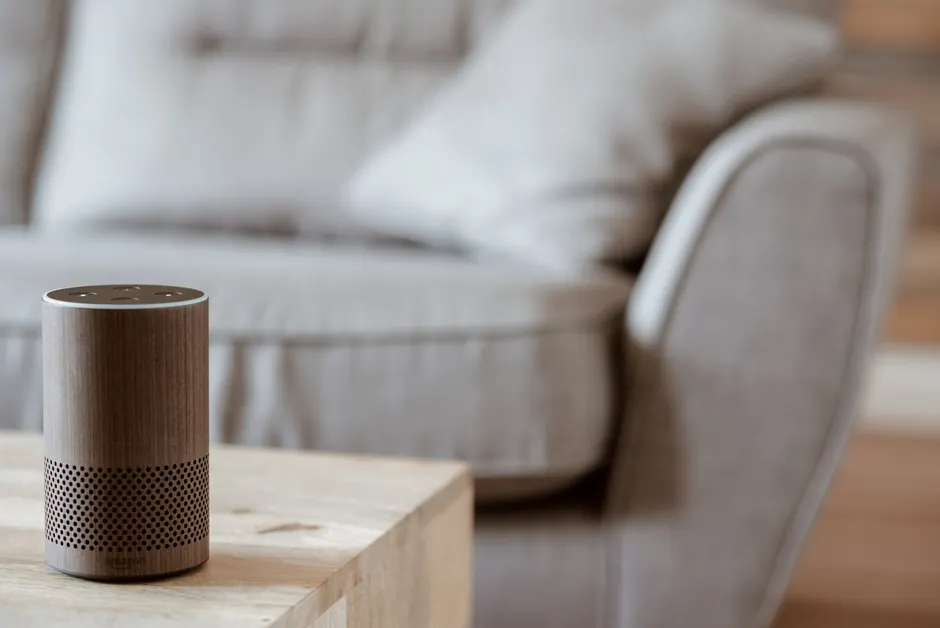
Some Amazon Echo speakers running Alexa Plus are interrupting conversations to say or sing nothing but "lalala" on repeat for minutes at a time. The behavior stops on its own. It starts without a clear prompt.
The failures often occur in the middle of conversations with users, according to reports detailed by The Verge. When users ask what it was doing, Alexa appears unaware of what just happened. That lack of self-report is familiar to anyone who works with large language model systems, where the conversational layer has no reliable trace of a low-level generation or playback fault.
The issue was reported repeatedly on Reddit over the last few weeks across multiple types of Echo speaker. Multiple users uploaded videos of Echo speakers repeating "lalala". The clips show the same pattern. A normal exchange gives way to a looped vocalization that continues until the device exits it by itself.
Amazon told Android Authority the bug affects a small number of Alexa Plus users and a fix is in the works, as cited in the same Verge reporting. The company has not described a cause. The scope remains narrowly defined. A small population, in this context, still matters when the installed base sits in living rooms and kitchens.
Alexa Plus is the upgraded Alexa experience powered by generative AI technologies, announced by Amazon and unveiled at an event in New York, according to TechCrunch. Amazon later refreshed its device lineup with models optimized for home security and its AI-infused Alexa+, according to Reuters. Alexa+ became available to everyone in the U.S., after a period in which Amazon worked to resolve bugs and address user feedback ahead of launch, TechCrunch reported.
That pre-launch period was not smooth. Some Alexa+ beta testers complained that Alexa+ was too chatty. Alexa+ was plagued with issues from the beginning owing to challenges with the AI infrastructure underpinning it, TechCrunch reported. The current "lalala" loop fits that longer pattern of shipping conversational behavior that is difficult to bound in testing.
The broader context here is the shift from deterministic voice assistants to probabilistic ones. The old Alexa matched intents to canned responses. Alexa Plus generates language, manages multi-turn context, and streams speech. That architecture enables far more useful handling of vague requests, follow-ups, and household complexity. It also creates new classes of failure, including fluent nonsense, repetition loops, and confident unawareness after the fact.
In my view, the interesting detail for practitioners is not the silliness of the output. It is the combination of persistence, mid-dialogue onset, and amnesia. A single wrong answer is easy to retry. A minutes-long loop that the assistant cannot later describe breaks the basic recovery contract users expect from voice interfaces. Stop, cancel, and direct questioning should terminate and explain. Here they appear to do neither reliably.
Looking at what this means for deployment, the fix will matter less than the telemetry behind it. Voice is an always-on trust surface. I have watched my own children, now adults, move from shouting commands at speakers to simply expecting the room to understand them. That expectation raises the bar for containment. Short server-side guardrails on repetition, client-side watchdog timers on identical audio frames, and explicit fallback utterances cost little compared with letting a loop run in a home.
Worth flagging is that this kind of bug tends to look small in incident counts and large in user memory. People forgive a missed timer. They remember a speaker chanting at them for minutes. If Amazon contains the loop quickly and keeps the general availability build stable, the long arc still points toward more capable ambient assistants. The technology has earned that optimism before, once the rough edges were engineered away.