Replit, Anthropic, and OpenAI Push Separate Updates Across Coding, Agents, and Embeddings
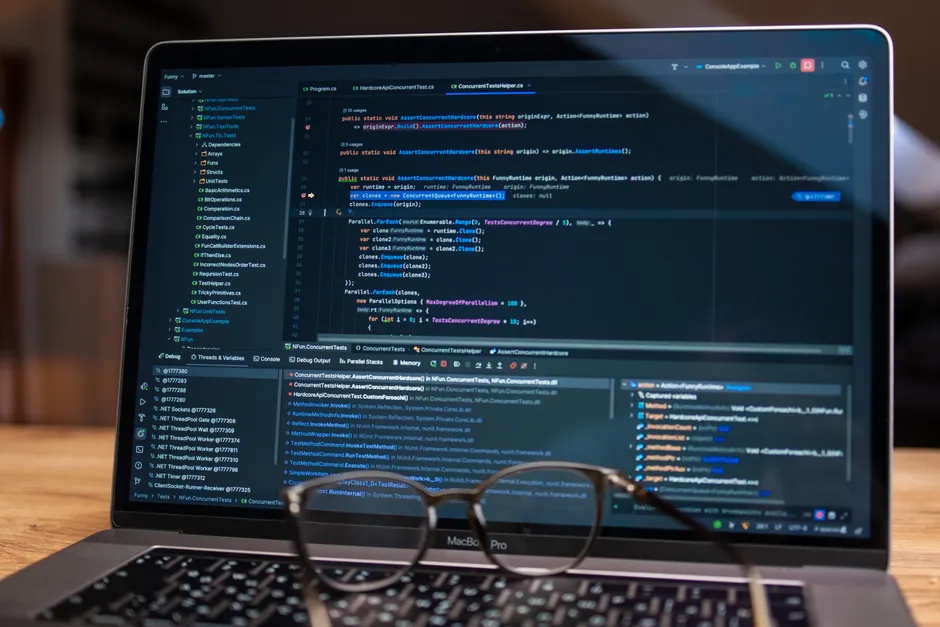
Replit has closed a $97.4 million funding round and, alongside it, unveiled a proprietary coding-focused large language model that the company says outperforms OpenAI Codex on a subset of benchmarks. The capital injection and the model debut together position Replit more directly as a vertically integrated AI development platform — one that no longer relies solely on third-party inference for its core coding workflows.
The Codex comparison is worth holding up carefully. Benchmark outperformance on selected tests is not the same as general superiority, and Replit has not, at time of writing, published full evaluation methodology. That said, Replit building its own model rather than reselling capacity from OpenAI or Anthropic is a structurally meaningful shift. It gives the company tighter control over latency, fine-tuning cadence, and margin — three variables that matter considerably at the scale Replit operates, with millions of developers and students running sessions concurrently.
Separately, Anthropic has moved to bring its agent capabilities into messaging platforms. The specifics of which platforms and the technical integration layer have not been fully disclosed in available sourcing, but the direction is clear: Anthropic is pushing agentic workflows out of dedicated interfaces and into the communication surfaces where knowledge workers already spend their time. That is a different distribution bet than deploying a better chat UI. Agents embedded in messaging inherit ambient context — threads, participants, prior decisions — that a standalone product has to reconstruct from scratch.
OpenAI, meanwhile, has made two distinct product moves. The company announced a pair of new embedding models with improved retrieval performance and lower per-token pricing, alongside a refreshed GPT-4 Turbo preview model. The embedding update is quieter than a headline model launch, but embeddings sit at the foundation of nearly every production RAG pipeline in enterprise deployments today. Pricing reductions here have a compounding effect: they lower the cost of indexing at scale, which in turn makes more frequent re-indexing economically viable — a practical improvement for teams managing rapidly changing document corpora.
The GPT-4 Turbo preview refresh carries less immediately actionable detail from available sourcing. Preview-tagged releases from OpenAI have historically served as staged rollouts allowing teams to evaluate behavioral changes before they propagate to production API endpoints. The cadence of these updates has accelerated noticeably over the past year, which creates its own operational overhead for engineering teams that have built prompt-sensitive workflows on top of the API.
Looking at what these moves say collectively: the AI infrastructure layer is compressing. Replit is building its own models. Anthropic is expanding surface area into messaging. OpenAI is tuning both the cost structure of embeddings and the capability ceiling of its flagship. These are not coordinated, but they are convergent — each company is extending further into the stack than it occupied twelve months ago. For developers and platform engineers, that means more options but also more evaluation surface. Choosing an inference provider now involves assessing model roadmap, distribution strategy, and pricing trajectory alongside raw benchmark numbers.
Worth flagging: the sourcing for all of these developments carries no publication dates. That limits confidence in sequencing — it is possible some of these announcements are separated by weeks rather than days. Readers building product decisions on any of these specifics, particularly the Replit benchmark claims or the OpenAI pricing figures, should verify current documentation directly with each company before treating them as durable.
The competitive topology here is familiar from prior infrastructure transitions: a period of rapid parallel expansion by multiple players, followed by consolidation around the providers who achieve sufficient distribution and margin stability. The embedding pricing cut from OpenAI, modest as it appears in isolation, fits a pattern of using commodity-layer pricing to deepen developer lock-in while preserving margin on higher-value completions and fine-tuning. Replit's model ownership play is a defensive move against that exact dynamic.


