Apple Unveils MacBook Neo Alongside M5 Silicon Refresh as Production Shifts to Houston

Apple Unveils MacBook Neo Alongside M5 Silicon Refresh as Production Shifts to Houston
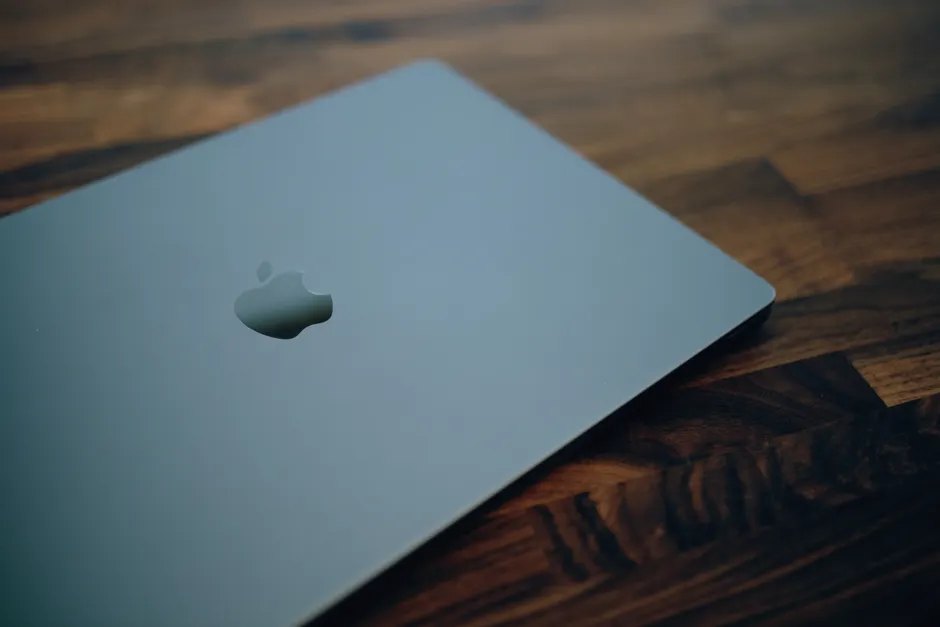
Apple announced the MacBook Neo on March 4, 2026, a day after refreshing its MacBook Air and MacBook Pro lines with the new M5, M5 Pro, and M5 Max chips. The announcements follow February's commitment to accelerated U.S. manufacturing, with Mac mini production beginning in Houston.
M5 Silicon Architecture Arrives
The M5 family extends Apple's silicon roadmap with three configurations targeting different performance profiles. The base M5 powers the refreshed MacBook Air, while M5 Pro and M5 Max variants drive the updated MacBook Pro lineup announced March 3.
Apple has not disclosed M5's node process or architectural changes from the M4 generation, though industry patterns suggest continued focus on performance-per-watt optimization and neural engine enhancements. The timing aligns with Apple's previously reported plans for an accelerated Mac refresh centered on M4 silicon, now extended to the M5 generation.
MacBook Neo Positioning Unclear
The MacBook Neo announcement came with minimal technical specifications or market positioning details from Apple's newsroom. The "Say hello to MacBook Neo" messaging suggests a new product line rather than a refresh of existing MacBook Air or Pro models, though Apple has not clarified where Neo fits within its notebook hierarchy.
The Neo's introduction coincides with MacBook Pro supply constraints that emerged in late 2023, when Bloomberg reported shortages across the Pro line. Whether Neo addresses specific market gaps or represents a premium tier above existing offerings remains unspecified.
Houston Manufacturing Strategy
Apple's February announcement of Mac mini production in Houston marks a notable expansion of its domestic manufacturing footprint. The Houston facility represents Apple's first Mac production line outside of traditional Asian supply chains for volume manufacturing.
The Mac mini selection for initial Houston production aligns with Apple's incremental approach to supply chain diversification. The mini's relatively simple thermal envelope and lower volume compared to MacBook and iMac lines reduce manufacturing complexity while establishing domestic production capabilities.
This geographic shift occurs as Apple navigates evolving trade policies and supply chain resilience concerns that have accelerated since 2020. The Houston operation provides a foundation for potential expansion to other Mac products, though Apple has not committed to specific timelines or additional product lines.
AI Integration Timeline
Tim Cook's acknowledgment that Apple has been working on generative AI technology "for years" provides context for the M5 silicon release timing. The Bloomberg report indicated Apple's AI efforts span Siri improvements, search enhancements, and Apple Music features.
The M5's neural engine likely incorporates architectural improvements for on-device AI workloads, following industry trends toward edge inference capabilities. Apple's pattern of tight hardware-software integration suggests M5 silicon was designed alongside specific AI features planned for macOS and application frameworks.
We have seen this pattern before, when Apple introduced the A11 Bionic's neural engine in 2017—initially with limited public AI features, but laying groundwork for subsequent Face ID, computational photography, and machine learning acceleration that became central to iOS experiences. The M5's AI capabilities may follow a similar trajectory, with initial applications expanding over subsequent software updates.
Market Context and Supply Chain Implications
The simultaneous M5 rollout across MacBook Air and Pro lines represents Apple's most coordinated Mac silicon refresh since the original M1 transition began in 2020. This approach contrasts with the staggered M2 and M3 deployments that saw months between Air and Pro updates.
The coordinated launch timing, combined with Houston manufacturing expansion, suggests Apple is addressing both demand planning and supply chain resilience simultaneously. The MacBook Pro shortages of 2023 likely informed production capacity decisions for the M5 generation.
Looking at what this means for Apple's broader Mac strategy, the Neo introduction alongside traditional refreshes indicates continued experimentation with product line segmentation. Apple has historically used new naming conventions to test market positioning—the MacBook (without Air or Pro designation) that launched in 2015 and was discontinued in 2017 serves as precedent for targeted products that may not achieve long-term lineup status.
Technical Implications
The M5 family's arrival eighteen months after M4's introduction maintains Apple's silicon cadence established since transitioning from Intel processors. This timeline allows for meaningful architectural improvements while supporting annual product refreshes across the Mac lineup.
The neural engine enhancements likely embedded in M5 silicon position Apple's Macs for expanded on-device AI capabilities as the company competes with cloud-based AI services from Microsoft, Google, and others. Local processing reduces latency and privacy concerns while providing consistent performance independent of network connectivity.
Apple's approach of building AI acceleration directly into its system-on-chip architecture contrasts with discrete GPU strategies employed by traditional PC manufacturers. This integration advantage becomes more pronounced as AI workloads shift from occasional tasks to continuous background processing for features like real-time translation, content analysis, and predictive text input.
The Houston manufacturing component adds domestic production capacity as Apple balances cost optimization with supply chain risk management. While Asian manufacturing will likely remain dominant for Mac production, the Houston facility provides operational flexibility and potential cost advantages for specific markets or product configurations.
The M5 launch, Neo introduction, and Houston production expansion collectively indicate Apple's confidence in Mac market positioning as AI capabilities become central to personal computing workflows. The coordinated timing suggests these initiatives support a unified strategy rather than independent product decisions.