Supreme Court Takes Up Trump v. Carroll as $83.3 Million Judgment Awaits Fate
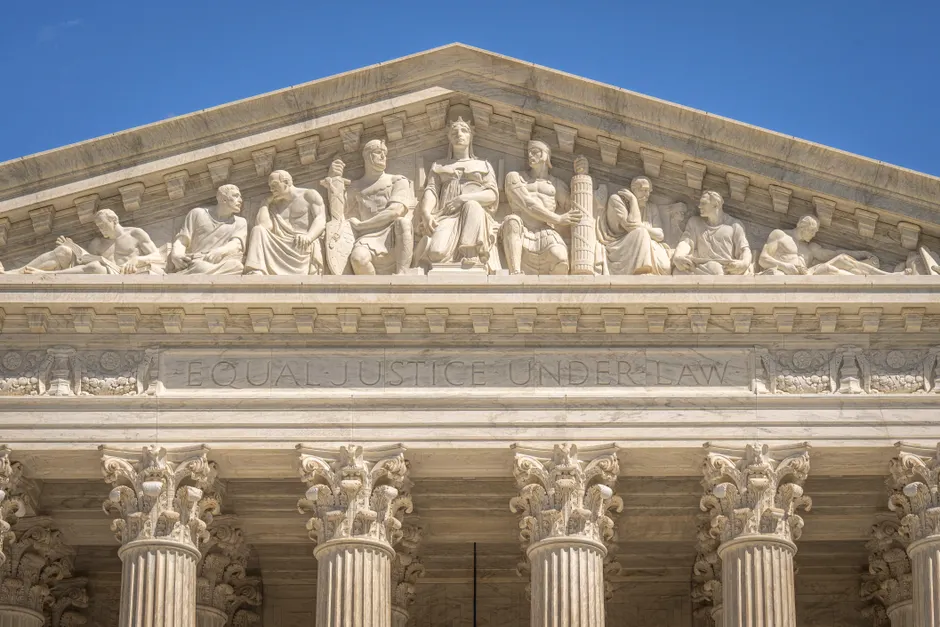
The Supreme Court is weighing whether to hear Donald Trump's challenge to an $83.3 million defamation judgment won by E. Jean Carroll, with the case having been distributed for conference on February 20, 2026, after its docketing in November 2025.
The underlying litigation traces back to a May 2023 jury verdict in the Southern District of New York, which found Trump liable for sexually abusing Carroll and for defaming her. A Second Circuit panel subsequently upheld both the liability finding and the damages award, as confirmed in Carroll's brief in opposition filed in January 2026. The federal appeals court's affirmance of the $83.3 million figure — reported by AP in September 2025 — set the stage for Trump's petition to the Court.
The Supreme Court docket lists the case as No. 25-573, with Trump as petitioner and Carroll as respondent. Docketed on November 13, 2025, it represents the culmination of one of the most closely watched civil defamation proceedings in recent American legal history.
The conference date matters procedurally. When the Court distributes a case for conference, the nine justices privately vote on whether to grant certiorari — that is, whether to accept the case for full briefing and argument. The Court typically needs four votes to grant cert. A denial leaves the Second Circuit ruling intact and the judgment enforceable. A grant reopens the question of both liability and damages at the highest appellate level, and in a case with this fact pattern, the Court's framing of the issues could have downstream consequences for how defamation law applies to public figures contesting civil sexual-abuse findings.
Trump's petition almost certainly presses arguments about the interplay between his denials of Carroll's allegations and the First Amendment's protections for statements on matters of public concern — a line of doctrine that has been contested terrain since New York Times v. Sullivan (1964) and its progeny. Carroll's brief in opposition, filed January 14, 2026, would have argued that the Second Circuit correctly applied settled law and that no circuit split or novel constitutional question warrants the Court's intervention. Whether the justices agree is now the operative question.
The scale of the judgment is not incidental. At $83.3 million, this is among the largest defamation verdicts against an individual in U.S. history, and its survival through the appellate process intact is itself notable. Defamation cases of this magnitude typically attract amicus attention from press-freedom organizations on both sides of the cert question — some warning that an expansive cert grant could chill legitimate public-figure commentary, others arguing that accountability for provably false statements of fact must survive First Amendment scrutiny.
The timing is worth noting on its own terms. Trump returned to the presidency in January 2025, making the Court's handling of a case in which the sitting president is the civil defendant an institutionally delicate matter — not because justices are expected to treat presidents differently, but because any ruling will be read through that lens regardless. The Court has navigated presidential-party litigation before, most recently in its 2024 immunity ruling in Trump v. United States, and the institutional optics of cert disposition here will attract scrutiny from court-watchers across the spectrum.
No ruling on the cert petition has yet been publicly reported as of June 29, 2026. The February conference could have produced a relisted case — a common occurrence when justices want additional time to deliberate — or a decision that has not yet surfaced in the available record. Until the Court issues its orders list reflecting a grant or denial, the $83.3 million judgment nominally remains in force, subject to any stays that may have been separately litigated.


