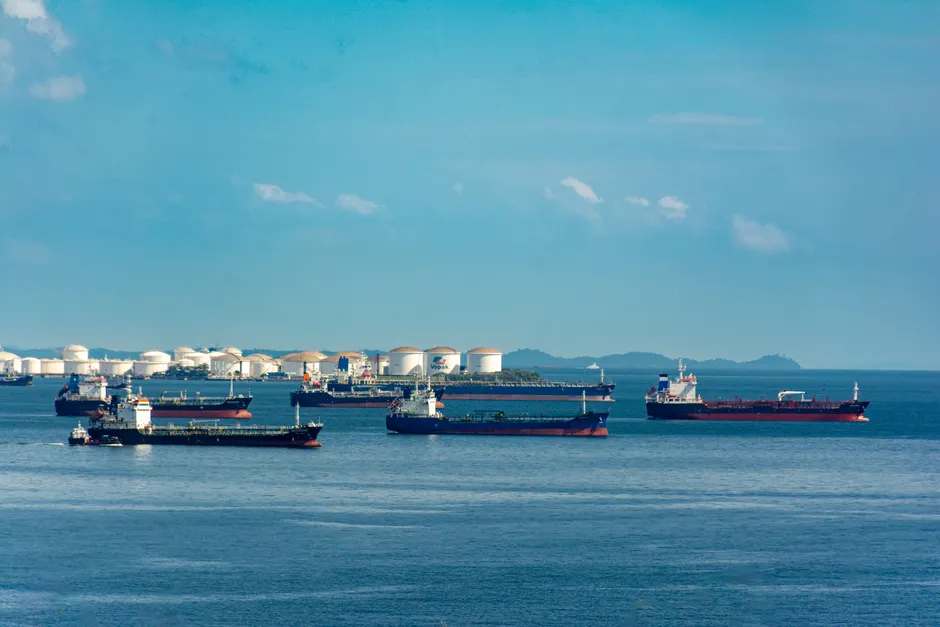
Hormuz Tensions Flare and Recede: A Tanker Strike, U.S. Retaliation, and a Fragile Halt

The United States struck Iran on June 27, 2026, hours after a tanker was hit in the Strait of Hormuz, before both sides agreed to halt attacks and return to talks — a rapid escalation-and-pullback that tested one of the world's most consequential chokepoints. Reuters reported both the U.S. strikes and the subsequent agreement to stand down.
The tanker incident and the military exchange landed just four days after Oman and Iran had agreed to continue discussions on the future administration of Hormuz navigation — a diplomatic signal that the strait's governance was already under active negotiation before the shooting started. Reuters reported those talks on June 23. Iran's Foreign Ministry, for its part, issued a statement asserting that the strait remains open and maritime traffic uninterrupted. Iran MFA
The Strait of Hormuz is the narrow passage between Iran and Oman connecting the Persian Gulf to the Gulf of Oman and the Arabian Sea. Roughly 20 percent of global oil supply — including the bulk of crude exports from Saudi Arabia, Iraq, Kuwait, and the UAE — transits it daily. Closure or sustained disruption would trigger an immediate supply shock with no short-term logistical substitute. That is precisely why Iranian officials have historically held the threat of closure as strategic leverage, and why every kinetic incident in the strait pulls an outsized reaction from energy markets and naval planners alike.
The Escalation Sequence
The sequence that unfolded on June 27 follows a familiar but dangerous pattern in the gulf: an ambiguous attack on a commercial vessel, attribution disputes, and a military response before the diplomatic channel can absorb the shock. CNN reported the tanker strike as U.S. and Iranian forces traded attacks — framing the commercial hit within a broader exchange rather than as an isolated provocation.
That the U.S. and Iran reached a halt-and-talk agreement the same day as the strikes is notable. It suggests both parties retained functional back-channels capable of de-escalation under live fire. Oman's role is likely not incidental here. Muscat has served as the preferred quiet intermediary between Washington and Tehran for decades — most consequentially during the nuclear negotiations that preceded the 2015 JCPOA. Its active engagement on Hormuz governance as recently as June 23 positions it as a plausible conduit for the rapid standdown brokered on June 27.
Governance of the Strait
The Oman-Iran talks introduce a dimension that goes beyond crisis management. Negotiating the "future administration of navigation" implies structural questions: who oversees traffic separation schemes, how inspection regimes are handled, and whether Iran's assertion of co-sovereignty over the strait — contested by international maritime law, which treats Hormuz as subject to transit passage rights under UNCLOS — forms part of any eventual framework.
Iran has long maintained that coastal states hold authority to regulate transit through the strait. The U.S. and the broader maritime community reject that position, insisting on the right of unimpeded transit passage for all vessels, including warships. Any governance framework that Oman helps broker would have to navigate that legal fault line, and any agreement that implicitly legitimizes Iranian oversight could set a precedent with ramifications well beyond the Persian Gulf.
The halt-and-talk outcome on June 27 provides a temporary floor. But the underlying drivers — Iran's nuclear and sanctions status, the bilateral U.S.-Iran military posture, and the unresolved question of who governs the world's most strategically sensitive waterway — have not changed. The Oman track is the only active diplomatic mechanism addressing the structural issue rather than the immediate incident. Whether it survives the June 27 exchange, and whether Washington is a party to it or merely a beneficiary, will determine whether this week's rapid standdown becomes a durable arrangement or simply a pause before the next escalation.