US-Iran Détente Frays as Tanker Strikes Hit Hormuz, Washington Pulls Oil Waiver
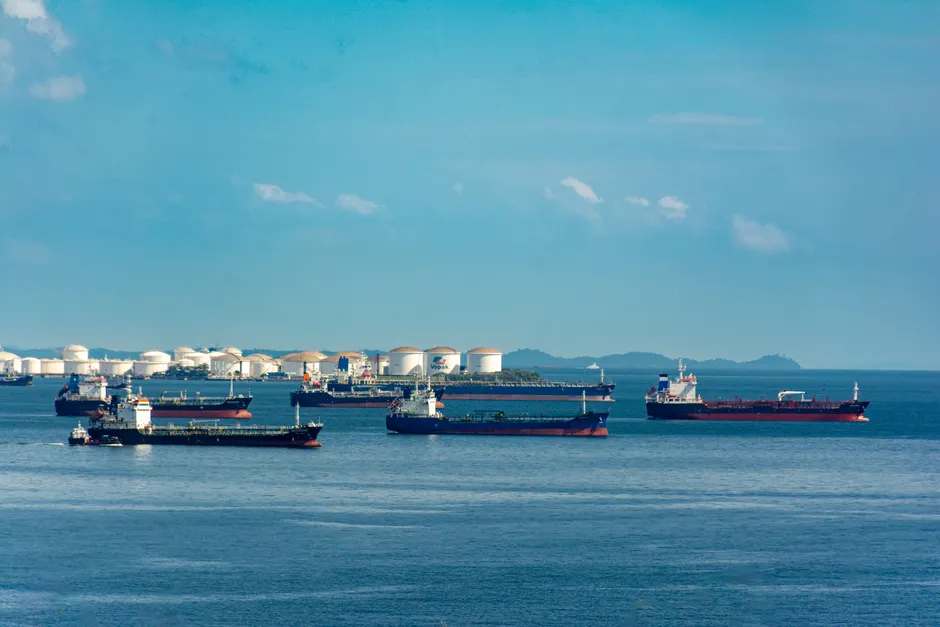
Three tankers were hit by projectiles in the Strait of Hormuz region in early July, and the United States responded by revoking a license that had allowed Iran to sell oil, according to Reuters. Iran has said there will be no further talks unless President Trump halts what Tehran characterizes as continued pressure, per the same report. The episode marks the sharpest test yet of the Memorandum of Understanding the two governments signed on June 18.
The MOU itself was never a peace treaty. Reuters described it at the time as an interim instrument — an extension of a ceasefire first announced in April 2026, pushed out by 60 days, with a further round of talks on a final agreement expected within that window (Reuters). Its terms included lifting the U.S. naval blockade on Iranian ports and reopening the Strait of Hormuz to commercial traffic, a corridor that carries roughly one-fifth of global oil shipments (Reuters).
Trump announced the agreement on June 14 and followed with a string of Truth Social posts declaring "the Deal with the Islamic Republic of Iran is now complete" and authorizing "the toll free opening of the Strait of Hormuz" (Truth Social). He later wrote that the deal "will bring Peace and Security to the whole Region" and claimed credit over predecessors: "Many presidents have tried to make Peace with Iran, and all have failed before me" (Truth Social). The White House's June 19 release, titled "President Trump's Iran Agreement Is America First in Action," went further still, stating the agreement ensures Iran will never obtain a nuclear weapon and reopens Hormuz to free navigation (White House). A White House video from June 11 had already captured Trump saying, "we have a deal that Iran will never have a nuclear weapon" (White House) — language that outpaces what an MOU, by definition non-binding, typically commits parties to.
The sequence since signing has not been linear. Trump discussed the deal at the G7 Summit in Evian on June 17 (White House), and Vice President JD Vance used the same period to criticize Israeli officials who had attacked Trump over the terms — a rare instance of the administration publicly rebuking Israel rather than Iran (CNN). Yet within days, at a NATO summit, Trump himself declared the interim deal "over," even as U.S. and Iranian negotiators reportedly proceeded to a second day of talks amid renewed threats over Hormuz closure (Reuters). The same report noted Washington had waived Iran sanctions after that round of talks — a waiver now partly reversed by the license revocation following the tanker strikes.
Markets have tracked the diplomacy closely. Oil settled at a three-month low after the June 14 announcement (Reuters), then crude fell below $70 a barrel on June 26 after an attack on a cargo ship near Oman (CNBC) — a case where a shipping disruption compressed rather than lifted prices, an inversion of the standard risk-premium response that likely reflects expectations the strait would soon reopen. Iran had separately been reported to have struck a container ship in the strait around June 25, halting traffic altogether (New York Times). By early July, prices reversed again, rising on reports of the Iranian attack on commercial ships (CNBC Africa).
Underlying the diplomacy is a coercive economic architecture Trump built well before June's talks. A February 2026 executive order reaffirmed the national emergency with respect to Iran and established a mechanism for tariffs on third countries doing business with Tehran (White House). Trump later specified the rate: 25% on any country's U.S.-facing trade if it continues business with Iran (Truth Social). That architecture remains in place regardless of the MOU's fate, giving Washington leverage that doesn't depend on Tehran's cooperation.
The Wall Street Journal reported on June 30 that Trump had been briefed on all-out war options against Iran but chose to continue with diplomatic talks instead (WSJ). That decision predates the tanker strikes by roughly a week, and it frames the current impasse: the administration has a stated preference for negotiation over escalation, even as its own rhetoric has oscillated between declaring victory and declaring the deal dead.
Technical talks in Doha concluded around July 1, focused specifically on securing the strait for shipping (Reuters). That those talks preceded, rather than followed, the July tanker strikes suggests the technical track and the security situation on the water are not yet in sync. Iran's position, per Reuters, is now conditioned on Trump halting pressure before any further talks proceed — a precondition that, paired with the license revocation, leaves the 60-day window from the June MOU looking less like a deadline for a final agreement than a marker of how quickly an interim arrangement can unravel under real-world stress-testing in the strait itself.