Pakistan–Afghanistan Border War: A Cycle of Strikes With No Exit in Sight
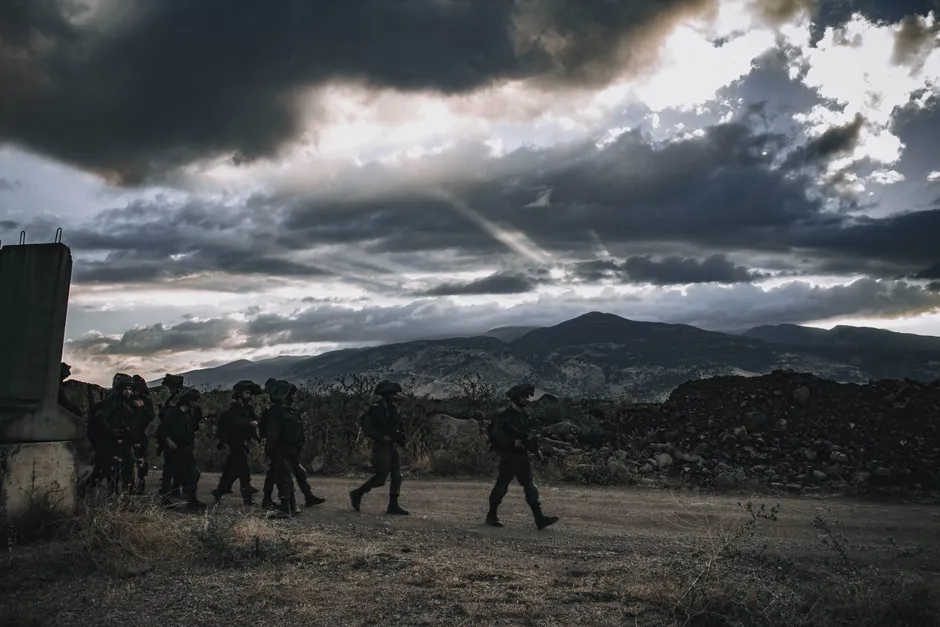
Pakistan claimed on June 28–29, 2026 that ground operations and strikes along the Afghan border killed 29 militants — the latest exchange in a sustained, escalating military confrontation between Islamabad and Kabul that has now produced cross-border airstrikes from both sides within the span of three weeks.
The current arc of violence began sharpening in early 2026. In February, Pakistani airstrikes in eastern Afghanistan killed at least 70 militants the government attributed to attacks inside Pakistan, according to the Associated Press. In March, Pakistani and Afghan forces exchanged fire at dozens of border points in a single day, a scale of simultaneous contact points that pointed to organized military coordination rather than isolated skirmishes, Reuters reported. The UN, noting the March clash, also reported that the fighting had displaced 100,000 people.
The June Escalation
On June 10, Pakistani airstrikes hit three Afghan provinces. The Afghan Taliban said at least 13 people were killed, including 11 children, Reuters reported. Pakistan framed those strikes — as it has framed earlier operations — as targeted action against infrastructure used to plan and facilitate terrorist attacks, language drawn directly from an October 2025 Foreign Ministry statement that set out Islamabad's public legal rationale. Nine days later, on June 19, Afghan forces struck what the Taliban described as militant hideouts in two Pakistani provinces, Reuters reported — the first confirmed Afghan retaliatory airstrike of the cycle, and a notable threshold: a Taliban-governed Afghanistan conducting offensive air operations inside a nuclear-armed neighbor.
Pakistan's Foreign Ministry has been building a diplomatic record in parallel. It summoned the Afghan Chargé d'Affaires in May 2026 to deliver a formal demarche over a terrorist attack on a police post in Bannu, a district in Khyber Pakhtunkhwa with a long history of TTP-linked violence. A separate, undated statement warned that further provocations by the Taliban regime or affiliated groups would be met with a response — the studied vagueness of the phrasing leaving open the range of options. When the British government's senior representative for Afghanistan commented on the border situation, Islamabad rejected those remarks as one-sided, signaling both sensitivity to external scrutiny and a determination to manage the narrative internationally.
What Is Actually Being Contested
The structural driver of this conflict is well-established: Pakistan holds the Afghan Taliban responsible for providing sanctuary — tacit or operational — to the Tehrik-i-Taliban Pakistan (TTP), a distinct but ideologically aligned organization that has conducted hundreds of attacks inside Pakistan since the Afghan Taliban retook Kabul in August 2021. The TTP, which seeks to overthrow the Pakistani state and impose its own interpretation of sharia, exploits the Durand Line's disputed status and the Afghan Taliban's unwillingness or inability to act against it. Islamabad has repeatedly demanded extradition or suppression of TTP leadership; Kabul has repeatedly declined, publicly denying any harboring while offering mediation.
What has changed in 2026 is the method. Pakistan has moved from diplomatic pressure and periodic cross-border shelling to sustained air and ground operations targeting what it describes as TTP infrastructure on Afghan soil. The Afghan Taliban, rather than absorbing those strikes without response, has now conducted its own airstrikes into Pakistani territory — framed, symmetrically, as counterterrorism operations against "Islamist militants." Both governments are using the same language to justify the same kind of action against each other.
The civilian casualty figures from the June 10 strikes — 11 children among 13 dead, per Taliban sources — will complicate Pakistan's international position regardless of the accuracy of its targeting claims. Islamabad has not publicly disputed the toll figures, and its characterization of the strikes as "precise" sits in tension with them. That tension is the opening through which third parties, including the British interlocutor Islamabad already rebuffed, will continue to press.
The deeper question is whether either side has a strategic theory of success. Pakistan's military logic — raise the cost of sanctuary until the Taliban calculates it is cheaper to suppress the TTP — has not yet produced that outcome across five-plus years of pressure. The Taliban, for its part, cannot publicly accommodate Pakistani demands without appearing to subordinate Afghan sovereignty to Islamabad, a politically corrosive position for a government whose legitimacy rests on nationalist as well as Islamist credentials. The displacement of 100,000 people by March's border clashes, and the trajectory since, suggests the human cost of this impasse is accumulating faster than either capital is prepared to acknowledge.