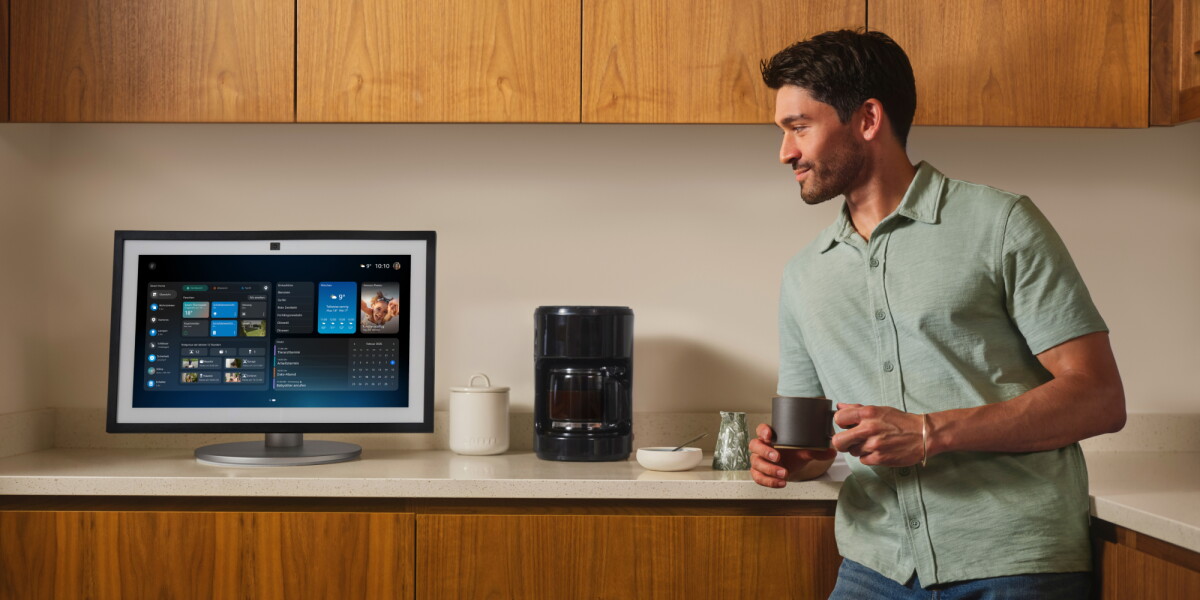
Alexa Tablets Replace Fire as Amazon Teases Neo Design System

Amazon has retired the Fire name for tablets in favor of a new Alexa Tablet series. Panos Panay, Senior Vice President of Devices and Alexa, confirmed the change. Engadget
Panay confirmed the Alexa Tablet series is the first Amazon hardware product with Alexa as its brand. The distinction matters for brand architecture. Fire defined a value tablet line. Alexa defines an assistant-led compute model.
Industrial design for that shift sits with Ralf Groene, who leads design for Amazon Devices & Services. Groene is developing a design language called Neo. Panay did not detail materials, dimensions, or interface specifications. He positioned Neo as a system-level effort rather than a single-product refresh.
When asked if the Alexa tablets were the start of more Alexa-branded hardware, Panay said "No, it's just when it makes sense" and added "not that you've seen." The wording leaves room for expansion without committing to it. It also signals selective rebranding rather than a wholesale rename.
Panay indicated he would be back later this month to share more about the Echo speakers and displays brand as well as Neo. That timeline puts the tablet announcement first in sequence. Echo clarification follows.
Panay described Neo as a "structure of how we're moving information" to customers so they can get back to it depending on where they are. The phrasing points to continuity across form factors. Information persists. The endpoint changes.
The tablet move connects directly to Alexa+. Amazon introduced Alexa+ as the next generation of Alexa powered by generative AI. About Amazon Amazon covered the system at a 2025 Devices & Services event that included the new Alexa+. About Amazon
On the hardware side, Amazon announced Echo Dot Max and Echo Studio devices built for Alexa+. About Amazon Those products use custom-designed silicon and the Omnisense sensor fusion platform to enable Alexa+ experiences. Amazon also announced a new Fire TV lineup with Alexa+. About Amazon
For a tech-literate reader, the stack is legible. Custom silicon handles on-device inference and sensor processing. Omnisense fuses acoustic, motion, and proximity inputs for presence and context. Alexa+ provides the generative model layer for conversation, summarization, and task orchestration. The tablet becomes another endpoint in that architecture, with touch and portability added to far-field voice and lean-back TV.
The broader context here is worth spelling out. Consolidating tablets under Alexa simplifies the mental model for developers and accessory makers. One assistant brand, multiple surfaces, shared continuity primitives for state, history, and notifications. In this author's view, that is the practical test for Neo. A design language earns its keep not in renders but in latency budgets, readability at a glance, predictable voice-plus-touch handoffs, and consistent privacy controls across devices with very different sensor profiles.
There is also a longer-arc reason for optimism. Each prior shift in personal computing, from desktop GUI to browser to smartphone to voice, initially looked like a naming exercise. The useful change arrived later, when information started following the user instead of living inside the app where it was created. If Neo delivers on Panay's description, tablets, speakers, displays, and TV stop competing as destinations and start functioning as views into the same interaction history. That is unglamorous infrastructure work. It is also what makes new hardware categories usable.