Miles Guo Sentenced to 30 Years for Leading Billion-Dollar Fraud Scheme
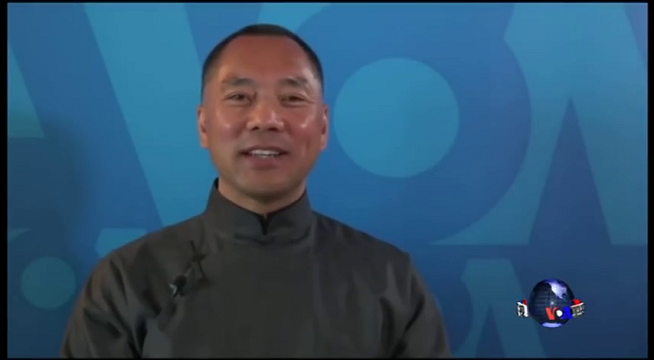
Miles Guo — the exiled Chinese billionaire who built a media and political empire in the United States while soliciting funds from tens of thousands of Chinese diaspora followers — was sentenced to 30 years in federal prison on June 29, 2026, for orchestrating a fraud that prosecutors say stole more than $1 billion from victims, according to the U.S. Attorney's Office for the Southern District of New York.
The sentence caps a legal saga that began with Guo's arrest in New York in March 2023. He has been held in Brooklyn since then. A seven-week jury trial opened in late May 2024; on July 16, 2024, the jury returned guilty verdicts on nine of the 12 criminal counts, including racketeering conspiracy and wire fraud. His chief-of-staff had already pleaded guilty to related fraud charges in May 2024, a cooperation that prosecutors typically use to corroborate testimony about a scheme's internal workings.
The Scheme and Its Scale
Guo, who also goes by Ho Wan Kwok and Guo Wengui, had cultivated a following largely among mainland Chinese nationals and diaspora communities hostile to the Chinese Communist Party. That audience became the target. Prosecutors established that he used multiple vehicles — media platforms, purported investment funds, and a cryptocurrency — to solicit money under false pretenses, ultimately diverting over $1 billion for personal use.
The racketeering charge is significant in this context. RICO counts require prosecutors to prove a pattern of related criminal acts conducted through an enterprise, a higher evidentiary bar than a standalone fraud count. A guilty verdict on that charge signals the jury found Guo's operation was not opportunistic but systematic — an organization built around fraud rather than a legitimate business that crossed legal lines.
Political Dimension
Guo's profile was never purely financial. He positioned himself as a prominent critic of Beijing and cultivated ties with figures in American conservative political circles, including a long-standing association with Steve Bannon, who was separately indicted in 2020 on charges related to a border-wall fundraising effort (Bannon was subsequently pardoned before trial). That political adjacency drew sustained attention to Guo's activities from both U.S. law enforcement and Chinese state media, which had its own incentives to publicize his legal troubles.
Beijing had sought Guo's extradition for years on separate corruption allegations — claims Guo dismissed as political persecution. U.S. courts did not act on those requests, and the American prosecution proceeded entirely on conduct occurring within U.S. jurisdiction. The 30-year sentence was handed down on American charges, not as a result of any coordination with Chinese authorities.
What the Sentence Means
Thirty years is a severe term by federal standards for a white-collar case. Federal sentencing guidelines for large-scale fraud schemes can produce advisory ranges well above statutory minimums, particularly when loss amounts exceed nine figures and the number of victims is large. Judges retain discretion, but a sentence at this level reflects judicial findings about the breadth of harm, the degree of planning, and Guo's role as the scheme's architect.
The practical effect for victims is limited in the near term. Forfeiture and restitution orders typically follow sentencing, but recovering funds from complex, multi-entity fraud operations — particularly where assets have moved internationally — is a protracted process with no guarantee of meaningful recovery. Investigators will have traced asset flows during the prosecution; whether those assets remain reachable is a separate question.
The broader consequence sits at the intersection of diaspora community trust and the vulnerability of politically charged fundraising to fraud. Guo's operation drew from people who had specific grievances against the Chinese state and were therefore primed to trust an outspoken dissident with their money. That dynamic is not unique to this case. High-profile prosecutions like this one tend to prompt compliance reviews inside organizations that solicit funds from diaspora communities, even when those organizations have no connection to the defendant.
Guo, 52 at the time of his arrest, faces the effective remainder of his active life in federal custody.


