ZLUDA Version 6 Released, Bringing CUDA Compatibility Layer to AMD ROCm 6.2
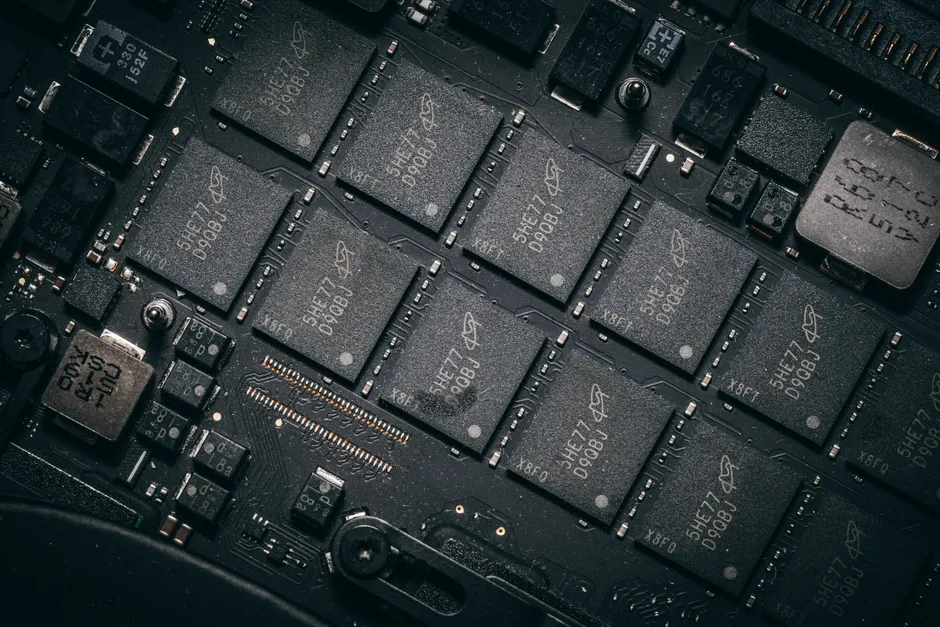
ZLUDA Version 6 Released, Bringing CUDA Compatibility Layer to AMD ROCm 6.2
The vosen/ZLUDA project shipped Version 6 on 30 June 2026 — a new major release of the open-source compatibility layer that lets unmodified CUDA applications execute on non-NVIDIA GPUs.
ZLUDA intercepts CUDA API calls at the application layer and translates them for the underlying GPU runtime, sparing developers from rewriting or recompiling GPU-accelerated workloads to target alternative hardware. Version 6 targets AMD's ROCm SDK version 6.2, aligning the project with AMD's current-generation compute stack.
The release arrives as the 184th published to the GitHub repository, following 183 prior versions under the project's MIT license. That version count reflects years of iterative work; a major version bump here signals a meaningful architectural or compatibility boundary rather than incremental patching.
For GPU-accelerated workloads — inference serving, scientific simulation, rendering pipelines — portability across hardware vendors has long been a practical headache. CUDA's deep integration with the NVIDIA toolchain means that most ML frameworks, libraries, and applications carry an implicit hardware dependency, even when the underlying math is vendor-agnostic. ZLUDA's stated goal is to dissolve that dependency without touching the application binary.
The significance for AMD hardware users is concrete. ROCm has matured steadily and now powers a broad range of data-center GPU deployments, yet the CUDA ecosystem remains the default assumption for most ML tooling. A compatibility shim that tracks a current ROCm release — 6.2, in this case — rather than lagging behind it meaningfully expands the set of workloads AMD hardware can run without modification.
Worth flagging: compatibility layers of this kind carry inherent caveats. CUDA is not a monolithic API; it spans compute kernels, memory management, graph APIs, streams, and a growing surface area of library extensions. No translation layer achieves full fidelity across all of those, and performance overhead on translated paths can vary significantly depending on workload characteristics. Users running latency-sensitive inference or memory-bandwidth-bound kernels should profile on their specific workloads rather than assume parity with native execution. The project's documentation and the release notes for Version 6 are the right starting point for understanding the current coverage boundaries.
The MIT license means ZLUDA can be incorporated freely into commercial workflows, redistributed, and forked — a permissive stance that has historically encouraged adoption in projects where proprietary or copyleft constraints would otherwise be a barrier.
The broader context here is a GPU market under pressure from multiple directions. NVIDIA's CUDA moat is real but not impenetrable. HIP, OpenCL, SYCL, and now tools like ZLUDA represent different approaches to the same underlying problem: reducing the friction cost of moving compute workloads between hardware generations or vendors. Each approach has trade-offs — native ports via HIP offer the best performance ceiling but require code changes; ZLUDA prioritises zero-modification portability at the cost of some translation overhead. For organisations evaluating hardware diversity in their GPU fleets, the existence of a well-maintained, MIT-licensed compatibility layer that tracks current ROCm releases is a practical data point.
Version 6 is available now from the vosen/ZLUDA GitHub repository.

