Anthropic Launches Claude Science, an AI Workbench Built for Researchers
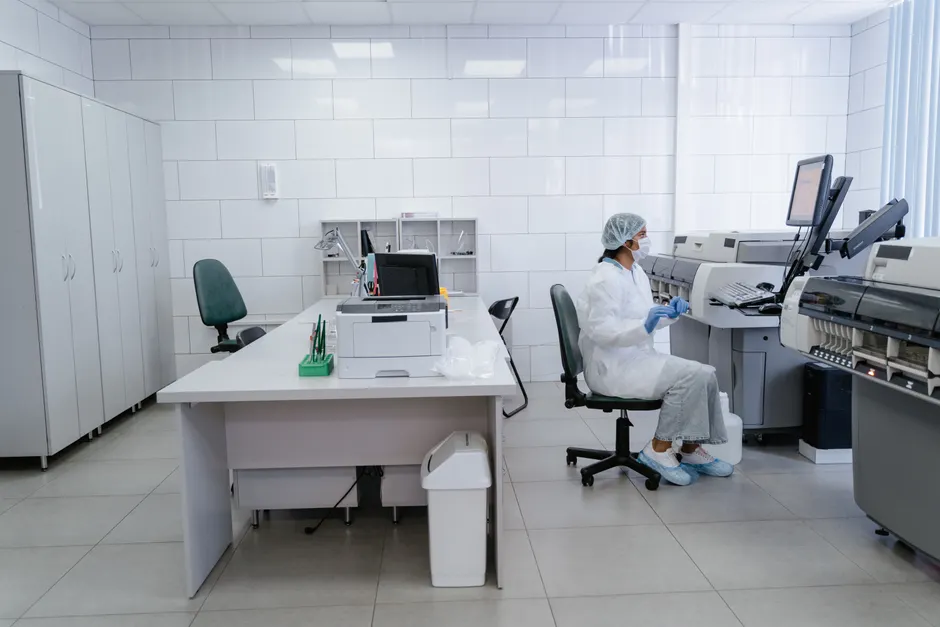
Anthropic released Claude Science on June 30, 2026, a dedicated AI workbench designed for scientists and researchers that integrates the tools, packages, and databases they already use and produces auditable artifacts from its work.
The product runs on existing Claude models rather than a new foundation, extending Anthropic's enterprise portfolio into a segment it had been approaching incrementally. The company had signaled this direction in October 2025, when it launched Claude for Life Sciences — a targeted offering that introduced scientific connectors, domain-specific skills, and improved performance for drug discovery workflows. Claude Science appears to generalize that architecture into a broader research workbench.
What Claude Science Actually Does
The workbench connects to tools and databases researchers are already running in their environments, rather than requiring migration to a proprietary stack. That connectivity, combined with native code execution — covering data analysis, visualization, complex calculations, system commands, and file operations — positions it as an ambient layer on top of existing research infrastructure rather than a replacement for it. The auditable artifact output is notable: producing traceable, reproducible records of computational steps is a non-trivial requirement in regulated research environments, and it addresses one of the more credible criticisms of LLM use in scientific workflows, which is that model reasoning can be opaque and difficult to verify or reproduce.
Anthropic convened an event, "The Briefing: AI for Science," on June 29, 2026, bringing together Anthropic leadership, life sciences executives, and representatives from leading research institutions to discuss Claude's applications in scientific research. Staging that event the day before a product launch is a conventional but effective sequence: it primes the institutional audience and concentrates coverage.
The Broader Context
The customizable workbench framing is worth examining carefully. Scientific research environments are heterogeneous by nature — proteomics pipelines, cheminformatics toolkits, bioinformatics frameworks, and clinical data systems rarely share a common interface layer. An AI system that can orchestrate across those without forcing tool standardization solves a real integration problem. Whether Claude Science's connectors cover enough of that surface area in practice is not something the launch announcement settles.
The auditable artifact output is the detail that will matter most to enterprise and institutional buyers. In my view, it is also the feature most likely to determine whether Claude Science gets traction beyond proof-of-concept deployments. Scientific credibility depends on reproducibility; a workbench that can show its work in a format auditors, regulators, and peer reviewers can follow is meaningfully different from one that cannot. Anthropic is threading a needle here that pure chat interfaces were never designed to navigate.
Targeting scientists and researchers globally with an enterprise product also puts Anthropic directly into territory occupied by specialized scientific software vendors, general-purpose cloud AI services from AWS, Google, and Microsoft, and domain-specific platforms from companies like Schrödinger and Benchling. None of those competitors lacks resources. What Anthropic is betting on is that Claude's reasoning quality — particularly on complex, multi-step scientific problems — combined with the workbench's integration layer, is differentiated enough to justify the switch cost for research teams already embedded in existing toolchains.
The life sciences entry point from October 2025 now reads as a deliberate beachhead. Drug discovery is capital-intensive, has clear ROI metrics tied to pipeline velocity, and is already familiar with probabilistic computational methods from ML-assisted screening. It is an instructive first domain for an AI workbench: if you can demonstrate value reduction in time-to-candidate, the business case writes itself. Claude Science extends that argument to the broader scientific enterprise, which is a larger and more varied market but one where the purchasing and evaluation cycles are considerably longer and less uniform.
The pace of iteration here — a domain-specific product in October 2025, a generalized workbench by June 2026 — suggests Anthropic is moving quickly to establish platform positioning in scientific AI before that space consolidates. Whether the customizable, integration-first architecture proves more durable than vertically integrated alternatives is an open question. But the design choice to run on existing Claude models and plug into existing research infrastructure, rather than build a siloed product, is a coherent one for an enterprise market where IT standardization and data governance are rarely optional considerations.


