DOJ and 17 States Settle with Cal-Maine, Hickman's, and Centrum Valley Over Egg Benchmark Manipulation
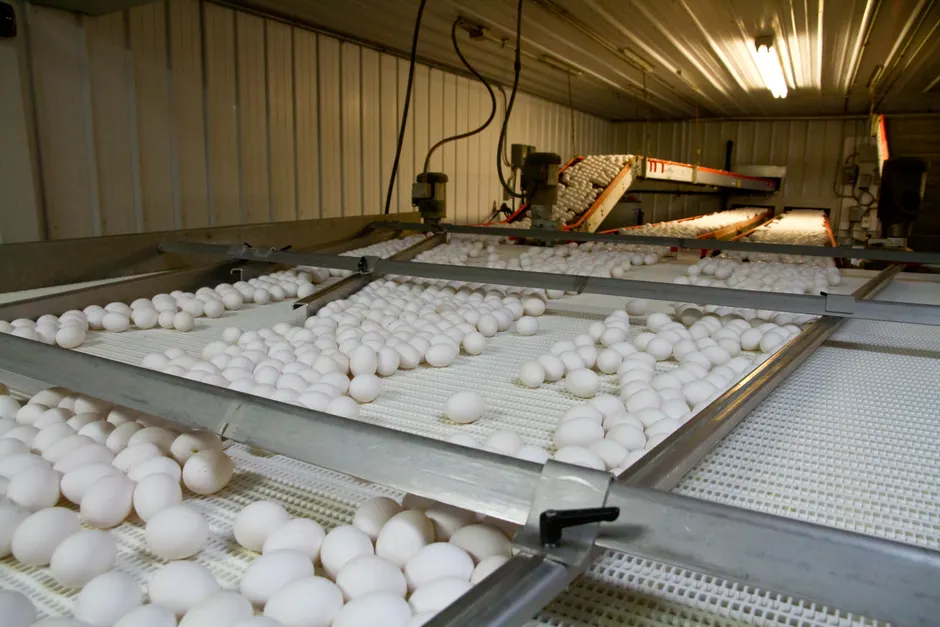
The Justice Department and a 17-state coalition have reached a settlement with three major egg producers — Cal-Maine Foods Inc., Hickman's Egg Ranch Inc., and Centrum Valley — resolving allegations that the companies coordinated through an industry price-benchmarking service to artificially inflate egg prices nationwide, according to the DOJ.
Under the terms of the agreement, the producers must donate more than 50 million eggs and pay $3.3 million in combined relief, per Maryland Attorney General Brown's office, which was part of the multistate coalition. They are also prohibited from continuing the benchmarking conduct at the center of the probe.
The core allegation is a coordinated manipulation of a shared industry benchmark — a price-reporting mechanism that wholesale buyers and institutional purchasers use as a reference point for contract negotiations. The DOJ's theory, reported by Reuters, is that producers used this service not as a passive price discovery tool but as a coordination vehicle, feeding inputs or responding to signals in ways that moved the reported benchmark higher than competitive market dynamics would have produced. Once a benchmark is skewed, every contract or purchase tied to it gets skewed with it — the manipulation propagates automatically through the supply chain.
Cal-Maine Foods is the largest shell-egg producer in the United States by volume, which gives the settlement its market weight. The company is publicly traded, making this resolution significant for its shareholders and for the institutional investors who hold egg supply chain exposure broadly. Hickman's and Centrum Valley are major regional producers. The fact that three structurally distinct firms allegedly coordinated around a single benchmark mechanism is consistent with how antitrust enforcers increasingly approach price-coordination cases: the focus has shifted from proving explicit price-fixing agreements to demonstrating that firms used common information intermediaries — benchmarks, industry surveys, data platforms — to achieve parallel pricing outcomes without a proverbial smoke-filled room.
The $3.3 million cash component of this settlement is modest relative to the revenues involved in U.S. egg markets, which have been politically and economically charged through the avian influenza cycle of 2022–2025. The egg donation, however, is the more operationally visible remedy. Fifty million eggs distributed through food banks and state programs functions as direct consumer restitution — it reaches households that felt the price impact most acutely. Whether that calculation satisfies the harm actually inflicted will likely be contested in downstream civil litigation, which this kind of DOJ consent decree typically does not foreclose.
The multistate structure of the coalition is worth noting. Seventeen state attorneys general participating alongside federal enforcers reflects the model that has become standard in consumer-harm antitrust enforcement since the mid-2010s — states contributing investigative resources, data from local retail markets, and political accountability into cases that the federal agencies might otherwise deprioritize. Maryland's AG office appears to have played a leading coordination role here.
The producers' agreement to end the benchmark conduct rather than contest the allegations avoids a prolonged discovery process that would have surfaced internal communications and pricing strategy documents. For Cal-Maine in particular — a publicly traded company with ongoing shareholder scrutiny — a negotiated resolution that doesn't require admissions of liability carries obvious strategic value, even at the cost of the egg donation and cash payment.
Benchmark manipulation as an antitrust theory has precedent in commodity and financial markets — the LIBOR and FX rate-rigging cases of the prior decade established the doctrinal scaffolding — but its application to agricultural commodity benchmarks in a domestic consumer-goods context is a less-traveled enforcement path. The DOJ's willingness to pursue it here, and to do so jointly with a broad state coalition, is a signal about where enforcement attention is trained on commodity pricing infrastructure going forward.


