Dish DBS and EchoStar Wireless File Prepackaged Chapter 11, Targeting $2.4 Billion FCC Fund
Dish DBS and EchoStar Wireless File Prepackaged Chapter 11, Targeting $2.4 Billion FCC Fund
EchoStar's Dish DBS and wireless subsidiaries filed for Chapter 11 bankruptcy protection on June 30, 2026, seeking court approval for a prepackaged reorganization plan, Reuters reports.
A prepackaged filing means creditors have already voted on the plan before the court petition — typically a signal that the major parties have agreed to the terms in advance and are using the Chapter 11 process primarily to bind holdouts and effect the legal restructuring cleanly. It is a faster, lower-friction path through bankruptcy than a contested reorganization, and it limits the period of uncertainty for customers, vendors, and regulators alike.
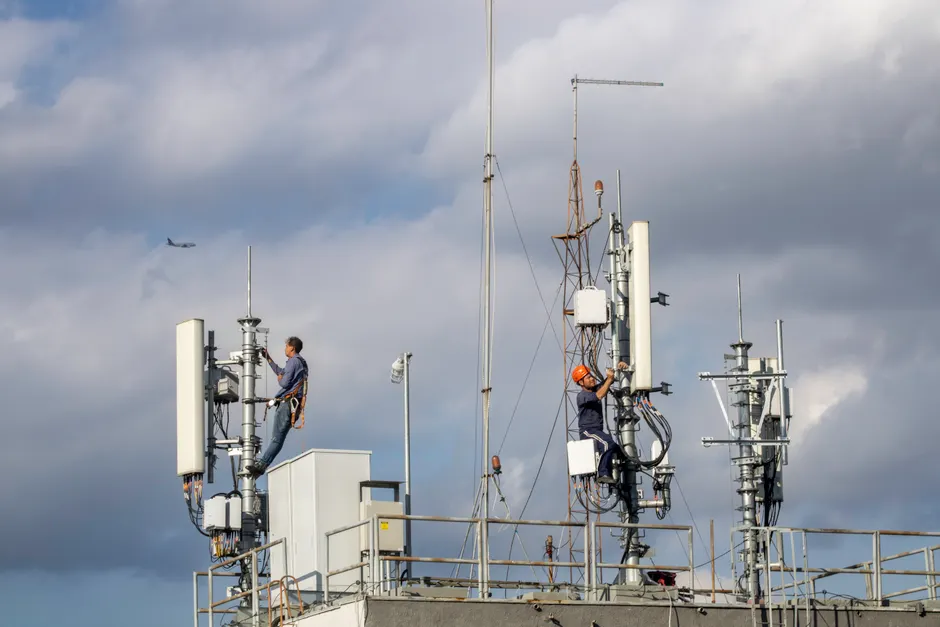
Central to the plan is the deployment of a $2.4 billion FCC-mandated fund earmarked for qualifying Dish Wireless 5G infrastructure. That figure has been a contested asset for some time. Dish accumulated its spectrum portfolio through years of FCC auctions and was required to meet buildout milestones tied to the licenses — commitments the company struggled to satisfy at scale. The FCC-mandated fund represents money set aside under regulatory requirements, and directing it through the bankruptcy reorganization plan will likely require both court approval and FCC sign-off, given the agency's jurisdiction over the underlying licenses.
The filing was not entirely without warning. In June 2025, EchoStar was already preparing a potential bankruptcy filing specifically to shield its wireless spectrum licenses during an ongoing FCC review, Reuters reported at the time. The gap between that preparatory posture and today's actual filing — roughly twelve months — suggests the intervening period involved negotiating the prepackaged structure with creditors and navigating the regulatory dimensions of a spectrum portfolio that has always been the company's most consequential asset.
Dish's spectrum holdings have been a recurring subject of industry debate for the better part of a decade. The company acquired licenses across multiple bands, including AWS-4, 700 MHz E-block, and the H-block, and later absorbed Boost Mobile and portions of the Sprint wireless customer base following T-Mobile's merger with Sprint in 2020 — a deal the DOJ conditioned on Dish building a facilities-based 5G network from scratch. The network buildout that followed was ambitious on paper: Dish pursued an open-RAN, cloud-native architecture at a time when most operators were still evaluating those approaches in pilots. Executing it at commercial scale, while carrying significant debt and a legacy satellite pay-TV business in secular decline, proved to be a different matter.
The DBS subsidiary — the direct-broadcast satellite television business — is folded into the same filing, though its fortunes are structurally distinct from the wireless side. Pay-TV via satellite has been losing subscribers to streaming for years; that trajectory is well understood and irreversible in the aggregate. The satellite business is relevant here primarily because it shares a corporate parent and balance sheet with the wireless operation, and separating or resolving one without the other would have been legally and financially complex.
Worth flagging: the treatment of the spectrum licenses through the reorganization will be the detail to watch closely. Spectrum licenses are not ordinary corporate assets — they are granted by the FCC under conditions, subject to transfer rules, and tied to buildout and holding requirements. A bankruptcy court can reorganize a company's obligations and ownership structure, but it cannot unilaterally reassign or modify FCC license terms. How the plan threads that needle, and what the FCC's posture will be toward the reorganized entity or any prospective acquirer, will determine whether the 5G infrastructure story attached to these licenses continues or effectively ends.
For the broader U.S. wireless market, the outcome has real stakes. The mid-band and low-band spectrum that Dish holds is finite and would be immediately valuable to AT&T, T-Mobile, or Verizon, or to a newer entrant with the capital to activate it. A clean reorganization that keeps the licenses productive and the $2.4 billion fund deployed toward actual infrastructure is the constructive scenario. A prolonged dispute over license validity or transfer approvals is the costly one — for competitors, for the FCC's auction framework, and for the rural and underserved markets that Dish's buildout commitments were partly designed to reach.
The prepackaged structure suggests the major creditors are aligned. Whether regulators share that alignment will become clear as the filing moves through court.


