Ireland Takes the EU Council Presidency for an Eighth Time, with Irish Now a Full Working Language
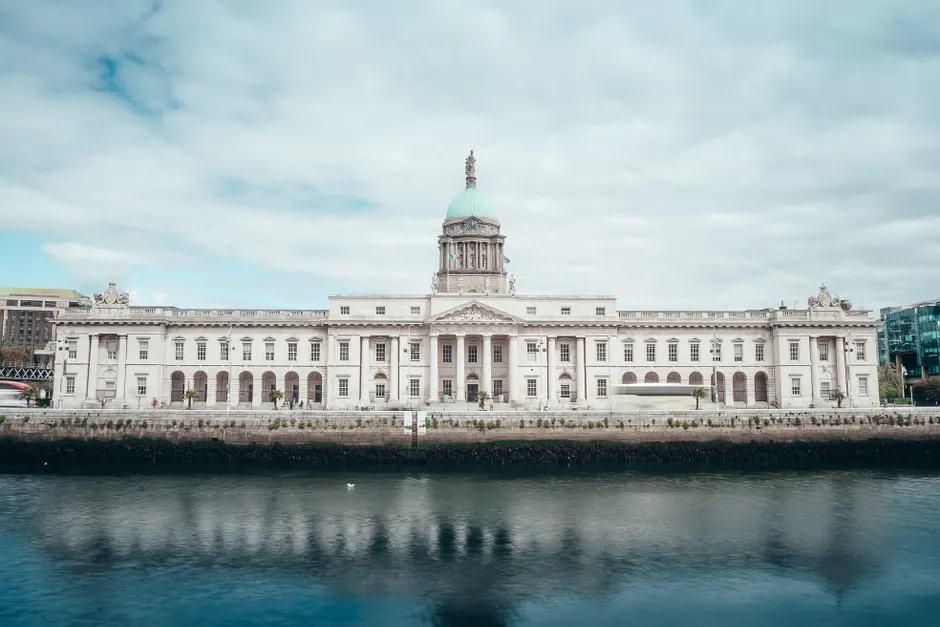
Ireland assumed the Presidency of the Council of the European Union on 1 July 2026, opening a six-month term that runs through 31 December — its eighth time holding the rotating chair since accession in 1973.
The presidency slots into a programmatic trio with Lithuania and Greece, the standard 18-month grouping the Council uses to maintain legislative continuity across successive six-month rotations. Ireland follows Cyprus, which held the chair from January to June 2026 as part of the preceding Poland–Denmark–Cyprus trio. Handovers between trios require particular coordination: the incoming presidency inherits a docket of partially negotiated files and must decide quickly which to push toward trilogues, which to park, and which to reprioritise under its own programme.
Ireland's official policy programme, logo, and website were launched on 10 June 2026, three weeks before the term began — an unusually visible run-up that gave stakeholders time to orient before the first formal Council configurations convened. Minister Helen McEntee set out the presidency's legislative and political priorities in a press release on 11 June, which also confirmed that Ireland will host a meeting of the European Political Community during its term. The EPC, relaunched in 2022 as a forum spanning EU member states and non-member European democracies, has become a standing fixture on presidency agendas — its hosting carries diplomatic weight beyond the formal Council workstream.
One structural change distinguishes this presidency from Ireland's previous seven. As of 2026, Irish — Gaeilge — operates as a fully working language of the EU for the first time, having been granted official status in 2007 but subject to a derogation that limited its use in legislative procedures. That derogation expired at the end of 2021, with a phased implementation that only reaches full operational status now. In practical terms, Irish must now be used in the preparation of legal acts, Council working party documents, and formal correspondence — a logistical undertaking that required sustained investment in translation capacity across the institutions. Ireland holds the chair precisely as that transition completes, meaning the presidency secretariat will, for the first time, manage Council business with Irish as a live procedural language rather than a symbolic one.
The broader institutional context matters here. Presidency terms since 2022 have been shaped by overlapping pressure tracks — the war in Ukraine and its knock-on effects on energy, defence spending, and enlargement policy; the push to operationalise the European Defence Union; digital and AI regulation moving from framework to implementation; and an ongoing effort to revise the EU's fiscal rules in ways that accommodate capital-intensive strategic investment. Ireland, as a small open economy with specific exposure to corporate tax reform, transatlantic trade dynamics, and the EU–UK relationship via the Windsor Framework, brings a distinct set of sensitivities to the chair. Presidencies are formally expected to act as honest brokers — advancing Council consensus rather than national interest — but the choice of which files to calendar, and when, is never without consequence for the chair-holder.
Ireland's previous presidency, in the second half of 2013, took place during the tail end of the eurozone crisis and the consolidation of the European Stability Mechanism. The political and economic landscape in 2026 is materially different, but the structural demands of the role are not: build qualified-majority coalitions on contested dossiers, manage the Parliament's legislative timeline, and keep the European Council's strategic agenda aligned with the working-party level where actual drafting happens.
Six months is a short window. The presidency that ends 31 December 2026 will hand a partially cleared — and partially loaded — docket to Lithuania when it opens 2027. What Ireland completes, what it advances, and what it consciously defers will shape the legislative rhythm of the trio's final chapter.


