Amnesty Documents RSF Crimes Against Humanity and Ethnic Cleansing in El Fasher
Amnesty International published a detailed report on 30 June 2026 concluding that the Rapid Support Forces committed crimes against humanity and ethnic cleansing during their campaign to seize El Fasher, the capital of North Darfur State and the last major city in Darfur not under RSF control at the war's outbreak. The document — AFR54/1116/2026 — is the organization's most comprehensive accounting to date of RSF conduct in North Darfur and draws on survivor testimony, satellite imagery, and open-source verification.
El Fasher had held a singular strategic and symbolic position throughout Sudan's civil war. When fighting between the Sudanese Armed Forces (SAF) and the RSF erupted in April 2023, every other major urban center in Darfur fell within months. El Fasher held out, sheltering an estimated one to two million internally displaced people alongside its resident population. That status made it both a refuge and a target. The RSF claimed control of parts of the city on 26 October 2025, marking the formal collapse of a defensive perimeter that had already been under sustained pressure for well over a year.
What the Report Documents
The Amnesty report catalogues a pattern of conduct that, under international humanitarian law, extends well beyond incidental harm. Investigators found evidence that RSF fighters deliberately killed civilians, carried out mass sexual violence, and targeted protected sites — mosques, schools, and health facilities — for pillage and destruction. Survivor accounts collected by Amnesty, including testimony gathered in November 2025 from people who had escaped the city, described killings that were targeted rather than opportunistic, with victims selected along ethnic lines consistent with the broader pattern of violence against non-Arab Sudanese communities in Darfur.
The ethnic dimension is what grounds the ethnic cleansing determination. Under the UN's framework, ethnic cleansing requires making an area ethnically homogenous by force or intimidation — displacement, killing, or terror directed at a particular group. Amnesty's finding that targeting tracked community identity, not combatant status, is the analytical load-bearing element here.
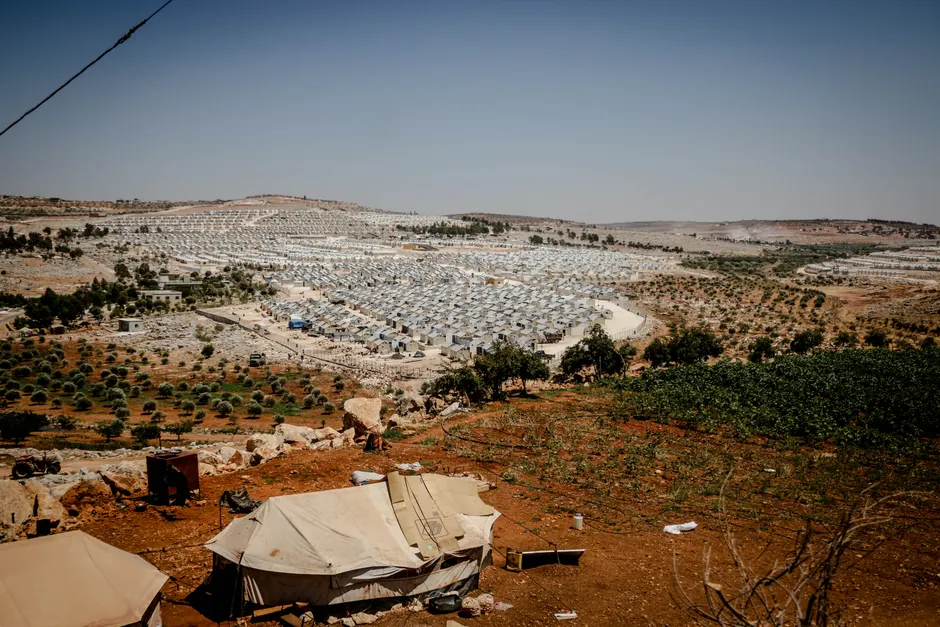
The RSF's conduct around El Fasher was not confined to the city itself. In December 2025, Amnesty reported that RSF forces had attacked Zamzam camp — one of the largest displacement sites in Sudan — deliberately killing civilians, taking hostages, and destroying civilian infrastructure. Earlier, in November 2025, at least 40 people were reportedly killed in a drone strike outside El Fasher in the Kordofan region. Together, these incidents form the operational context the June 2026 report situates within a coherent campaign.
Legal and Political Stakes
The crimes against humanity threshold under the Rome Statute requires widespread or systematic attacks against a civilian population, carried out with knowledge of the attack. Ethnic cleansing is not itself a freestanding crime in international law but constitutes evidence of, and often overlaps with, genocide, crimes against humanity, and war crimes — a distinction that matters enormously for how international courts and the UN Security Council frame their responses.
Sudan is a party to the Rome Statute, though the International Criminal Court's prior Sudan dossiers — centered on Darfur atrocities during the Bashir era — have languished for years without full cooperation from Khartoum. The RSF's leadership, particularly its commander Abdel Fattah al-Burhan's rival Mohamed Hamdan Dagalo, known as Hemeti, has long been connected to the Janjaweed militias implicated in earlier Darfur violence. That continuity will feature prominently in any prosecutorial theory.
Politically, the report lands in a context of deep international inaction. The Security Council has been blocked from coordinated action on Sudan by divergent great-power interests. Regional frameworks — the African Union, IGAD — have produced ceasefires that neither party has honored. Humanitarian access to North Darfur remains severely constrained, limiting the ability of UN agencies and NGOs to independently verify conditions on the ground.
The Amnesty report does not carry the force of a court judgment, but documentation of this kind performs a specific function in international accountability processes: it builds an evidentiary record, names specific units and command structures, and creates political costs for states that continue to supply or legitimize the RSF. Whether those costs translate into changed behavior from Gulf backers or other external actors is a separate, open question. What the report forecloses is the claim that the international community lacked detailed, sourced information about what was happening in El Fasher.