Berlin's Plans to Demolish a Nazi Bunker Ignite a Preservation Debate
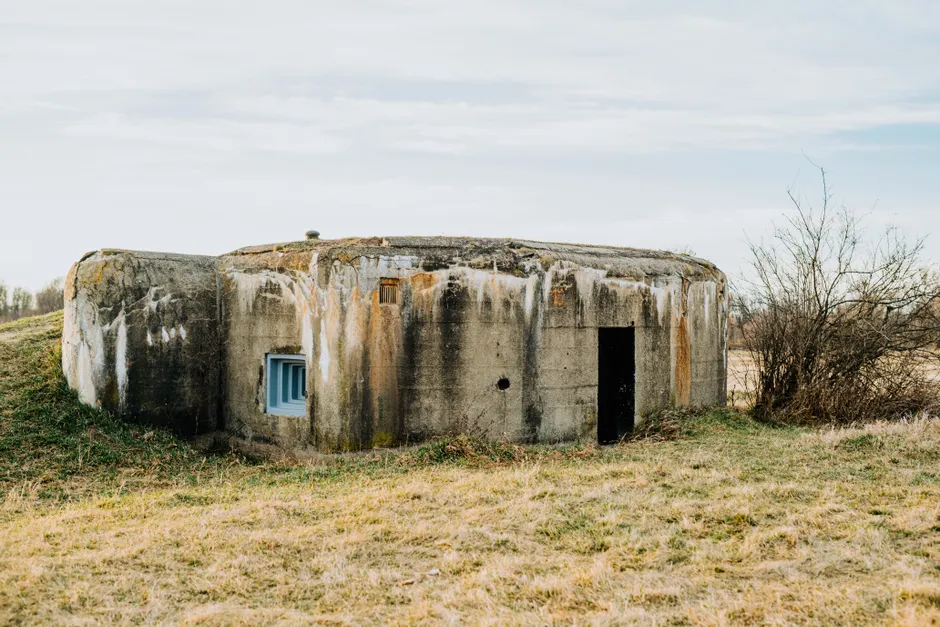
Plans to demolish a Nazi-era bunker in Berlin — described as one of the last physical remnants of Adolf Hitler's former power centre — have triggered a sharp public dispute over how Germany should manage the material legacy of the Third Reich.
The bunker in question sits near the site of the Führerbunker, where Hitler died in April 1945. That ground is now a car park marked by an informational plaque detailing the bunker's layout, a deliberately low-key arrangement that has long reflected official German ambivalence about memorialising sites associated with Nazi leadership. The bunker slated for demolition is a related structure, and according to the BBC, plans to replace it with residential flats have now brought the tension between erasure and preservation to a head.
Opponents of demolition argue that destruction is itself a form of historical distortion. Writing in The Spectator Australia, published on 2 July 2026, commentators contend that Berlin should preserve, not destroy, its Nazi-era bunkers — that physical structures carry an evidentiary and pedagogical weight that plaques and archives cannot replicate. The argument is not new, but the stakes are sharper as surviving structures from that period become increasingly rare.
The counterargument, embedded in the case for demolition, draws on a settled strand of German memory policy: that Nazi sites should not become shrines, and that providing housing is a morally neutral use of contested ground. Berlin's postwar urban logic has always carried this tension. The Führerbunker itself was deliberately left unexcavated and unmarked for decades precisely to deny it symbolic power.
What complicates that calculus now is the site's existing status as an informal dark tourism destination. As NPR reported in September 2025, the car park above the Führerbunker draws visitors despite — or because of — its studied blankness. That gravitational pull does not disappear with a demolition order. It tends to intensify around absence.
The broader policy question is a live one across Europe. Germany's approach to Nazi-era sites has never been uniform: the Nuremberg Rally grounds are preserved and interpreted; Spandau Prison, where Rudolf Hess was the sole prisoner for his final decades, was razed in 1987 and is now a supermarket car park. The pattern is not ideological consistency but case-by-case negotiation between historical accountability, public safety, and the desires of developers and city planners. Berlin, perpetually short of housing, is no different.
The row has drawn enough international attention that GB News covered the planning dispute on 1 July 2026, framing it as a conflict between heritage interests and residential development. The Belarusian outlet Nasha Niva also picked up the story, citing the BBC's original report — a sign of how Germany's internal memory debates continue to resonate in countries whose own twentieth-century histories intersect with, and were shaped by, the same period.
What happens next depends on Berlin's planning authorities and whatever heritage protections — if any — apply to the structure. Germany's monument protection law (Denkmalschutz) can cover structures of historical significance, but its application to sites of perpetrator history rather than victim history has always been contested. If the bunker lacks listed status, the legal path to demolition may be straightforward. If it carries any protected designation, the dispute moves from op-ed pages to administrative courts.
The wider stakes are more than sentimental. As the generation with living memory of the Nazi period continues to shrink, physical sites carry more of the interpretive burden. Demolishing them forecloses options that future historians, educators, and policymakers have not yet fully defined. Preserving them risks conferring a gravitas that perpetrator sites arguably should not hold. Neither position is obviously wrong. That is precisely why the row in Berlin is unlikely to settle quietly.


