EV Battery Longevity Is Outrunning the Market Narrative
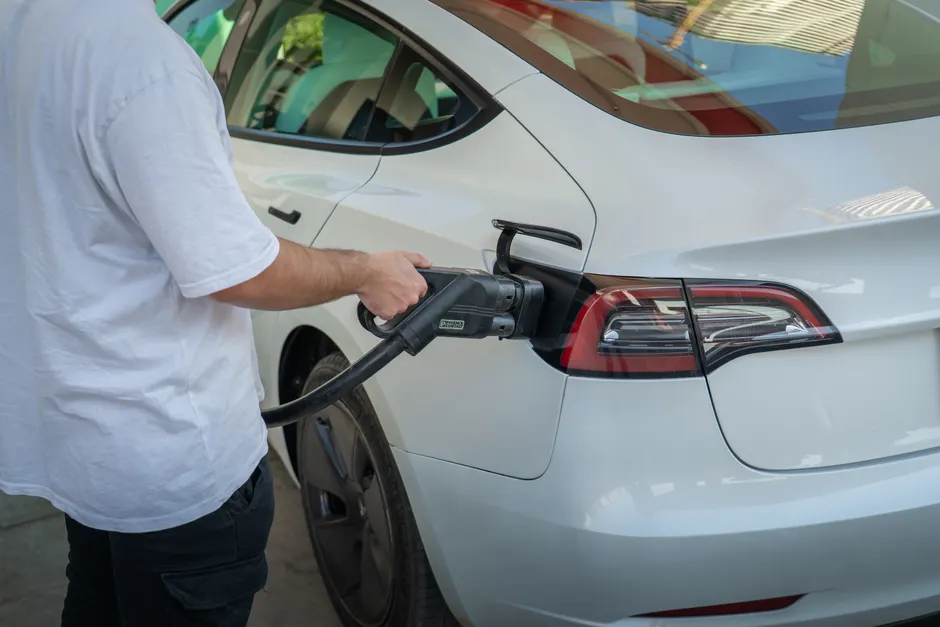
EV batteries are lasting significantly longer than early consumer expectations predicted, according to a Wall Street Journal report published on 5 July 2026 — a finding that arrives as EV sales in the United States are down 25% year-on-year so far in 2026.
The tension between those two data points is worth sitting with. Battery degradation anxiety has been one of the most durable friction points in EV adoption since the segment went mainstream, and the concern was never entirely irrational — early lithium-ion packs in consumer electronics degrade fast and visibly. But automotive battery engineering has diverged substantially from that reference point, and the field data now available at scale makes the gap plain.
What the Data Actually Shows
Recurrent Auto, drawing on 250 million electric car miles of battery health telemetry, puts average range degradation at 1–2% per year, with a modestly steeper curve across the first 50,000 miles before the rate flattens. That trajectory is slow enough that a vehicle purchased today retains the majority of its usable range well into a second decade of operation.
Warranty terms from manufacturers already reflect this expectation. The Tesla Model 3 Standard Range, for instance, carries a guarantee that the battery will hold at least 70% of original capacity at 100,000 miles or eight years — whichever comes first — according to Recurrent Auto's warranty analysis. That floor is a contractual acknowledgment by the manufacturer that the chemistry is expected to clear that threshold in normal use.
Predictive modeling from the National Renewable Energy Laboratory, cited by Recurrent Auto, projects that batteries in today's EVs should remain functional for 12 to 15 years. And cycle-life arithmetic supports that range: Recurrent Auto calculates that 20 years of EV operation equates to roughly 1,000 full charge-discharge cycles — a number well within the rated cycle life of modern automotive-grade lithium-ion and LFP cells.
Why the Anxiety Persists Anyway
The cell-phone analogy explains a lot. Every smartphone owner has watched a battery go from a day's use to four hours in two or three years. That experience is visceral and nearly universal, and it has shaped intuitions about lithium-ion that simply do not transfer to automotive packs. The engineering differences are substantial: automotive thermal management systems actively regulate cell temperature; charge management software rarely pushes cells to true 100% or discharges them to zero; and cell chemistry is selected for cycle durability rather than energy density per gram. A phone battery is optimized to be thin and light. A car battery is optimized to last.
The scale of managed charging also matters. Most EV owners charge primarily at home overnight, rarely completing a full cycle in a single day. A commuter driving 40 miles daily and topping up each night is cycling perhaps 10–15% of pack capacity per day — a regime that is extremely gentle on cell longevity compared to the deep-discharge patterns that accelerate degradation in portable electronics.
The Market Paradox
What makes the July 2026 context genuinely interesting is the collision between improving technical reality and declining commercial momentum. EV sales falling 25% year-on-year is a material reversal, and it is happening precisely as the empirical case for battery durability strengthens. Battery range anxiety, charging infrastructure gaps, and vehicle price premiums have all been cited as demand headwinds — and of those three, the first is increasingly a perception problem rather than a technical one.
None of this means the market will self-correct simply because the engineering is sound. Consumer confidence rarely moves in lock-step with data. But for fleet operators, insurers, and used-vehicle lenders — participants who price risk quantitatively — the Recurrent Auto corpus and the NREL projections are directly actionable. A 15-year battery life expectation changes residual value models substantially, and that repricing of long-term risk is likely to flow through to retail markets eventually.
The broader trajectory here is one the technology industry has navigated many times: a component that defined the ceiling of a product category matures past the point where it limits adoption, and the bottleneck shifts somewhere else. For EVs, the battery is reaching that inflection. The remaining constraints — grid infrastructure, charging speed, upfront cost — are real, but they are solvable problems of a different kind.


