Syria Delays Inaugural Session of Transitional Parliament Without Explanation
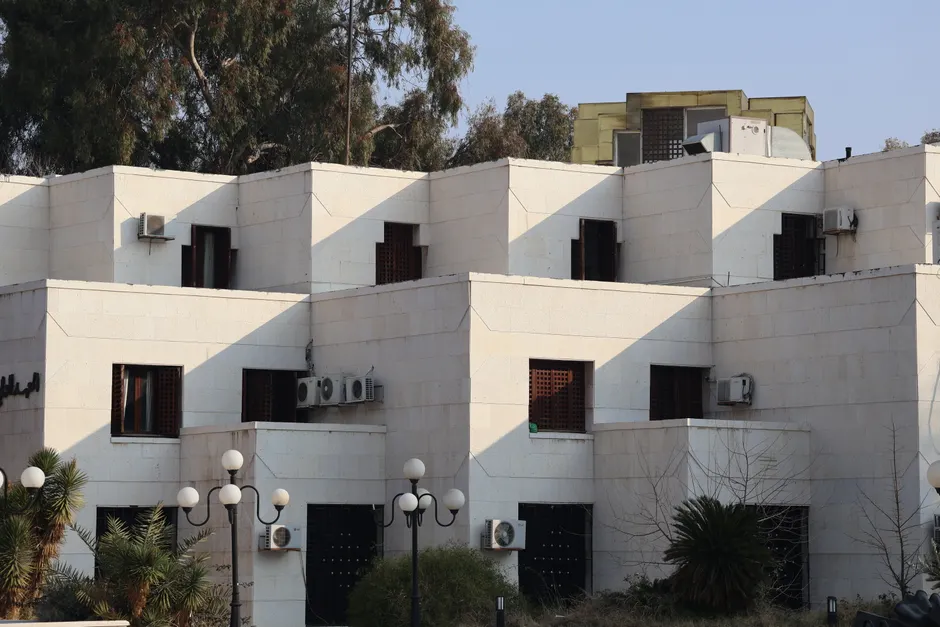
Syria's transitional People's Assembly will not convene on Monday as scheduled. Syrian state television broadcast an announcement on Sunday citing an electoral official: "The convening of the first session of the people's assembly has been postponed to a date to be determined later." No reason was given.
The announcement came from the Supreme Committee for Elections of the People's Assembly, confirmed on SANA, Syria's official state news agency. Mohammed Taha al-Ahmad, the head of the electoral committee, was cited in the broadcast. The absence of any stated rationale — not a procedural technicality, not a scheduling conflict, not a security assessment — is itself the notable fact here.
The 210-seat assembly is structured along lines that reflect the particular balance of forces shaping Syria's post-Assad transition. Two-thirds of members were selected by local committees appointed by the electoral commission; the remaining one-third were directly appointed by President Ahmed al-Sharaa. Fifteen women hold seats in the chamber. Al-Sharaa's cohort includes an actress among his appointees — a detail that drew attention when the selections were announced earlier this week.
The composition was not finalized without friction. Selection of representatives for Sweida province was postponed separately, reflecting the particular sensitivities around that predominantly Druze governorate, which has maintained a degree of autonomous political identity through successive phases of the Syrian conflict. Whether the unresolved Sweida question contributed to Sunday's delay is unknown — authorities offered nothing.
The broader procedural picture matters for how practitioners read this delay. A transitional parliament of this kind is not a legislature in the conventional sense. It holds no mandate from competitive elections, carries no popular sovereignty claim of the sort that constrains executive power in consolidated democracies, and functions primarily as an institutional scaffolding — a body that can ratify decisions, lend procedural legitimacy to the transitional authority, and signal to external actors that governance structures are being built. Its convening date carries symbolic weight disproportionate to its immediate legislative capacity.
That framing cuts both ways. A delay of a few days or weeks, if that is what this turns out to be, is operationally minor. Syria's international interlocutors — Gulf states, Turkey, the EU, and the United States, all of which have calibrated their engagement with the post-Assad government partly on the pace of institution-building — will be watching for what the reschedule signals about internal cohesion at the top of the transitional structure. A body this closely shaped by presidential appointment is not independent of al-Sharaa's office. A last-minute postponement with no stated cause is more likely to reflect unresolved disputes within the transitional leadership than any external disruption.
The timing is delicate. Syria's transitional government has been threading a narrow path: consolidating territorial authority, managing competing armed factions, maintaining enough of a reform posture to keep sanctions relief and reconstruction financing in play, and building institutions that can plausibly be presented as moving toward eventual elections. A parliament — even an appointed, transitional one — is a necessary rung on that ladder.
What happens next depends almost entirely on when and how authorities reschedule. A prompt announcement with a clear new date would suggest a discrete internal problem now resolved. An extended open-ended delay would raise harder questions about whether the coalition of interests behind al-Sharaa's government has reached the limits of its internal consensus on the assembly's composition or mandate.
For now, the only confirmed facts are that Sunday's announcement was brief, unexplained, and unilateral. In a transition where institutional credibility is still being constructed, that pattern — a decision broadcast without accountability — is worth tracking.


