AI-Guided Private Schools Target Wealthy Families With Tuition Up to $75,000 a Year
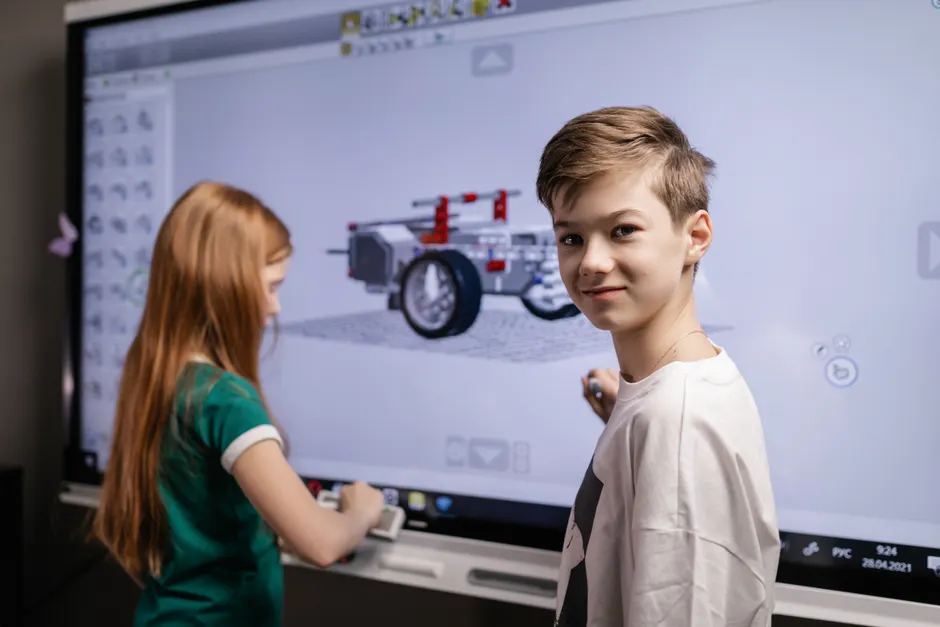
A cohort of private schools built around AI-driven instruction is gaining traction among affluent American families, with annual fees reaching $75,000 for the youngest pupils. The Verge reported on 5 July 2026 that Alpha School and Forge Prep are among the most visible operators in this space, each pitching a model in which AI tutoring software carries most of the instructional load.
Alpha School, whose site is at alpha.school, brands its approach as "2 Hour Learning" — a structure in which students complete core academics in two AI-guided hours, leaving the remainder of the day for other pursuits. The school primarily serves K–8, though it operates through high school in certain locations. San Francisco-based venture capitalist Shaun Johnson, who plans to enroll his son in Alpha Kindergarten, told the Wall Street Journal that the program carries a $75,000 annual price tag. Co-founder MacKenzie Price has said she intends to keep "hot-button social issues" out of the classroom.
Forge Prep takes a different pitch. The New Jersey school, at forgeprep.org, serves grades 5 through 12 and frames its model around project-based entrepreneurial learning: students build businesses, and the school says graduates leave with a $200,000 investment in their venture. First-year tuition runs $24,000 to $36,000. Forge Prep will open its Founding Class of 30 students in grades 5 through 8 in Fall 2026. Before a single class had met, the Wall Street Journal reported it had already drawn 600 applications. The school has also published an "AI Head of School" page on its site, describing a system trained on the research and philosophy behind its founding — an unusual branding move that signals how central the AI framing is to its market positioning.
The demand figures are notable. But supply-side enthusiasm and applicant numbers say nothing about whether the underlying model works.
That is not a small gap. The Verge found that companies like Forge Prep do not publish performance metrics, and there is no evidence in the public record that AI-guided private schools of this type produce better educational outcomes than conventional alternatives. Parents paying five-figure annual fees are, in effect, making a high-conviction bet on an unvalidated pedagogy. That is their prerogative — but it is worth naming plainly.
The broader context here is a pattern familiar from edtech's prior cycles. Learning management platforms, MOOCs, tablet-first classrooms, and adaptive-learning software all attracted serious investment and serious believers before longitudinal outcome data arrived to temper expectations. Some of those tools did ultimately prove their value in specific contexts; many did not survive contact with the reality that durable learning is hard to engineer. The schools covered here are early-stage operations. Forge Prep has not yet held its first class. Alpha School's "2 Hour Learning" claim is provocative by design — the cognitive science literature on deliberate practice and retrieval spacing does not obviously support compressing rigorous skill acquisition to that degree, though it is conceivable that AI-adaptive pacing could change the calculus for certain learners at certain stages. We do not yet know.
What is clear is the addressable market these operators are targeting. The willingness of wealthy families to pay $25,000–$75,000 annually for an unproven AI-native curriculum suggests either deep frustration with existing private schooling or, more likely, a cohort of early adopters who have internalized the belief that AI will restructure knowledge work fast enough that traditional credentialing loses its value before their children finish school. A VC enrolling his kindergartner in an AI school for $75,000 a year is not primarily buying an education; he is expressing a view about the near-term future of human capital.
Whether that view is correct is a separate question entirely. What these schools represent in the near term is a real-world experiment — small in absolute enrollment, high in tuition revenue per student, and thus far insulated from the accountability mechanisms that govern publicly funded education. The outcomes, when they eventually surface, will be worth watching closely.


