England's Rural Affordable Housing Hangs on a Section 106 Decision Due Within Weeks
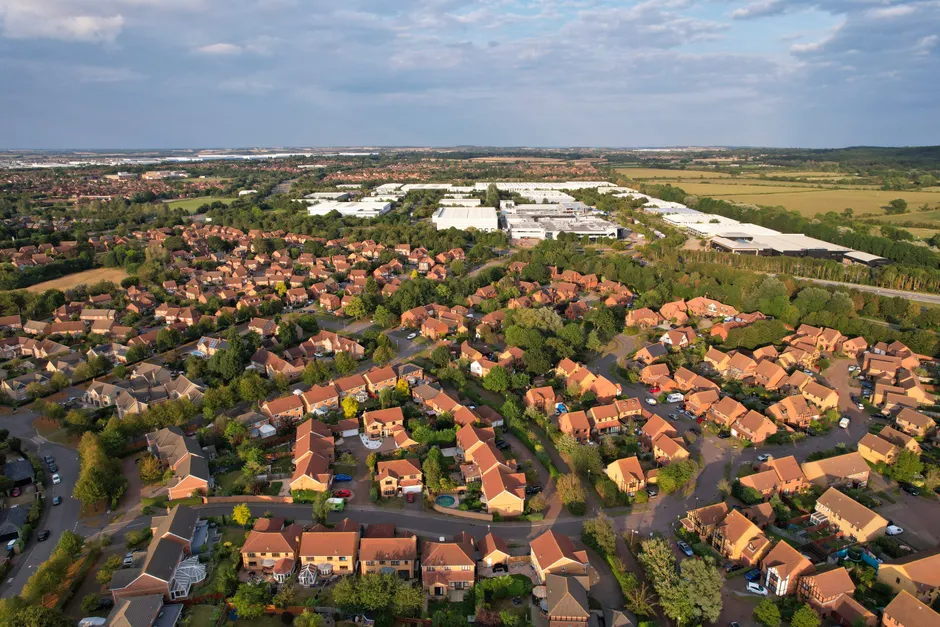
More than half of affordable homes built in England's most rural areas sit on developments of 10–49 houses — the precise tier the UK government is considering exempting from Section 106 affordable housing obligations, according to National Housing Federation analysis published by The Guardian on 6 July 2026. Ministers are expected to make a final decision within weeks on whether housebuilders in that size bracket should be permitted to substitute cash payments to local councils for on-site affordable units.
Section 106 agreements — the planning obligations negotiated between local authorities and developers as a condition of consent — accounted for 36% of all affordable homes delivered across England in 2024–25. Strip them from mid-sized rural developments and the NHF projects a loss of 32,000 affordable homes over the next decade. That number is not a marginal rounding error; it is a structural gap in the only delivery mechanism that reliably reaches villages and market towns where grant-funded registered provider pipelines rarely venture.
What the Proposal Actually Does
The government's proposal would end mandatory Section 106 affordable housing quotas for schemes of between 10 and 49 homes. In their place, developers could make payments in lieu — cash contributions earmarked for affordable housing elsewhere in the local authority area. The policy logic is familiar: reduce friction for smaller housebuilders, accelerate consents, and trust councils to deploy the proceeds. The practical record, however, is less reassuring. The NHF has stated explicitly that replacing on-site delivery with cash contributions rarely results in new affordable homes — the money tends to be absorbed into council budgets under competing pressures, or recycled into sites that were already viable without it.
Historical data reinforces the concern. In 2019/20, 54% of affordable housing completions by housing associations — some 21,456 homes — were delivered via Section 106 agreements, as were 46% of starts that year. That share has evolved since, but the structural dependency on s106 for dispersed, smaller-scale delivery has not.
The Rural Dimension
Urban planning debates tend to dominate the Section 106 conversation, but the NHF data redirects attention to where the stakes are highest per unit. Rural England has no equivalent pipeline: build-to-rent is absent, grant-supported registered providers concentrate on urban regeneration schemes, and rural exception sites — a separate planning route for small affordable developments outside settlement boundaries — are slow and limited in output. For a farmworker, a local teacher, or an adult child of a farming family trying to stay in their village, the 10–49 unit development on the edge of a market town is often the only realistic access point to affordable housing tenure.
The timing is complicated further by political circumstances. Ministers have been instructed not to advance major policy announcements ahead of a new prime minister taking office, leaving the Section 106 decision in an awkward holding pattern. The Ministry of Housing, Communities and Local Government's spokesperson confirmed on 6 July that "no decisions have been taken on the future of section 106 agreements" — a formulation that technically forecloses neither the exemption nor the status quo.
A Pattern Taking Shape
The Section 106 debate does not exist in isolation. In London, ministers and Mayor Sadiq Khan have already moved to reduce the affordable housing threshold that developers must meet to qualify for fast-track planning status. That accommodation to development viability in the capital signals an appetite for flexibility at the margin of affordable requirements — a direction of travel that housing associations and campaign groups are watching closely as an indicator of where national policy may land.
Kate Henderson, NHF chief executive, has been among the most direct voices warning that substituting cash for bricks in mid-sized schemes will hollow out rural provision. Her organisation's position is that the 10–49 threshold is not an arbitrary administrative boundary; it maps almost precisely onto the development geography of rural England.
The central tension is unresolved and structurally awkward. The government wants more homes built faster. Developers argue that s106 obligations on smaller schemes cut into margins enough to kill otherwise viable sites. The NHF argues that the cure is worse than the disease — that you cannot solve a housing crisis by dismantling the mechanism that delivers a third of affordable supply. A final ministerial decision, when it arrives, will have to land somewhere in that triangle. The rural data makes clear that wherever it lands, the distribution of costs will not be even.